From Navy Project to Army Air Defense
The Army is finalizing the requirements and funding to take over development of an air defense, hypervelocity cannon. This project, previously spearheaded by the Navy and later the Pentagon’s Strategic Capabilities Office (SCO), could offer multiple opportunities for industry involvement.
Cannon-Based Air Defense Initiative
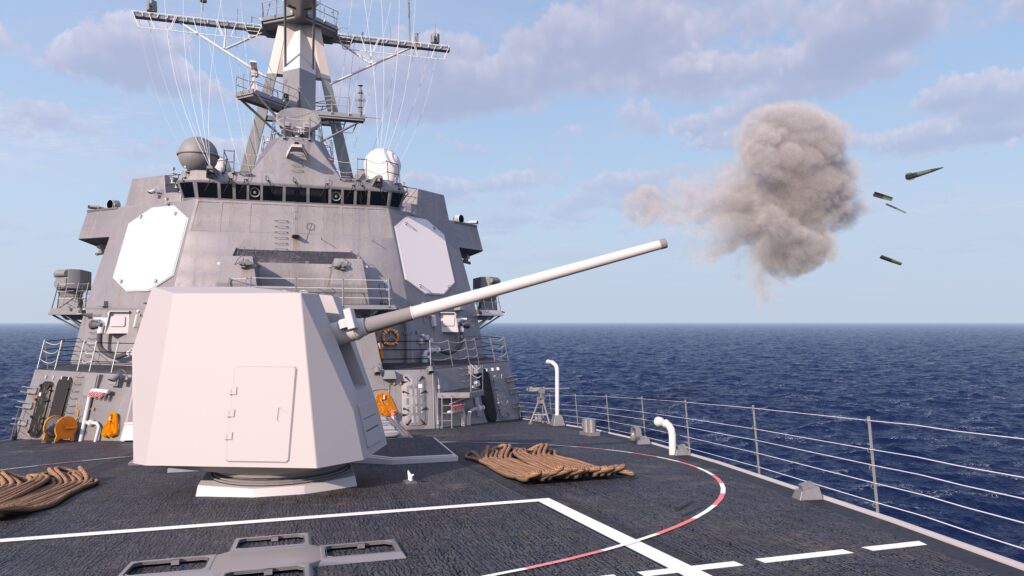
After the Navy discontinued work on BAE Systems’s Hypervelocity Projectile in 2021, the SCO took over under the Multi-Domain Artillery Cannon System program. Now, the effort is transitioning to the Army, where it’s being called the Cannon-Based Air Defense initiative. Lt. Gen. Robert Rasch, head of the Army’s Rapid Capabilities and Critical Technologies Office (RCCTO), confirmed the transition and the finalization of requirements.
Competition on the Horizon
Rasch indicated that the Army is evaluating each component of the system developed by SCO to determine what to keep, what to sole-source, and what to compete out. „Some of it will absolutely be competed,” Rasch said. The components under review include the 155mm cannon, radar, battle manager, resupply aspects, and the projectile itself. The extent of competition will depend on the maturity of each technology and the number of viable vendors.
BAE Systems’s Role Uncertain
It remains unclear whether the Army will proceed with the late-2024 announcement of its intent to sole-source cannon and projectile work to BAE Systems, or if that decision is now under review as part of the ongoing requirements assessment. Rasch asserted that no contracts for the revamped effort have been awarded yet.
Expanding Capabilities: Offensive Potential and Autonomy
Several other aspects are under consideration, including whether to expand the weapon’s capabilities to include offensive operations. This would involve enabling the system to fire both hypervelocity rounds and traditional 155mm projectiles, which could impact the Army’s tactical fires study.
The Army is also evaluating the integration of autonomy features, such as a leader-follower capability. However, a final decision on „porting over” autonomy into the revamped weapon has not yet been made.
Funding and Timeline
The Army’s plans are contingent on receiving the necessary funding in a fiscal 2026 defense spending bill. If approved, the Army aims to begin revamping the hypervelocity weapon and have the first battery ready within three years, around 2029.
„We’re obviously not going to award a contract until Congress tells us we can, but we need to collect all of the information we can so that when we receive money, we can execute immediately,” Rasch said.