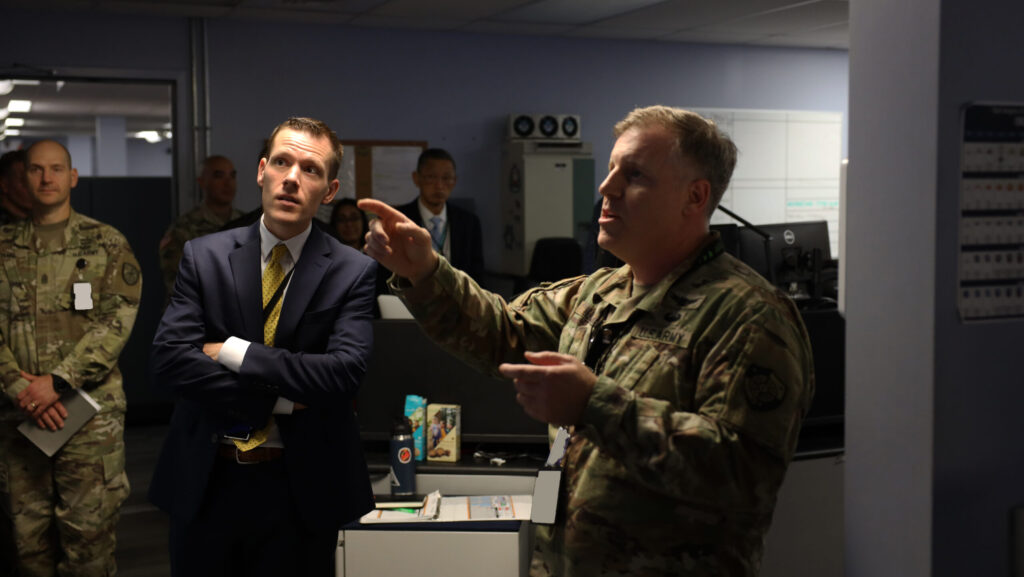
New Principal Cyber Advisor Brandon Pugh prioritizes AI integration at the tactical level to bolster cyber warfare capabilities.
Focus on Operational AI
The Army’s new Principal Cyber Advisor (PCA), Brandon Pugh, is determined to align with the service’s broader transformation efforts by enabling artificial intelligence for both defensive and offensive cyber operations. Pugh, an Army reservist and former cybersecurity expert, assumed his role eight weeks ago, succeeding Michael Sulmeyer. Notably, Pugh is the first PCA to be appointed by the president, marking a shift from previous appointments made within the service.
AI at the Warfighter Level
Following meetings with leaders across the Army and joint force, Pugh identified a critical need to better leverage AI for cyber at the operational level, extending beyond the enterprise-level applications already in place at the Pentagon. While praising the Chief Information Officer’s (CIO) work on enterprise AI, Pugh emphasized his passion for integrating AI into cyber defense and offense. He aims to amplify existing efforts within Cyber Command (CYBERCOM) and Army Cyber Command (ARCYBER) by investing in AI-driven capabilities that can adapt to evolving threats.
Human-in-the-Loop Approach
Pugh highlighted the use of AI for detecting malicious code as an example of edge-level cyber application. While AI can significantly save time, he stressed the importance of maintaining a human-in-the-loop approach. Pugh envisions AI as a tool to augment human capabilities, streamlining tasks and automating processes, but not replacing human decision-making entirely. He cautioned against the potential risks of unsupervised AI, suggesting that AI should flag vulnerabilities for human operators to review before patching.
Breaking Down Silos
One of the main obstacles to enabling AI at the operational edge is the fragmentation of AI programs across various Army offices. This creates silos that hinder innovation and adoption, leading to the potential loss or burying of valuable ideas and programs. Pugh emphasized the need for a holistic understanding of AI investments, research, and testing to ensure resources are directed to the most promising areas.
Administration Support
Pugh expressed confidence that the Army can accelerate the deployment of AI-enabled cyber tools to soldiers, attributing this potential to the Trump administration’s focus on AI in cyber operations. He highlighted the administration’s recognition of cyber as a key enabler for military actions and the importance of cyber defense. Pugh stressed that cyber capabilities should be infused across all domains of warfare, becoming a fundamental consideration for every military unit, rather than a niche, standalone capability.