SRC Inc.’s Ghost Mantis system promises to enhance CCAs with cutting-edge EW capabilities, creating battlefield confusion and enhancing survivability at a fraction of the cost.
Disrupting the Battlespace: Ghost Mantis in Action
As Collaborative Combat Aircraft (CCAs) prepare to integrate with manned aircraft in combat, their ability to disrupt enemy sensors and degrade situational awareness becomes paramount. SRC Inc., a non-profit R&D company, has developed Ghost Mantis, a modular electronic warfare (EW) system designed to do just that.
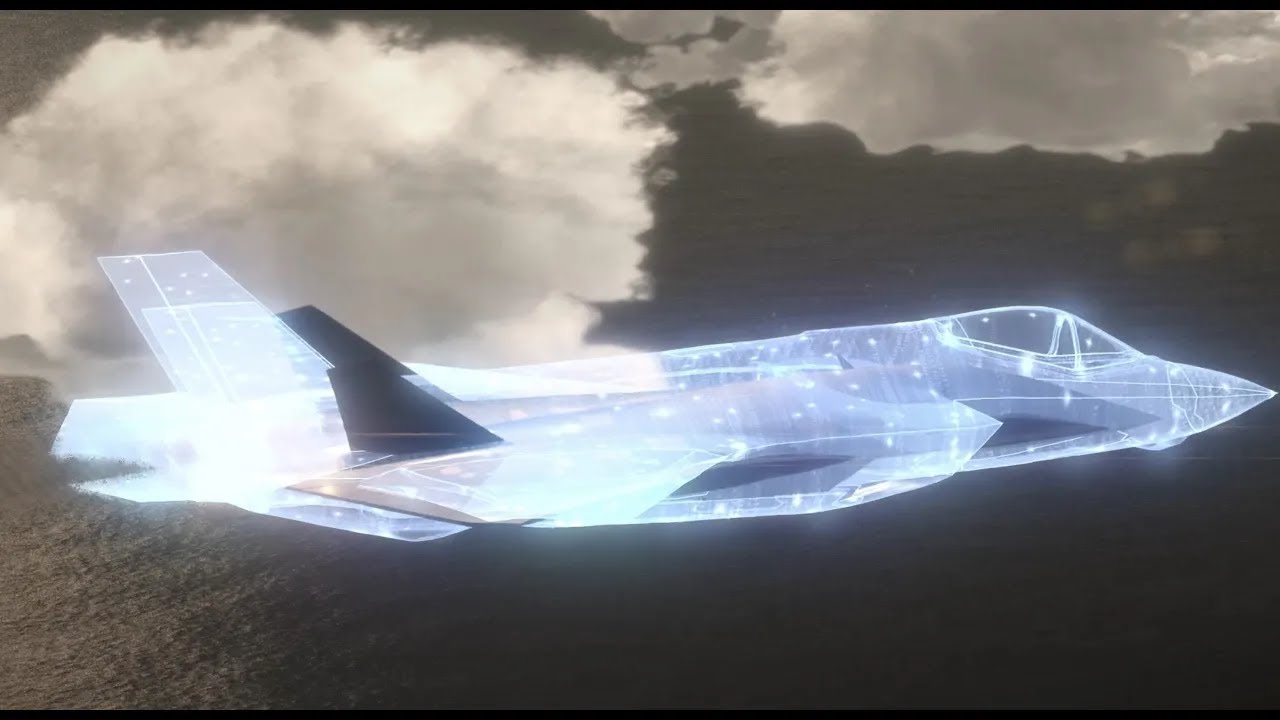
A video created by SRC illustrates a scenario where a Ghost Mantis-equipped CCA, directed by an F-35, uses electronic deception to mimic an F-35, diverting enemy fighters. The CCA then employs electronic attack capabilities to disrupt enemy targeting systems, ultimately leading to the interception of an airborne early warning and control (AEW&C) aircraft. The system then dynamically reprograms itself and send valuable Intelligence Mission Data (IMD) to other U.S. forces.
Platform-Agnostic and Cost-Effective
Ghost Mantis technologies offer a platform-agnostic solution, designed with attritability and affordability in mind. The system can be configured to meet platform-specific constraints, offering 80% of the capability of sophisticated EW systems at 20% of the cost.
Compact Design and Modular Architecture
Designed with a compact SWaP (Size, Weight & Power), Ghost Mantis can fit within the outer mold-lines of CCAs or Group 3 UAS, preserving stealth and aerodynamic efficiency. Its modular open systems architecture (MOSA) allows for the integration of EW, radar, and SIGINT sub-modules, enabling third parties to insert their own capabilities.
„Our commitment to designing Ghost Mantis systems with open architecture standards will allow us to rapidly add capabilities to respond to adversarial advances,” says Nick Reppard, SRC’s director for collaborative sensors and effectors.
Rapid Reprogrammability and Enhanced Survivability
Ghost Mantis leverages AI and machine learning to actively learn from its environment, rapidly updating IMD and automating the process of ingesting and using intelligence data. This ensures that platforms have the most up-to-date data available, increasing lethality and enabling CCAs to survive multiple engagements.
The automation offered by Ghost Mantis also reduces costs by lowering the reprogramming, test, and evaluation burden for key units.
SRC’s Legacy in Electronic Warfare
SRC has a long history of developing and supplying state-of-the-art EW systems to the U.S. military, including the AN/VLQ-12 CREW Duke system, Protean® multi-mission EW, Crypsis NAVWAR, and Silent Cyclone® counter-drone jammers.
The company’s manufacturing subsidiary, SRCTec, LLC, operates a flexible, 200,000 square foot facility capable of handling aggressive delivery schedules while maintaining the highest quality standards.
Ready for the Future of Warfare
With CCA fleet introduction slated for 2029 or earlier, SRC is positioned to meet the need for integrated EW payloads by producing Ghost Mantis systems in volume in the U.S. The company’s not-for-profit status enables it to reinvest earnings into the enterprise, ensuring continuous innovation and improvement.
„We’re one of the first to fly and one of the first to show passive and active capabilities in one system,” says Andrew Tormey, SRC’s director of business development for the U.S. Navy. „We are excited to continue to build on that momentum.”