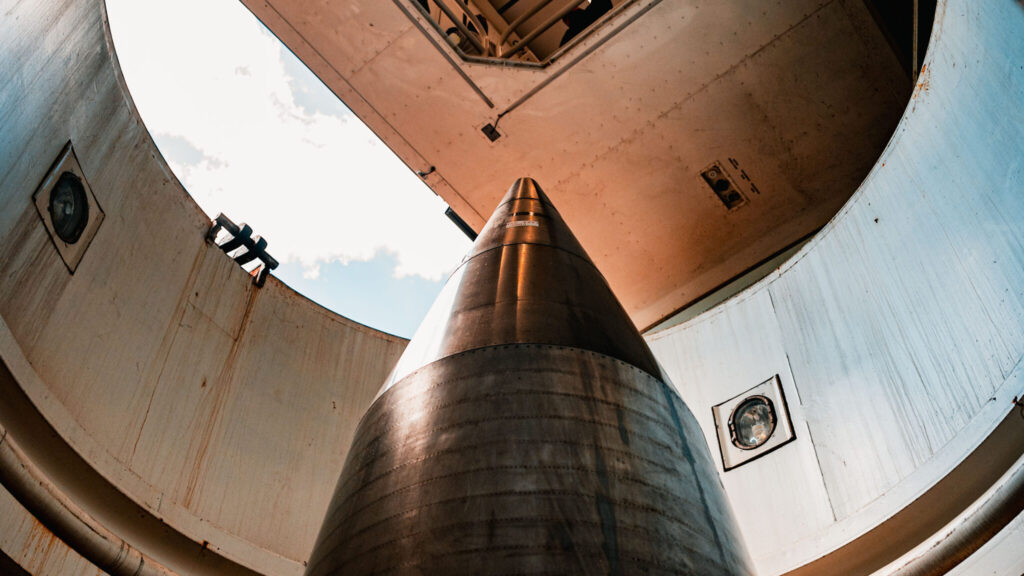
In a symbolic yet significant move, the U.S. Air Force has officially decommissioned its first Minuteman III (MMIII) missile silo as it prepares to transition to the next-generation LGM-35A Sentinel intercontinental ballistic missile (ICBM) system. This deactivation, involving launch facility LF 5E10 at F.E. Warren Air Force Base, Wyoming, marks the beginning of a complex overhaul of America’s land-based nuclear deterrent.
End of an Era, Start of a Challenge
„This is the first operational MMIII silo to be taken offline,” confirmed a spokesperson for Air Force Global Strike Command. The move is part of a broader strategy to replace the aging MMIII fleet with the Sentinel, a program led by Northrop Grumman.
Sentinel Program Faces Headwinds
However, the Sentinel program is grappling with significant challenges. Facing delays and escalating costs, the ambitious project aims to procure 634 missiles—with an additional 25 missiles for development and testing—and deploy 400 of them across missile fields in the Great Plains.
Ensuring Continuous Alert
Despite the deactivation, the Air Force insists there will be no disruption to America’s nuclear readiness. „The administrative decertification of LF 5E10 has no impact on the number of ICBMs that can be on alert,” the spokesperson stated, ensuring that Air Force Global Strike Command continues to meet ICBM alert requirements.
Modernization on a Massive Scale
The scope of the Sentinel program is immense. „This is one of the largest modernization efforts ever undertaken by the U.S. government, similar in scale to President Eisenhower’s interstate program,” the Air Force Global Strike Command spokesperson emphasized.
Decommissioning Details Emerge
While plans to decommission LF 5E10 were previously announced, the exact timing remained unclear. Maj. Gen. Colin Connor, Director of ICBM Modernization, confirmed the deactivation during an August 26 town hall at Minot Air Force Base. The Air Force declined to specify the precise date, citing operational security.
The decommissioning process involves removing the aerospace vehicle, critical equipment, isolating the facility from the network, and disposing of non-essential equipment.
Satellite Imagery Reveals Activity
Matt Korda, associate director of the Nuclear Information Project at the Federation of American Scientists, noted that satellite imagery showed „deviations from normal on-site activities… particularly from mid-August onwards, with the likely presence of vehicles on-site,” likely tied to the decommissioning process.
Empty Silo or Strategic Move?
With the Air Force maintaining 400 ICBMs on alert, 50 of its 450 silos remain empty. Korda suspects the decommissioned silo was vacant, suggesting a strategic approach of starting with unoccupied facilities.
Doubts and Concerns Emerge
The deactivation has raised questions among experts. Jon Wolfsthal, director of global risk at FAS, expressed surprise at the early timing, given the Sentinel’s delayed timeline. „No one seems to have a sense of what the full plan is,” he said.
Infrastructure Challenges Drive Restructuring
Following an 81 percent cost spike attributed to infrastructure issues, the Air Force is restructuring the Sentinel program. Work on the command and launch element was temporarily halted but has since resumed.
New Silos, New Approach
In a key shift, the Air Force has decided to construct new silos for the Sentinel rather than refurbishing existing ones. While an earlier analysis deemed this approach too expensive, officials now claim it will save money and address environmental concerns.
Skepticism Persists
Korda remains skeptical of these claims. „I would personally be very skeptical of claims that an unexpected thing that no one wanted to see happen is actually good for the program and will save money,” he said.