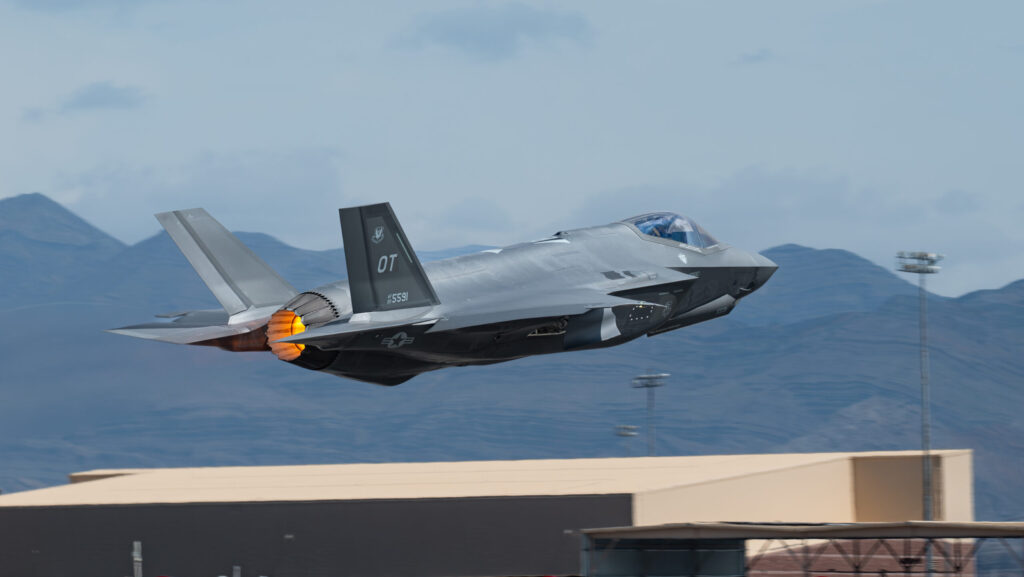
Lockheed Martin is engaged in „very active” discussions with the Pentagon regarding a „fifth-generation-plus” F-35, incorporating technologies developed for the company’s sixth-generation fighter concepts, according to Lockheed’s CEO Jim Taiclet.
High-Level Engagement
Taiclet told investors at the Morgan Stanley conference that these conversations are occurring at an „extremely high level” within the Department of Defense and are expected to reach the White House soon. He described the feedback as „encouraging” and noted „significant interest” from the government regarding aircraft modernization.
„Ferrari” F-35: 80% of Sixth-Gen Capability at Half the Price
Taiclet initially proposed this „Ferrari” version of the F-35 in April, shortly after Lockheed lost the Air Force’s Next Generation Air Dominance (NGAD) contract to Boeing. He suggested leveraging NGAD technologies to enhance the F-35, delivering „80 percent of six-gen capability at half the price.”
Classified Content, Unseen Contracts
While no contract is currently in place, Taiclet cautioned that any eventual agreement might remain undisclosed due to its classified nature. Nevertheless, he expressed confidence in the concept’s merit and Lockheed’s ability to integrate advanced technologies into existing aircraft.
Upgrade Potential for 1,000-1,500 Aircraft
Of the remaining 2,300 F-35s yet to be delivered, Taiclet estimated that 1,000 to 1,500 could be delivered as the „fifth-gen plus” version, even with potential export restrictions on international buyers. These upgrades could include new weapons, improved stealth coatings, and a more advanced engine.
Trump’s „F-55” Proposal
In May, former President Donald Trump expressed interest in an upgraded, twin-engine version of the F-35 dubbed the „F-55.” While Lockheed thanked Trump for his support, neither Taiclet nor other Lockheed officials have referenced the „F-55” concept in subsequent comments, with experts deeming it unlikely.
Block 4 Modernization Delays
Meanwhile, the F-35’s ongoing modernization effort, Block 4, faces continued delays. The Defense Department now anticipates completion in 2031, five years behind schedule, with a reduced scope of capabilities, according to a recent Government Accountability Office report.