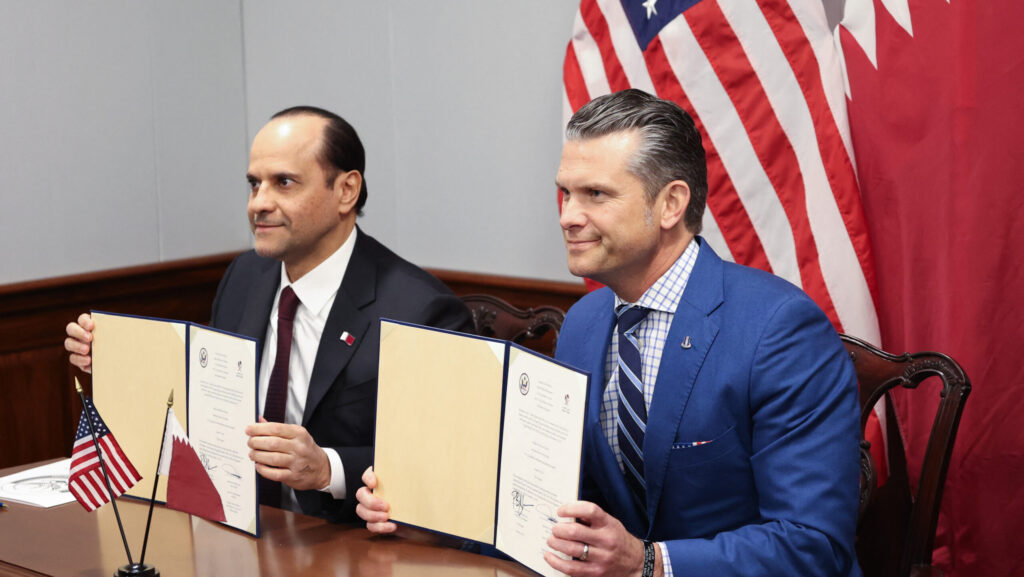
A new training facility for the Qatari Air Force at Mountain Home Air Base in Idaho offers practical benefits for Qatar and signals a deepening alliance between the two nations, according to experts cited by Breaking Defense.
Strategic Partnership on Display
The announcement, made by US Secretary of Defense Pete Hegseth alongside Qatar’s Defense Minister Saoud bin Abdulrahman Al Thani, underscores the strengthening ties between the US and Qatar, particularly in light of recent geopolitical events.
Practical Gains for Qatar’s Air Force
Rashid Al Mohnannadi, a non-resident fellow at the Middle East Council on Global Affairs, explained to Breaking Defense that the facility addresses Qatar’s limited airspace while accelerating pilot proficiency on US-made F-15 fighter jets. The facility will house Qatari F-15 QAs and will be used to train pilots and ground crew for missions, operations, and maintenance.
A US official confirmed that the facility and operational support for the Qatari F-15s were executed through Foreign Military Sales (FMS). The facility offers advanced training opportunities, fosters combined operational readiness, and provides strategic flexibility for Qatar to operate and sustain its advanced fighter aircraft.
Geopolitical Implications
Beyond the practical benefits, analysts view the announcement as a broader geopolitical message. Ali Bakir, a professor at Qatar University, told Breaking Defense that the new air base enhances Qatar’s influence in the US, mitigates potential political tensions, and strengthens ties with the US administration.
The agreement reinforces Doha’s positive image within the US, creates jobs in the US, improves infrastructure, and strengthens military ties with the Department of Defense, according to Bakir.
Kristian Alexander, a senior fellow at the United Arab Emirates-based Rabdan Security and Defence Institute, described the announcement as a „burden-sharing” message that „underlines Qatar’s value to Washington.”
A ‘Major Non-NATO Ally’
The agreement solidifies Doha’s status as a „Major Non-NATO Ally,” a designation it received in 2022, ensuring its alignment with US interests, according to Alexander.
Al Mohannadi added that such facilities help air forces develop more operational autonomy, which contributes to burden-sharing and reduces the US footprint in the Middle East.
Future Implications
Bakir suggested that this agreement could lead to Qatar purchasing more US-made weapons, as Gulf nations typically enhance their leverage through arms purchases, investments in the US economy, and lobbying efforts.