In a significant shift in operational control, the U.S. Army is piloting a program to delegate authority over cyber terrain to corps commanders, aiming to streamline decision-making and enhance battlefield agility.
From Centralized Control to Battlefield Empowerment
Previously, the management of cyber terrain and related capabilities was largely centralized. However, drawing a parallel to the command structure of physical assets, the Army is now empowering corps commanders to control and assume responsibility for the cyber domain within their operational area.
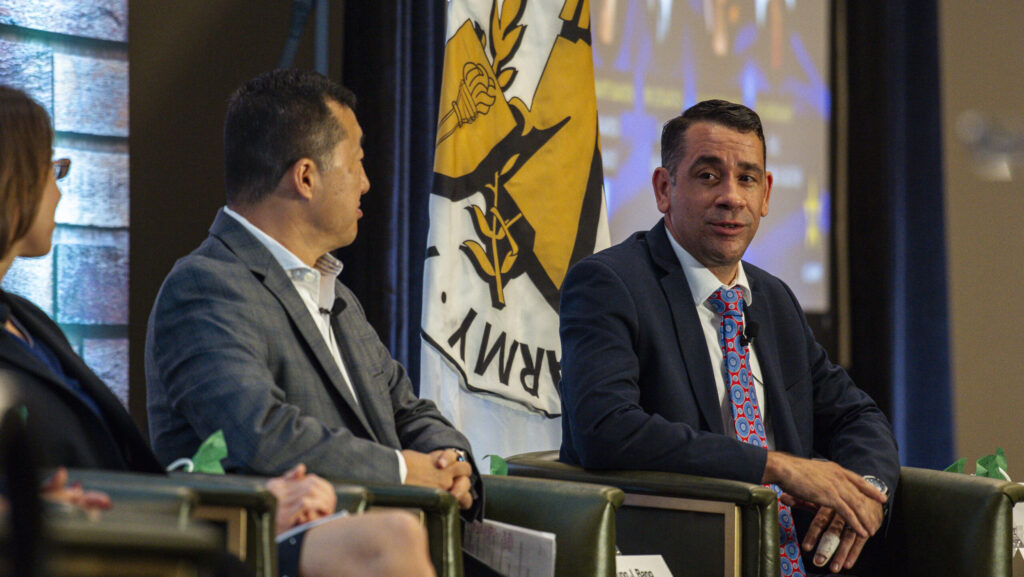
According to Army Chief Information Officer (CIO) Leonel Garciga, this initiative marks a fundamental change in how the Army approaches cyber warfare. „For the first time ever in the Army, we actually push those authorizing official authorities down to a corps commander to make sure that they can manage their cyber terrain and fight their cyber terrain versus having some headquarters element who’s disconnected from that fight doing it,” Garciga stated during a Federal News Network webinar on Thursday, 10/26/2025.
Pilot Program Underway
The Army, according to Garciga, is working with the Army G6 to receive implementation guidance and taking lessons to drive that guidance to accelerate efforts. A pilot program has been underway with XVIII Airborne Corps for the past three months, with I Corps slated to follow.
Redefining Command Responsibility
Historically, commanders faced bureaucratic hurdles when seeking permission to modify network equipment or even relocate it within their theater of operations, often requiring approval from program executive offices or the Department of the Army. Now, the Army wants the commander to accept the cybersecurity risks.
„We really pushed out on reimagining what a corps commander could do and having this thought that corps commanders are issued cyber kit, we want them to be able to maneuver that,” Garciga said. “That delegation was really about just putting the risk in the right place for the right risk decision maker. It made a lot of folks uncomfortable and some folks are still uncomfortable, but it’s really about how we’re going to fight and how we’re going to fight in the future.”
Flexibility Within Limits
While emphasizing the importance of commander autonomy, Garciga clarified that certain critical vulnerabilities will still require intervention from higher headquarters. The key is to strike a balance between flexibility and oversight.
„There’s flexibility, but within reason. I think they’re still going to fall under the same umbrella that most of our authorizing officials fall, but instead of having to reach back to some program office or have to reach back to another command or an ASCC [Army Service Component Command], they’re going to have that capability organic,” he said. The success of this initiative hinges on ensuring commanders are „manned, trained, and equipped” to effectively manage cyber risks and shoulder the responsibilities previously handled at higher echelons.