The Army’s top advisor on cyber issues has been given an expanded portfolio to include electronic warfare (EW) and information advantage, signaling an increased emphasis on these domains at the highest levels of the Army.
Consolidating Civilian Oversight
Brandon Pugh, the Army’s principal cyber advisor (PCA), stated that civilian oversight of cyber, EW, and information advantage will now fall under his office. This shift, effective two weeks ago, aims to align civilian oversight with uniformed roles within the Army.
Pugh explained that the Department of the Army’s Management Office for Strategic Operations within the Army’s G-3/5/7 previously oversaw these areas. The PCA’s expanded role is not intended to duplicate efforts but to provide a civilian counterpart to these military functions.
Supporting the Secretary’s Priorities
Pugh, the first political appointee to the PCA position, noted that each service PCA fulfills statutory responsibilities differently. In this case, the addition of EW and information advantage to the Army’s PCA role was directed by Secretary of the Army Dan Driscoll.
Reporting directly to the Secretary, Pugh’s role is to support the Secretary and Chief of Staff in their efforts to achieve Army continuous transformation. Given the focus on technology, cyber, and EW, Pugh’s existing portfolio aligns well with these priorities.
Convergence of Cyber and Electronic Warfare
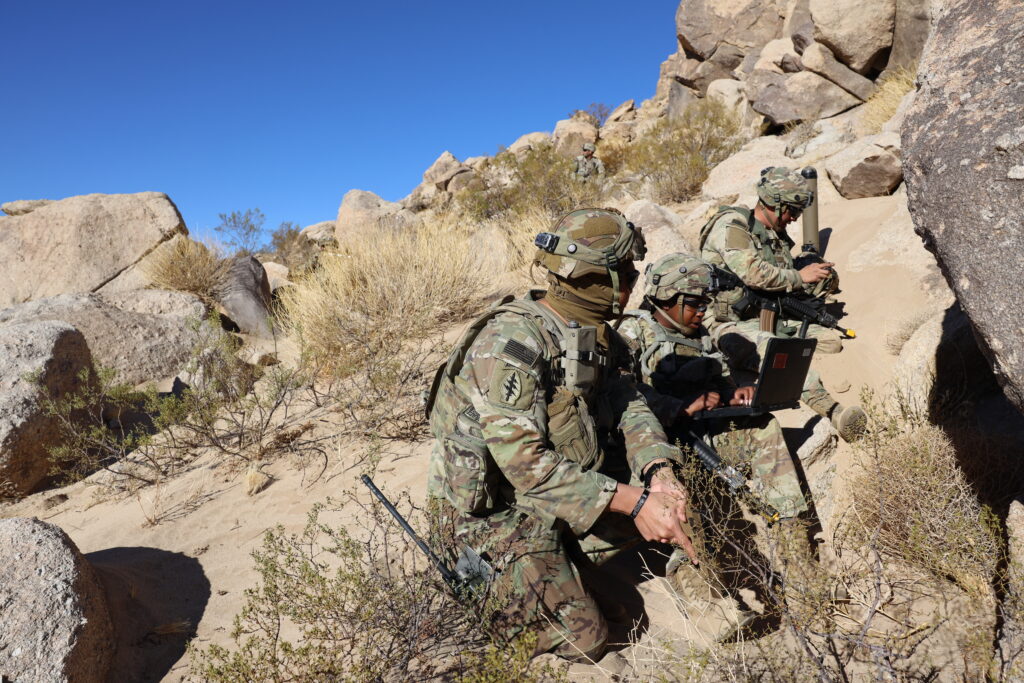
The move reflects a growing convergence of cyber and electronic warfare, particularly within the Army. The Army’s 11th Cyber Battalion aims to blend these capabilities at the tactical edge, providing commanders with cyber capabilities enabled through radio frequency technology.
Pugh aims to promote cyber and EW to ensure commanders are aware of these capabilities and can utilize them at the tactical level. He views himself as a „champion” for these domains, ensuring their integration into other Army efforts and helping prioritize them within the Pentagon.
Offensive Cyber Options
Pugh stated that Secretary of Defense sent a memo to the Secretary of the Army outlining five priority investment areas, with cyber being one of the five. He is working to ensure that cyber options, including offensive cyber capabilities, are readily available to the service.
In Pugh’s view, the US has missed opportunities and ceded ground to adversaries by being too „timid” in the past to utilize offensive cyber capabilities. He believes that past reservations were due to restrictive rules of engagement and improper analogies.
Balancing Law, Policy, and Risk
Pugh emphasized that while the US should not emulate adversaries who use cyber without restraint, it should also avoid being overly restrictive due to fears of escalation or large-scale conflict. He advocates for finding a middle ground that allows cyber to be considered as an option, balanced with adherence to law and policy.
Pugh added that military action always carries risk, and commanders should have the responsibility to assess the level of risk, weigh alternatives, and determine if cyber can be used as a standalone or complementary capability.
Integrating Cyber Across the Force
Pugh is working to help commanders understand that cyber capabilities can be enablers at both the combatant command level and at the tactical level. This extends beyond the high-end cyber operators in US Cyber Command’s cyber mission force to the emerging tactical capabilities that blend cyber and EW on the battlefield.
Cyber as an Enabler
Pugh wants to move away from the idea that cyber is limited to Fort Gordon and demonstrate its benefits to division, corps, geographic, and combat commanders. He believes cyber should not be a last resort, but should be considered for integration into all potential plans and actions in conflict, either as a standalone capability or in conjunction with other capabilities.