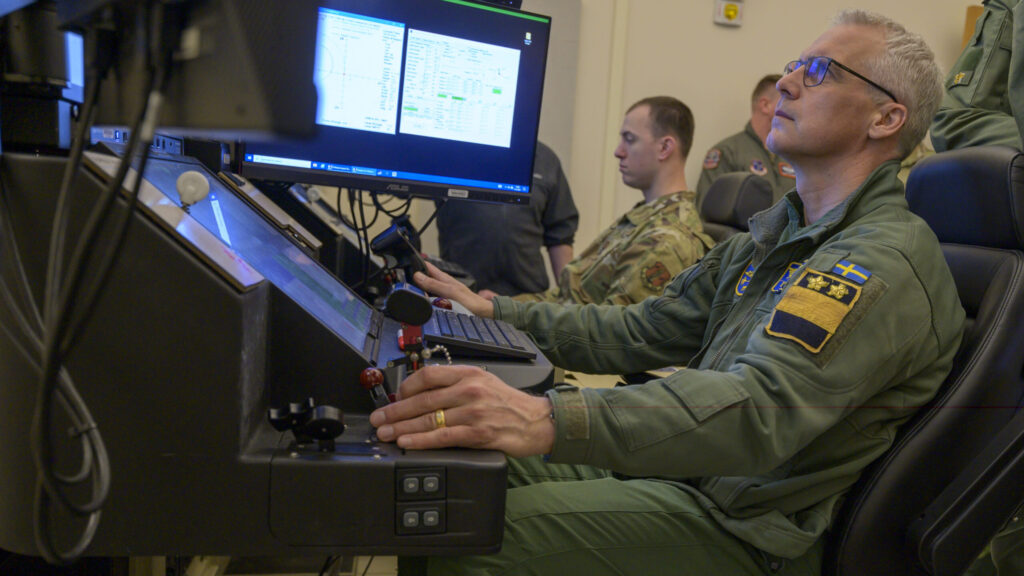
NATO allies are in danger of losing the „next decisive conflict in Europe” unless there is a major shift in the pace of developing weapon systems, warned Commander of the Swedish Air Force, Jonas Wikman, today during the Defence IQ International Fighter conference. His message is clear and incisive: the lack of rapid adaptation could have disastrous consequences in a potential war with Russia.
The Ukrainian Lesson: Speed of Adaptation, the Key to Victory
Jonas Wikman emphasized that the conflict model in Ukraine offers a „masterclass in accelerated adaptation,” unequivocally demonstrating that „the side that learns fastest wins.” Referring to the exceptional pace of technological change observed throughout the war, the Swedish official added, according to his statements, that „tactics evolve weekly. Almost no weapon… that we once supported Ukraine with, is today used in the same way as it was intended to be used.” This rapid dynamic necessitates a fundamental rethinking of military development strategies.
An Urgent Call for Innovation: Beyond Years-Long Development Cycles
Wikman’s comments come amid similar calls from other high-ranking Nordic leaders, who are urgently asking industry to provide them with new technologies tested in Ukraine. The emphasis is on moving away from equipment programs with years-long development cycles in favor of rapid and efficient solutions. Concerns are heightened by recent Russian drone incursions across Europe, which have led NATO to boost its presence on the Eastern Flank. Moreover, other drone sightings on the continent have concerned the European Union so much that the bloc has proposed a „drone wall” initiative, envisioned as a layered air defense system with formidable counter-drone capabilities.
Strategic Collaboration: Preparing for Wartime, Not Just Peacetime
To ensure „readiness for future threats,” air forces, industry, and academia must develop closer collaboration, Wikman stated. He drew a clear distinction between traditional partnerships and those needed in the current context: „I’m not talking about partnership[s] for peacetime… I’m talking about a capability for wartime operations,” the Swedish official emphasized, highlighting the necessity of deep integration and an immediate action-oriented approach.
The Swedish Model: Integrating Industry into the Heart of Operations
The Swedish Air Force is already integrating such a model as part of the introduction into service of the Saab-produced S 106 GlobalEye Airborne Early Warning and Control (AEW&C) platform, according to the commander. Sweden has three of the multirole GlobalEye aircraft, modified versions of the Bombardier Global 6000 business jet primarily designed for air, land, and sea surveillance, on order. Key to GlobalEye operational planning is a „development cell” where industry, academia, and research authorities are directly integrated within the Swedish Air Force’s GlobalEye unit, Wikman explained. „Industry and academia must be integrated into our wartime organization, co-located, empowered, and accountable under the commander’s intent,” the Swedish official concluded, offering a concrete example of the unified approach needed to address current and future security challenges.