The United States Army is accelerating the pace of military innovation, significantly expanding the scale and complexity of its Next Generation Command and Control (NGC2) prototype experiments. This week, a crucial element was introduced for the first time during exercises: AI-aided target recognition, marking a decisive step towards automating and accelerating decision-making processes on the battlefield.
The Intelligent Eye of the Battlefield: AI Identifies Threats
In a development that has captured the attention of military analysts, the U.S. Army has successfully implemented AI-aided recognition capabilities to identify targets, such as tanks, during its latest exercises. Major General Patrick Ellis, commander of the 4th Infantry Division, enthusiastically told reporters on Wednesday (November 5, 2025): „We spent the last week training the AI models to recognize what we would call hulks out in the impact area — old vehicles that we shoot at — and we’re training [it to say] ‘That thing, I think that’s the tank.’ Now it identifies that as a tank, which generates the fire mission. The complexity has continued to grow.”
This innovation, part of the 4th Infantry Division’s Ivy Sting series of experiments, is designed to incrementally test and assess NGC2 prototypes in increasingly complex environments, with the goal of scaling them from battalion level up to division level for next year’s Project Convergence exercise. At Ivy Sting 1, held in September, the Army tested a limited fires thread, verifying how data was passed from target acquisition through staff sections to the gun, using a beta version of the new Artillery Execution Suite (AXS) tool. That version only involved an observer on a hill and a drone for battle damage assessment and target acquisition.
Intensive Training and Strategic Partnerships: The Role of AI and Humans
While introducing AI for target recognition should make the division faster, the major challenge, General Ellis emphasizes, will be differentiating between multiple targets simultaneously. „What we’re finding is we’ve got to spend a lot of energy making sure that we train our models adequately; that’s a huge piece of what we’re going to do,” Ellis explained. He added that, despite the progress, there are times when the final decision rests with the human operator. „There’s cases where the machine can say, ‘Look, I’m very highly confident that this is a tank,’ and then the human looks at that and works the targeting threads.” This AI model training effort includes close collaboration with „pretty powerful AI companies,” whose expertise is essential.
Stress Testing the Digital Battlefield: Dispersed Command and Control Nodes
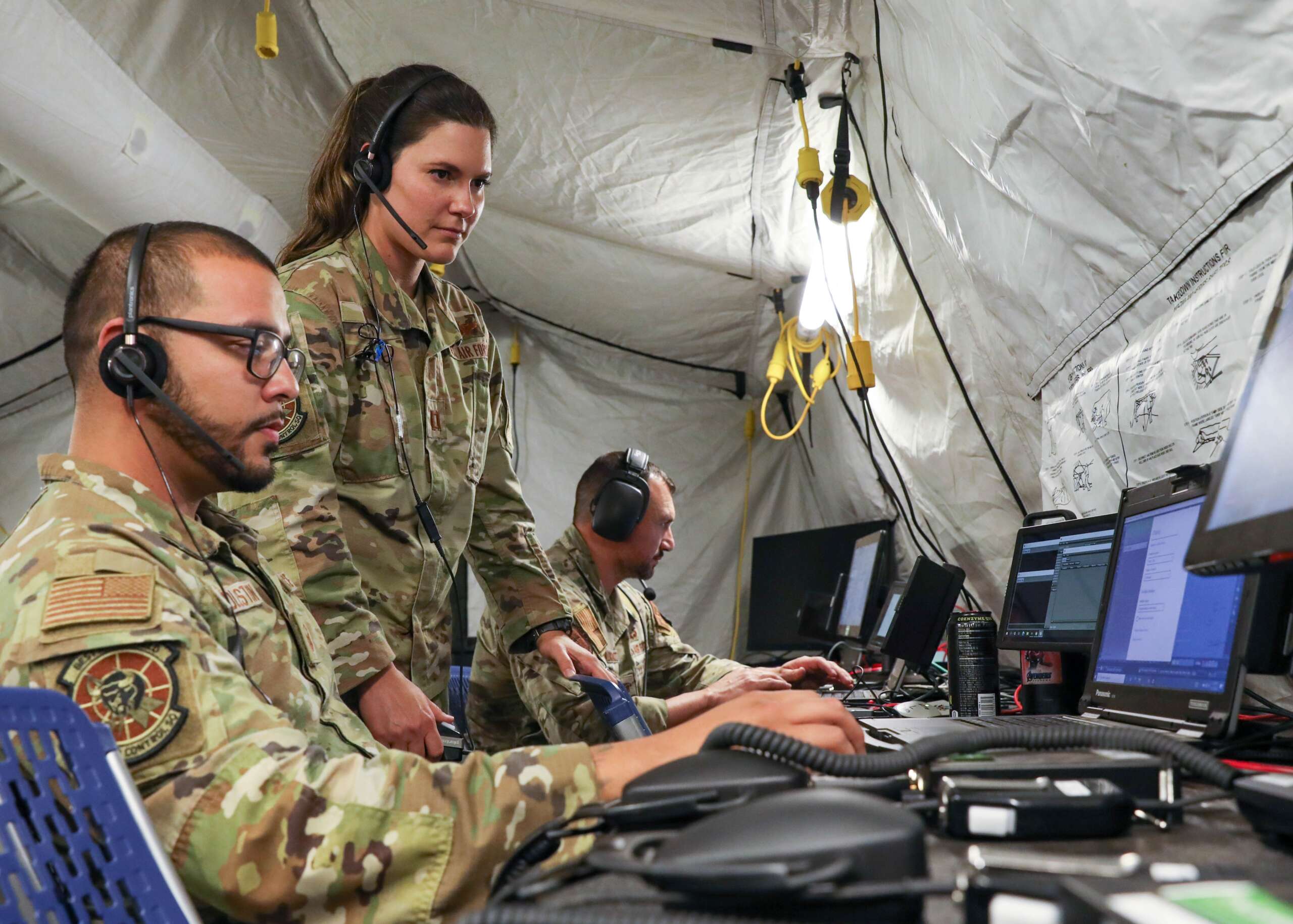
The Ivy Sting 2 experiment is not limited to AI; it also adds more dispersed Command and Control (C2) nodes across the battlespace. With six C2 nodes and various edge nodes, the goal is to stress the network and determine the optimal mix of transport, compute, and storage capabilities. General Ellis stated he was „really excited” about this second increment of the experiments, because the 4th ID is „running what we would call battle rhythm events — normal boards and procedures that we would run in an exercise — and we’re running those in a much more distributed way.”
From Platoon to Battery: Escalating Complexity and Firepower
The complexity of the Ivy Sting exercises will continue to increase incrementally. For Ivy Sting 3, the plan is to add eight more C2 nodes. Also, while Ivy Sting 1 involved a single gun (an M777A2), Ivy Sting 2 is already using three guns. Plans for Ivy Sting 3 crucially include moving from a platoon to a full artillery battery. Airspace deconfliction, a challenge General Ellis described as particularly complex, will also be addressed. „The goal in the division is not to just optimize the way we were already organized with new technology. It’s actually to use this technology in a fundamentally different way,” Ellis emphasized, highlighting a paradigm shift in the operational approach.
Beyond Tactics: Cybersecurity and Unified Data for the Army of the Future
NGC2’s impact extends beyond offensive operations. Joseph Welch, the Army’s executive NGC2 lead and deputy commanding general at Transformation and Training Command, highlighted that these innovations are already influencing other areas, such as cybersecurity. „Our approach to how we rapidly evaluate our cybersecurity posture is something that we’ve absolutely improved upon from an institutional perspective,” Welch stated. The process of integrating new capabilities into the accredited environment, which once took almost a year, is now „measured in days.” Welch also highlighted the breakdown of historical barriers between tactical and enterprise data: now, „it’s all just Army data” and is accessible at every echelon.
These advancements not only enhance military effectiveness but also strengthen cybersecurity and facilitate unprecedented information sharing, paving the way for a new era of warfare where the U.S. Army aims to be faster, smarter, and more adaptable.