The US Navy has initiated a complex operation to salvage both a fighter jet and a helicopter that crashed into the South China Sea. This move follows a double incident in late October and underscores ongoing US efforts to secure sensitive military equipment in the contested waters.
Dual Aerial Incidents from USS Nimitz
On October 26, two military aircraft – an MH-60R Sea Hawk helicopter belonging to Helicopter Maritime Strike Squadron 73 „Battle Cats” and an F/A-18F Super Hornet fighter jet from Strike Fighter Squadron 22 „Fighting Redcocks” – crashed within 30 minutes of each other. The incidents occurred during routine operations from the USS Nimitz (CVN 68) aircraft carrier. Fortunately, all three helicopter crewmembers and both fighter jet pilots were successfully recovered, with both incidents currently under Navy investigation.
Rapid Mobilization for Sensitive Equipment Recovery
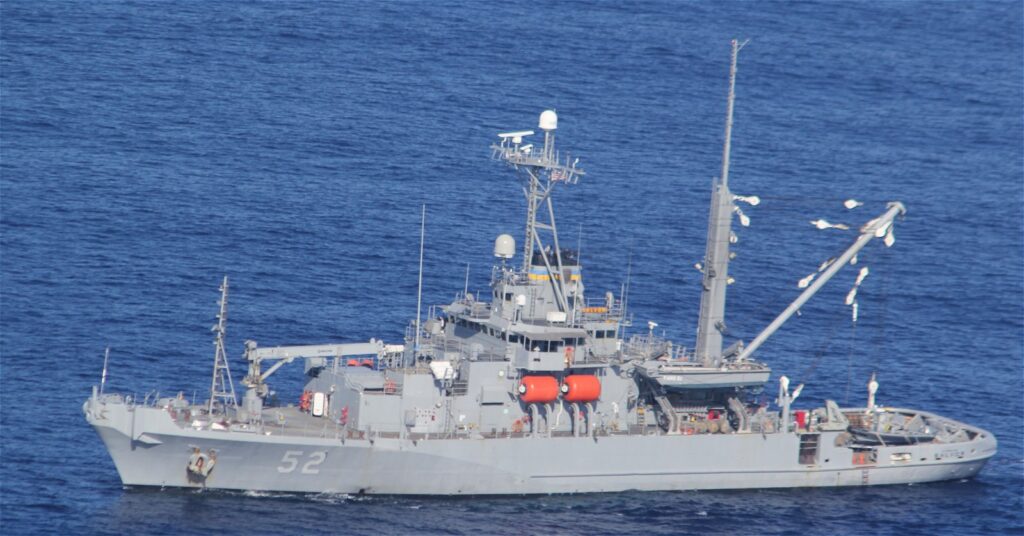
„The U.S. Navy has begun mobilizing units that will be used to verify the site and recover the F/A-18 and MH-60R aircraft lost off USS Nimitz (CVN 68) in the South China Sea, Oct. 26,” stated US 7th Fleet Public Affairs Officer Commander Matthew Comer in an emailed response to questions from Breaking Defense. While Commander Comer did not provide specific details, a source told Breaking Defense that the Military Sealift Command’s Safeguard-class rescue and salvage ship USNS Salvor (T-ARS-52) will be part of the efforts.
The Salvage Ship’s Itinerary: A Race Against Time
According to the ship tracking website Marinetraffic, the USNS Salvor was last seen heading in a roughly southwesterly direction off the Philippine island of Palawan on the evening of November 9. The ship had departed the port of Subic Bay near the Filipino capital of Manila the day before, with its final destination listed as Guam. The source cited by Breaking Defense indicated that the Salvor will first head to Singapore to pick up necessary equipment prior to carrying out the salvage operation. Singapore is home to Navy Region Center Singapore (NRCS), which coordinates shore support activities for the Department of the Navy and other DoD services in the region.
The Stakes of the Operation: Technology, Security, and Investigation
The recovery of both aircraft is crucial not only for completing the Navy’s internal investigations but also to prevent sensitive technologies from falling into undesirable hands, especially in a region with significant geopolitical tensions like the South China Sea. The operation is expected to be challenging, requiring advanced technical expertise and specialized equipment to retrieve the wreckage from the depths.