The United States Army is undergoing a comprehensive acquisition modernization process, a dramatic initiative designed to catalyze the digitalization of its networks and dismantle the „stovepipes” that have hindered previous progress. This profound overhaul offers the opportunity to accelerate the migration of essential capabilities to the cloud, according to a senior training and simulation official.
„In-Cloud” Training: Universal Accessibility for Soldiers
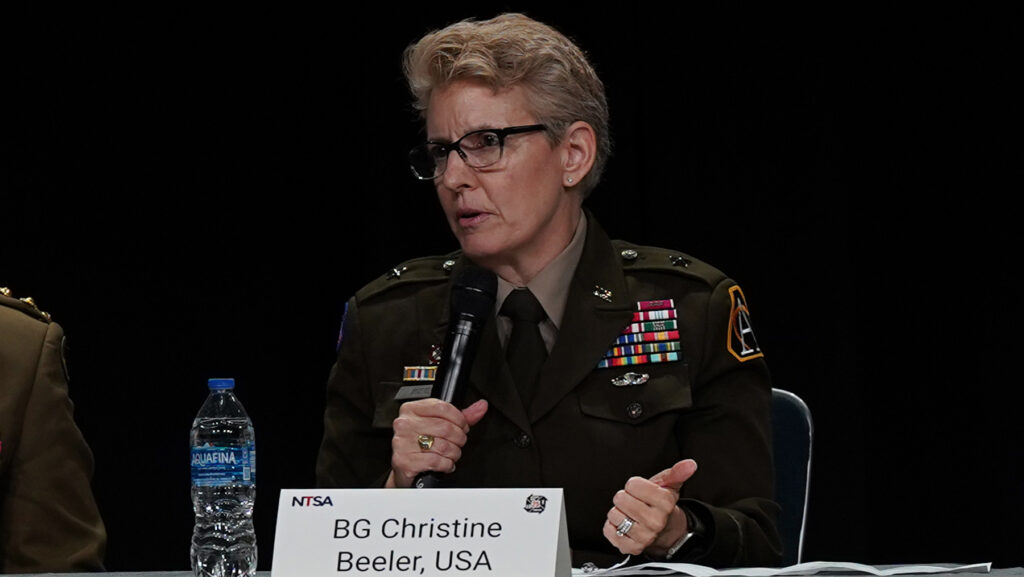
„Right now we can’t take advantage of opportunity as fast as we would like, and I think that’s part of the challenge with the way things are kind of bucketed out,” stated Brig. Gen. Christine Beeler, a key leader in this transformation. She emphasizes the urgent need to accelerate the transition to the cloud, allowing „any soldier anywhere to pull that training down, platform agnostic.” This approach, General Beeler believes, will enhance the lethality and operational understanding of the armed forces, transforming how simulations and training models come to life.
Structural Reorganization: Breaking Barriers, Boosting Synergy
Beeler serves as the Capability Portfolio Executive (CPE) for Simulation, Training and Instrumentation (STRI), one of the organizations affected by the structural changes initiated by Secretary of Defense Pete Hegseth. These reforms eliminate Program Executive Offices (PEOs) and replace them with Program Acquisition Executive offices (PAEs). The new PAE for command and control and counter C2 integrates three former PEOs (now called CPEs): STRI; intelligence, electronic warfare and sensors; and command, control, communications and network. Under the new PAE, CPE STRI will deliver „core services” such as simulation and „threat representation” directly to the network.
„So by putting us all under one PAE, we’re going to be able to break down those stovepipes and be able to synergize in that space instead of doing things separately,” Beeler explained. This consolidated structure will enable the three CPEs to identify advantages, disadvantages, major opportunities, and friction points that require adjustment.
Streamlining Processes, Amplifying Lethality
The primary goal of the Army’s acquisition office reorganization is to reduce the number of personnel responsible for requirements and to consolidate offices that already shared similar capabilities and missions. The objective, as stated by Army Secretary Dan Driscoll, is to streamline the time it takes to deliver essential capabilities to the warfighter. This, General Beeler hopes, will create more flexible funding, allowing STRI to pursue its goals, such as transitioning its simulation and training platforms to a fully cloud-accessible environment. The universal accessibility of these tools will ultimately amplify soldier lethality.
The Future of Training: An Essential Need, Not Just „Glamour”
General Beeler anticipates that in 2026, the Army will focus on resolving the „friction points” of the transition, and by 2027, she hopes to see concrete results, including the materialization of her cloud-related goals and other initiatives set by leadership. She stressed that, despite the focus on larger, more „glamorous” weapon systems, STRI’s mission—the development of training devices—is often underestimated but absolutely crucial.
„Training devices aren’t glamorous, right. Sometimes they’re not considered the most glamorous, but they are absolutely essential,” Beeler stated. „I think now there’s more people who realize we’re not that different than anybody else, and we provide exponential value for the resources that are applied in this space.” STRI’s core mission remains clear: „We simulate the fight, we replicate the threat so that we can win in all domains.”