After two years of intense combat operations in Gaza, Israeli officials are speaking of a radical transformation in warfare. A senior official has described the conflict as the “first robotics war,” highlighting significant technological leaps in ground combat.
The “First Robotics War”: An Autonomous Army on the Ground
Yaron Sarig, Head of the AI and Autonomy program at the Israel Ministry of Defense (IMOD) Directorate of Defense Research & Development (DDR&D), emphasized that Israeli forces have mobilized their entire defense ecosystem, deploying tens of thousands of autonomous systems across the battlefield. These range from drone swarms to agile ground robotics, distributed across vast areas. The statement was made at the second annual Defense Tech Week in Israel, held recently at Tel Aviv University.
Two Decades of Innovation, Applied in Practice
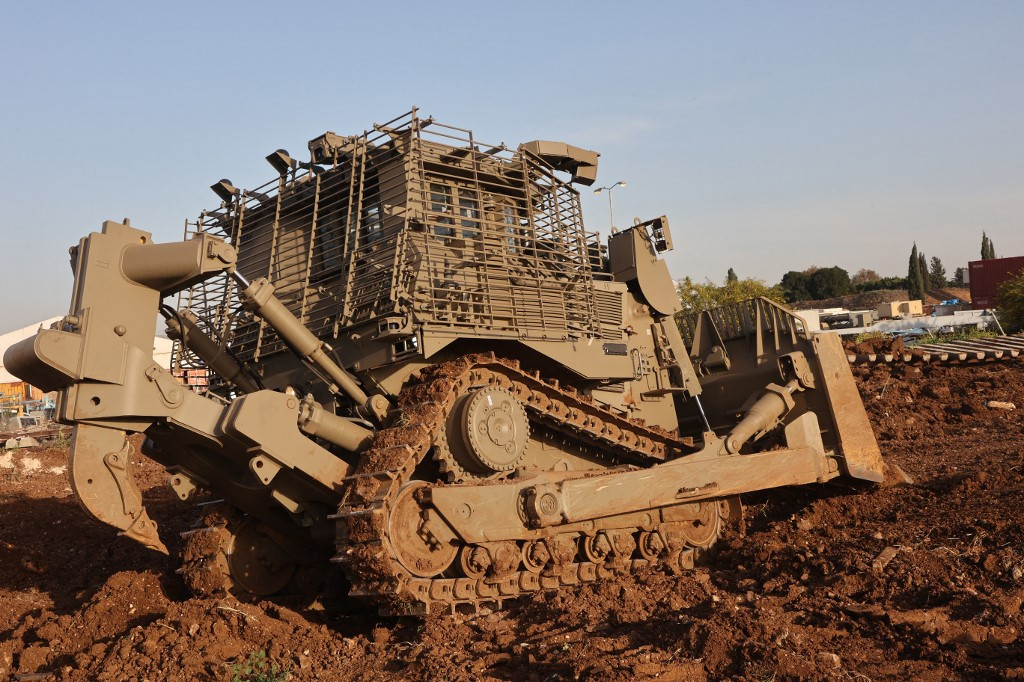
Sarig detailed how Israel’s technological success in various domains, from air defense to blending types of robotics, AI, and autonomous systems, materialized during the recent conflict. In his talk, titled „Robotics and AI: From Theory to the Battlefield,” he highlighted that two decades of developing these technologies enabled their extensive use over the past two years. He presented a video of a six-wheeled unmanned ground vehicle (UGV) and footage of D-9 armored bulldozers and M113 armored personnel carriers, platforms Israel has used as unmanned systems in the war.
Synergy and Adaptability in Critical Missions
The Israeli official spoke about combining different technologies, enabling robots and autonomous systems to work in concert as a group of machines. For instance, several unmanned M113s were used to open routes, while smaller UGVs provided logistics. Sarig specified that these systems can operate in GPS-denied environments, utilizing a multitude of new sensors. „We see these assets operating by almost every unit,” he added, underlining the ubiquitous use of robotics, supported by „tens of thousands of hours” of drone operations and „thousands of hours” of ground maneuver robotics data.
The Future of Ground Combat: Human-Machine Teams
At the same conference, Brig. Gen. Oren Giber, the commander general of MANTAK (the Merkava and Armored Vehicle Directorate in the Ministry of Defense), discussed new technologies for maneuvering forces. He anticipates that the future of ground combat will include tailored robotic systems working alongside armored vehicles. Giber exemplified the concept by using two types of vehicles that work as a team – a leader vehicle and a second vehicle – instead of several main battle tanks. „We can then introduce drones as part of their weapon systems and UGVs as part of the overall concept,” he explained. A video presentation illustrated tanks approaching a position in 2025 and, in a hypothetical scenario for 2032, two vehicles with two robotic UGV wingmen, sent into combat first and networked with their parent vehicles. These UGVs can, in turn, launch small drones and conduct combat operations.
Israel Invests Heavily in Artificial Intelligence
The IDF appears to be pushing robotics further, as a new AI and Autonomy program was declared last year by the ministry, according to Sarig. This program will focus on „force build up efforts to improve the IDF Multi-Domain operational gain.” Earlier this week, the IDF’s C4I and Cyber Defense Directorate announced a new division devoted to AI, named „Bina” (Hebrew for „intelligence”). This division will consolidate several existing disparate AI initiatives and will be led by a brigadier general.
The Beginning of an Unprecedented Revolution
Sarig stated convincingly that „we are only at the beginning of this revolution.” He added that „in the coming years, driven by operational necessity, we will significantly expand our robotic capabilities. Robotics serves as a critical bridge to the world of AI, which, looking forward, will be integrated into every weapon system and into the operational capability of every soldier.”