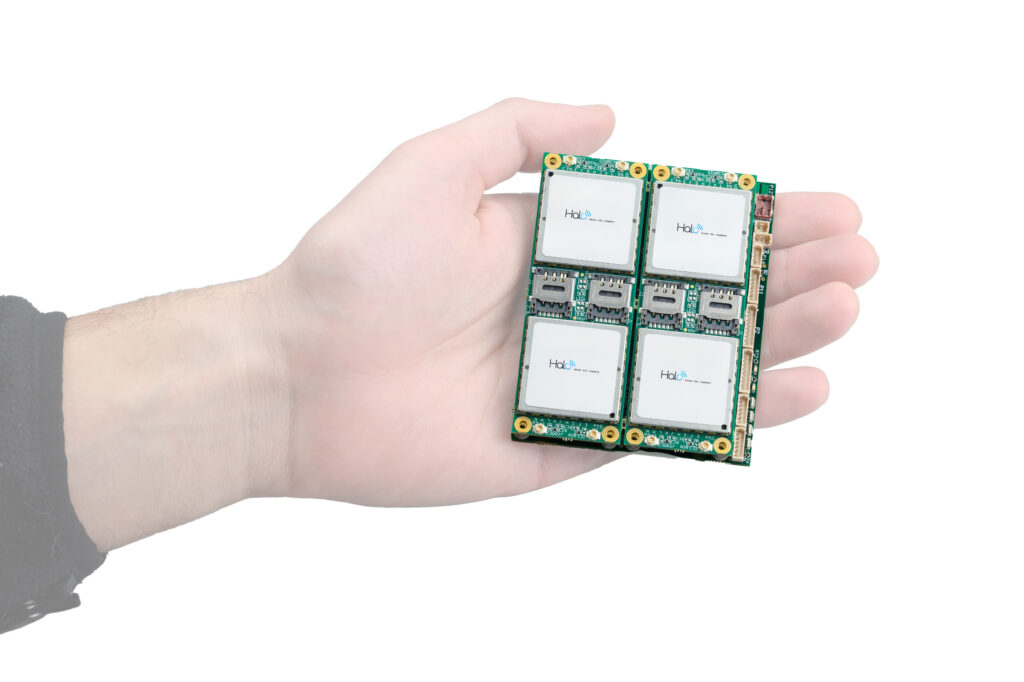
In an increasingly complex conflict landscape, where the lines between the physical and electronic battlefield blur, a persistent threat looms over military forces: communication vulnerability. With the rapid evolution of drones and precision artillery, the enemy’s ability to locate and target command posts or communications personnel has grown exponentially. The answer to this challenge comes not just through thicker armor or increased firepower, but by reinventing how units communicate. A disruptive innovation, known as „Halo,” promises to shift the paradigm, ensuring uninterrupted links even in the most hostile environments.
The Invisible Danger of Connectivity: Military Communications Vulnerability
Today’s military faces a harsh reality: communication systems essential for command and control can become a major vulnerability. The ease with which adversaries can detect the source of these signals turns command posts and comms personnel into prime targets for artillery and drones. By extending communication capabilities beyond visual line of sight (BVLOS) to significant distances, troops can maintain safety in remote locations, while simultaneously controlling complex missions involving multiple unmanned aerial or ground vehicles.
Until recently, traditional military communication solutions – from mesh networks and Software Defined Radios (SDRs) to satellite communications – did not offer an optimal and persistent BVLOS solution under the harsh conditions of modern warfare. Even the use of 4G/5G networks has been limited, and none of these technologies, alone, can guarantee vital connectivity. In the current context, communication has become, alongside mobility, the most crucial element of the operational value chain.
The Electronic Battlefield: A Constant Challenge
In contested battle environments, communication systems face multiple debilitating challenges: jamming, denial of service, spectrum congestion, lack of line-of-sight, degraded satellite links, and adversary intervention. It is increasingly said that today’s battlefield is defined by the electromagnetic spectrum and the cyber domain, where both sides employ offensive and defensive capabilities to dominate connectivity.
To address these challenges, the Halo platform was developed to provide a range of essential technical and operational capabilities.
The „Halo” Revolution: Multi-Link Aggregation and Operational Resilience
The first major innovation of the Halo platform is multi-link aggregation and resilience. Instead of relying on a single communication link (be it satellite, line-of-sight RF, or terrestrial), Halo bonds all available communication links – cellular (LTE/5G), SATCOM, RF/mesh/MANET – into a single, secured tunnel. This means that if one path is jammed, degraded, or denied, the system dynamically redirects traffic over alternative links with minimal interruption. This capability directly addresses the „DDIL” (denied, degraded, intermittent, limited) challenge – situations of compromised, degraded, intermittent, or limited communications – often encountered in electronic warfare contexts.
Connected Intelligence: Adapting to Electronic Warfare
Halo also supports intelligent, spectrum-aware, and link-independent routing. The system continuously assesses link health (latency, throughput, interference) and steers data packets over the best available route in real-time. It is designed to be spectrum-aware, meaning it can detect contested frequencies and automatically switch to stronger bands. In practice, even when an adversary is actively jamming a band or attempting to intercept signals, Halo maintains mission-critical connectivity by shifting to alternate carriers, frequencies, or modalities.
Halo is also device-agnostic, ruggedized, and mission-ready. Designed for BVLOS military applications, it integrates with most unmanned aerial and ground devices. It is built to operate at extreme temperatures, with low Size, Weight, and Power (SWaP) for mobile settings, and is highly portable – weighing just 93 grams for expeditionary deployments.
The Digital Shield: Resistance to Jamming and Spoofing
In today’s contested electromagnetic environment, jamming and spoofing are no longer hypothetical; they are everyday threats. The Halo platform was built from the ground up to ensure communication continuity when the spectrum becomes a battlefield.
At its core, Halo leverages multi-link aggregation, simultaneously bonding cellular (4G/5G), SATCOM, RF, and other data channels into one encrypted communications pipe. This architecture means that even if an adversary successfully jams one or more links, Halo’s intelligent routing engine automatically detects the degradation and reroutes traffic in real time through the remaining viable paths. Operators never lose the connection, even under electronic attack.
Halo also employs adaptive, spectrum-aware algorithms that constantly monitor signal integrity and environmental interference. When jamming is detected, the system can dynamically shift frequency bands or data bearers, minimizing vulnerability to targeted interference.
Against spoofing, Halo’s architecture uses end-to-end AES-256 encryption, mutual authentication, and secure tunneling, ensuring that only verified data streams are accepted. Every packet’s path is validated, eliminating the risk of false signal injection or data corruption.
Finally, Halo’s distributed and transport-agnostic design means there are no single points of failure. By blending multiple carriers and transmission modalities into a unified, encrypted data flow, the system maintains mission-critical connectivity whether the adversary is trying to jam, intercept, or impersonate signals.
Lessons from the Front: Why Connectivity Defines Victory
Modern conflicts prove that communication resilience is as decisive as firepower. From Eastern Europe to the Middle East and the Indo-Pacific, the lesson is clear: connectivity wins battles. Commanders are discovering that when networks fail—whether due to jamming, infrastructure collapse, or cyber interference—situational awareness, coordination, and precision all degrade within moments.
The first key lesson is the critical importance of resilient, redundant, and adaptive communications. Forces can no longer rely on a single channel, frequency, or satellite link. The fight for the electromagnetic spectrum is constant, and the side that maintains data flow despite jamming or denial retains operational tempo and initiative.
Second, there’s a growing recognition that mobility and decentralization demand agile networking. Units are dispersed, platforms are unmanned, and battlefields are data-rich but infrastructure-poor. Systems must automatically connect, adapt, and recover without waiting for human intervention.
Third, global combat experience underscores the need for secure, encrypted pathways that protect against spoofing and signal exploitation. Information integrity is now a survival issue. These lessons directly inform the design philosophy behind the Halo solution: a multi-link, multi-path communications platform that ensures connectivity endures even when the electromagnetic spectrum is contested. Halo embodies the battlefield reality that communication must not just be fast; it must be unbreakable.
The Commander’s Eye: Real-Time Visibility on the Battlefield
In practice, Halo becomes the main proxy or central hub for all data flowing to and from a platform, including telemetry, control, sensors, and other information. Although not a sensor or controller itself, all traffic passes through the system. This provides the operator with the ability to control multiple devices simultaneously and remain in a safe, remote location, whether for ground or aerial vehicles. From an operational perspective, all units benefit from the same ability to be connected to the control center or headquarters, which manages multiple platforms through an additional software management layer.
Operational Simplicity: Accessible Technology for Troops
The Halo platform is engineered for ease of deployment and minimal training overhead, a decisive factor in its selection by a strategic defense innovation unit under a major military program. During Phase 2 evaluations, Halo’s multi-link bonded connectivity demonstrated „mission-ready” performance, integrating seamlessly with existing uncrewed systems and communication architectures.
Because Halo is device-agnostic and operates at a high Technology Readiness Level (TRL 9), field troops can integrate it with current Blue UAS platforms and ground control systems without needing specialized technical expertise. The interface is designed for plug-and-play operation, automatically bonding available cellular, satellite, and RF channels into a single secure communication tunnel, requiring no manual configuration under stress or in combat conditions.
The decision to advance Halo to Phase 3 underscores that operators were able to achieve full functionality with minimal instruction and no additional infrastructure, validating the system’s low learning curve and operational intuitiveness. In other words, Halo „just works,” allowing warfighters to focus on mission execution rather than network troubleshooting.