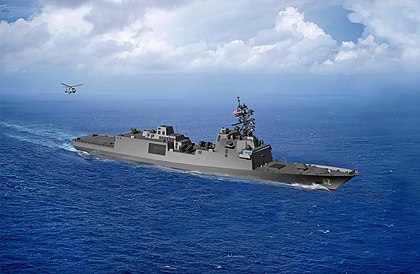
The United States Navy plans to have new frigates, based on an American design, „in the water” by 2028. This aggressive schedule follows the service’s cancellation of the Constellation-class frigate program, signaling a major strategic shift in naval acquisitions.
A New Approach for the Surface Fleet
„We believe the future frigate can be in the water in 2028,” stated Jason Potter, the Navy’s acting acquisition executive, addressing attendees at the Defense Forum in Washington. He emphasized that the Navy is focused on a design approach that separates the finalization of the ship’s design from the construction of the lead vessel. A similar method is already being adopted for its new Medium Landing Ship, aiming to streamline the process and reduce risks.
Constellation Cancellation: Costs and Controversy
The announcement comes shortly after the Navy terminated Fincantieri Marinette Marine’s contract for four of the six Constellation-class frigates it was slated to build. In their place, the Navy will pursue a new class of vessels, while promising Fincantieri piecemeal work from other programs to keep the shipyard afloat. The exact details of this pivot remain unclear.
Navy Secretary John Phelan recently confirmed that the new frigate would be based on an American design and stressed that any change orders would require his direct approval. This stance is a response to severe criticism received by the Navy from lawmakers and outside observers, who blamed excessive design changes to the Constellation-class frigate as the primary cause of its schedule delays and cost overruns.
The Coast Guard Option: A Proven Design?
Phelan also suggested at a private dinner that the new frigate might be a modified National Security Cutter (NSC), a vessel built for the US Coast Guard by HII. A spokesperson for HII, which built NSCs and proposed a modified version in the original Constellation-class competition, stated they are aware of the frigate program’s developments. The company expressed readiness to build whatever the Navy desires, recalling that their previous bid was „lethal, low risk, and affordable.”
Close Collaboration and Evolving Strategy
Jason Potter declined to elaborate on the acquisition strategy for selecting a new frigate design and shipbuilders. However, he highlighted the close relationship between the Navy and the Coast Guard regarding shipbuilding.
„We’re in continuous communication about one thing or another with the Coast Guard and I’d say it’s probably too early to make any declarative statements,” Potter added. This close collaboration could indicate a strategic direction that leverages existing expertise and designs, rather than developing from scratch, to meet the ambitious new timeline.