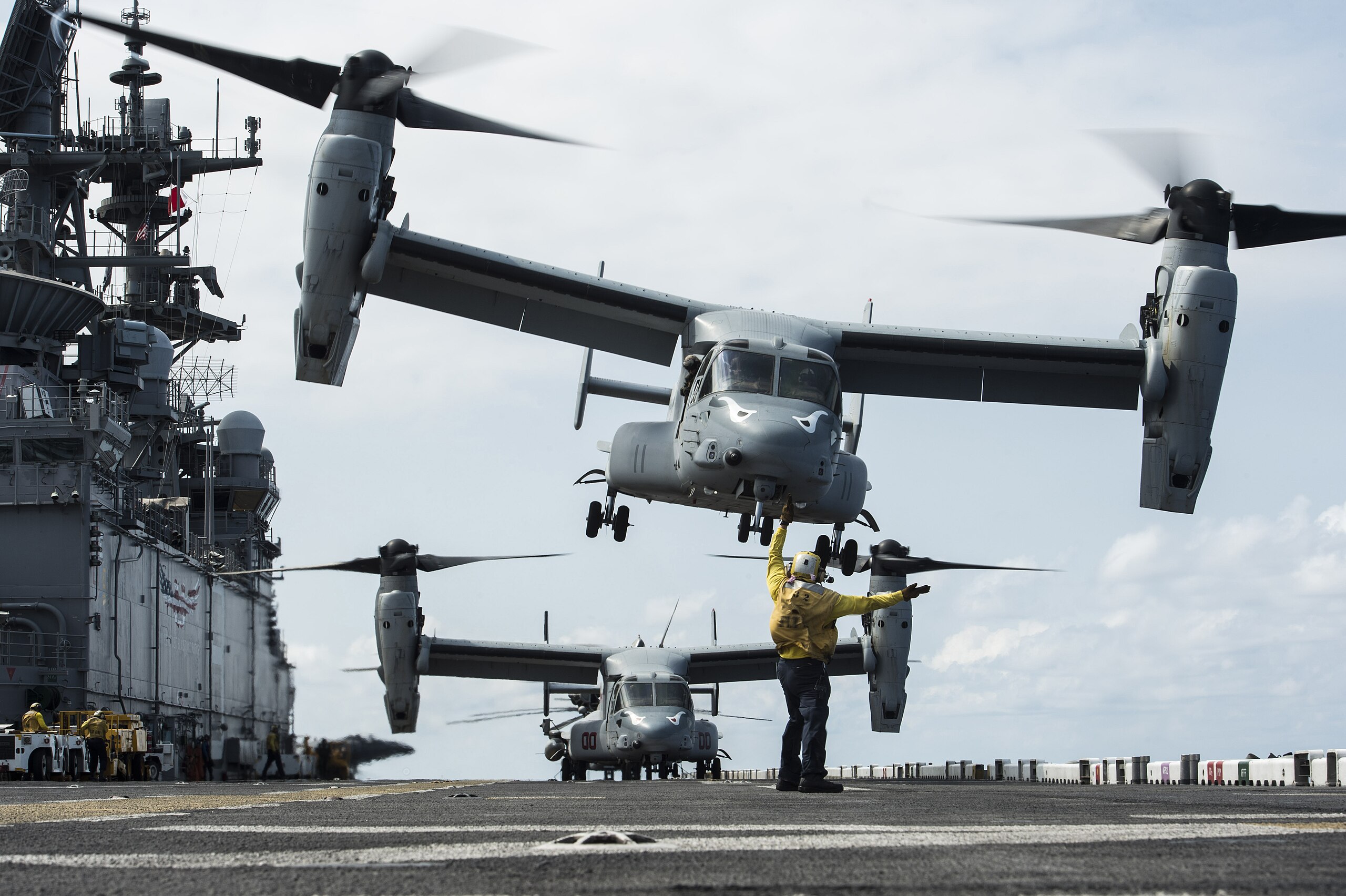
A new analysis by government auditors has cast a harsh light on the safety record of the U.S. Marine Corps and Air Force Osprey fleets, revealing a significant increase in „serious accidents” over the past two fiscal years. The findings underscore growing concerns about the V-22 tiltrotor aircraft, which has been under intense scrutiny following a series of fatal incidents.
A Troubling Trajectory
In fiscal years 2023 and 2024, the V-22 fleets experienced 18 serious non-combat accidents. These incidents, defined by criteria such as fatalities, permanent disability, extensive hospitalization, property damage exceeding $600,000, or a destroyed aircraft, represent a concerning trend. According to the audit, the rates of these serious accidents were between 36 percent and 88 percent higher than each service’s average rate for the preceding eight fiscal years.
While the report refrained from pinpointing specific causes for the recent surge in accident rates, program staffers attributed the V-22’s higher accident rate, relative to other aircraft, to its status as a first-generation tiltrotor. They also cited the aircraft’s „complex and expensive components, which, when damaged, result in higher accident classes by cost.” The comprehensive audit was initiated at the request of a House committee, seeking clarity on accident trends, risk mitigation efforts, and safety information dissemination within the program.
Unaddressed Risks and Urgency
The V-22 Osprey, operated by the Navy, Marine Corps, and Air Force, is a unique tiltrotor aircraft valued for its ability to combine the vertical lift capabilities of a helicopter with the speed and range of a turboprop plane, primarily used for troop and cargo movements. However, a string of lethal accidents in recent years has drawn sharp criticism from lawmakers and external observers alike, leading to the Pentagon’s acknowledgment of several aircraft defects.
The auditors delivered a stark assessment, stating that „Osprey program stakeholders have not fully identified, analyzed, or responded with procedural or materiel mitigations to all safety risks.” Specifically, the report highlighted that while 45 risk assessments had been closed, 34 known system-related risks linked to potential failures of airframe and engine components had not been fully addressed. In essence, the audit gave only minimal credit to the Pentagon’s recent initiatives, concluding that the Defense Department has not done enough to ensure the aircraft’s long-term safety and airworthiness.
Pentagon Pledges Action, Navy Reaffirms Commitment
In response to the critical findings, government auditors issued a series of recommendations to the Pentagon. These included calls for improved identification, analysis, and response to safety risks, the establishment of a robust oversight structure for timely resolution, and enhanced processes for routine sharing of relevant safety data across the services. Peter Belk, acting assistant secretary of defense for readiness, conveyed the department’s concurrence with all recommendations. „As a Department, it is our duty to protect our military’s most valuable asset, our people,” Belk stated, affirming the commitment to integrating safety and risk management into all operations.
Coinciding with the release of the audit, Naval Air Systems Command (NAVAIR) published its own „comprehensive review” of the V-22, initially ordered in September 2023. This review „reaffirmed the airworthiness of the V-22 platform under established controls,” allowing for its continued operation. Vice Adm. John Dogherty, leader of NAVAIR, announced 32 actions identified to „improve safety and readiness,” with „clear, enforceable action plans” already initiated. Dogherty emphasized the V-22’s „unmatched operational flexibility” and the Navy’s continued „commitment” to the program through its mitigation efforts.
A Critical Crossroads
Despite the Navy’s reassurances and commitment, its own report carried a stark warning: „If the V-22 enterprise fails to take immediate and decisive action on the findings in this report, the existing risk mitigation timelines will increase the likelihood of a risk materializing, potentially resulting in catastrophic outcomes, including both fatal and non-fatal consequences.” The dual reports paint a complex picture: a vital aircraft facing escalating safety concerns, prompting urgent calls for systemic change even as operational demands continue. The path forward for the Osprey program now hinges on the rigorous and timely implementation of the recommended safety enhancements to avert future tragedies.