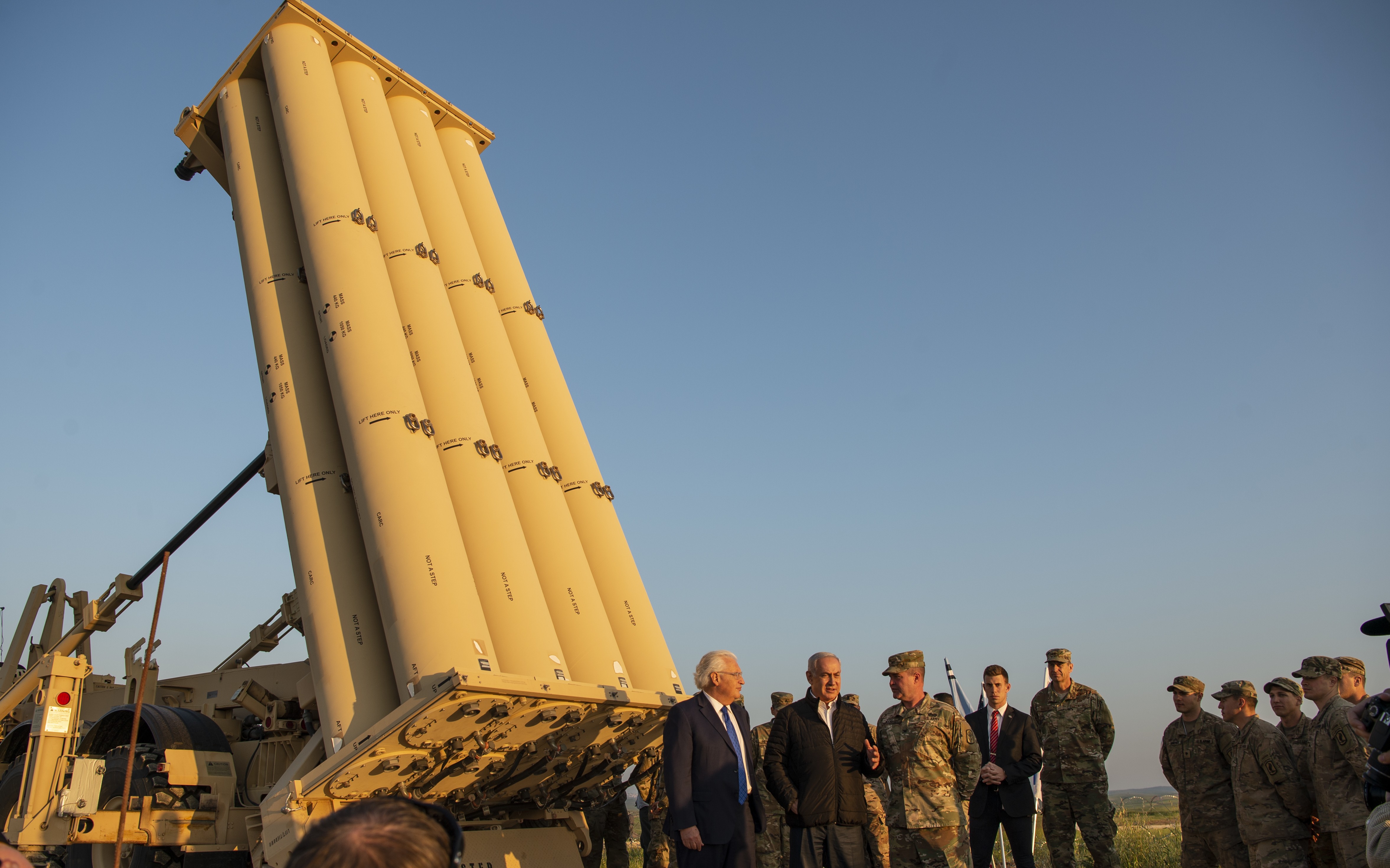
The Missile Defense Agency (MDA) is grappling with a pressing issue: a significant gap between the procurement and delivery of new Terminal High Altitude Area Defense (THAAD) missile defense interceptors. Experts warn that missiles ordered as far back as 2021 are not slated to arrive in the agency’s inventory until April 2027, a situation that could leave U.S. forces vulnerable.
A Dangerous Procurement Lag
„There is a projected gap between July 2023 and April 2027 of deliveries for THAAD interceptors for the United States,” stated Wes Rumbaugh, a fellow at the Center for Strategic and International Studies (CSIS) Missile Defense project, during an online presentation of his recent study on the issue. The CSIS analysis, „The Depleting Missile Defense Interceptor Inventory,” released on December 5, examined not only the THAAD interceptor inventory but also stockpiles of the Army’s Patriot PAC-3 Missile Segment Enhanced, and the Navy’s Standard Missiles-3 and -6.
„You know, it used to be that they said you couldn’t hit a bullet with a bullet. Now we’re doing it so frequently, we’re afraid we don’t have enough of them,” added Tom Karako, head of the CSIS Missile Defense Project.
Dwindling Stockpiles: The Hard Numbers
While exact THAAD and other missile defense numbers are classified, the CSIS study analyzed procurement data from the Defense Department comptroller. The conclusion: MDA currently has a backlog of 100 THAAD missiles – missiles procured between fiscal years 2021 and 2024 but not yet delivered.
„As of the June 2025 budget release, this gap is not slated to end until April 2027 when MDA will receive interceptors that it obligated procurement funds for in FY 2021,” the study says. While estimating the number of missile defense interceptors in Pentagon inventories is „trickier than it might first appear” due to how budgetary data is reported and the gaps between procurement and delivery, Rumbaugh assessed the number of available THAADs to be 534 – at least prior to June, when the US Army reportedly fired an unknown number of interceptors in Israel to help blunt Iran’s missile and drone barrage.
„The United States has fielded eight THAAD batteries, each with six launchers and eight interceptors per launcher, or 48 interceptors per battery. Under this assumption, that would mean that 384 of the previously delivered THAAD interceptors were assigned to fielded THAAD launchers, which would leave 150 for reload and spare capacity,” according to the CSIS study. This number, however, is likely quite a bit lower now, after the Army was reported to have used anywhere from 100 to 250 interceptors from THAAD batteries in defense of Israel.
The Challenge of Replenishment
CSIS stressed that while DoD has „taken some steps” to restore the THAAD inventory, doing so is more challenging than one might think. A primary problem is that „continued budgetary uncertainty will hinder execution and longer-term solutions.” For example, the study found that the Pentagon in May and June „reprogrammed over $700 million into the FY 2025 THAAD procurement program from previously approved Israel Security Supplemental Act funds” – enough to cover 45 missiles at $15 million apiece.
For FY26, MDA asked for 25 interceptors in its base budget request, and 12 more from the reconciliation bill, but uncertainty remains about the fate of the latter request amidst ongoing negotiations with Congress over DoD’s freedom to program reconciliation funds. In any event, CSIS asserted that although „this funding provides a start, it still falls short of replacing even the most optimistic assessments of THAAD expenditures.”
Industrial Base Bottlenecks
The second problem in the Pentagon’s effort to replenish THAAD stockpiles is the inability of the industrial base to ramp up production due to inconsistent financial demand from the U.S. government. This isn’t because production lines at prime manufacturer Lockheed Martin have gone cold; on the contrary, the company announced in January it had delivered the 900th THAAD to date to MDA. „The question is, because the production line isn’t cold — the industry is making announcements about delivering additional THAAD interceptors. And so our assumption is that they’re working on something like an FMS [foreign military sales] case,” Rumbaugh said.
The Pentagon could always insist its orders go to the front of the line, but the study warned against pulling rank. „Simply prioritizing U.S. interceptors and pushing those procurements to the front of the production line risks undercutting future international sales by creating uncertainty about previously agreed delivery schedules,” the study cautioned. „The more often the U.S. jumps the production line, the likelier it is that allies and partners will search for alternative suppliers.”
Charting a Path Forward
Rumbaugh’s analysis suggests that the DoD needs to undertake several key actions to stabilize missile defense interceptor acquisition, production, and ultimately inventory levels, not just for THAAD, but for all its air and missile defense interceptor types.
First, it needs to address budgetary uncertainty and swings in procurement orders year-to-year, largely due to the reliance on supplemental monies. While these funds are often significant, the process doesn’t actually convince industry that continued funding is stable enough for them to invest in increased capacity.
Second, to overcome the problem of long lead times, Rumbaugh’s study suggested that the DoD „could codify additional munitions requirements, including the need for larger stockpiles of replacement interceptors, through the Munitions Requirement Process.” Crucially, any new requirements for THAAD and other interceptors should account for the „high deployment rate” and include both a steady stockpile to meet „the pacing challenge” as well as additional ones for contingencies.
„You got to build the ramp and build a stable ramp for industry to want to walk up that thing,” he said. Otherwise, CSIS bluntly warned, the U.S. military will repeatedly face the same problem of having to scramble to replace depleted munitions across the missile defense sector. „If every use of a U.S. air and missile defense interceptor is going to produce another round of discourse about inventories, then it is time to reevaluate either the deployments themselves or how to procure enough interceptors to avoid handwringing,” the study concluded.