The United States Army has announced the selection of companies advancing to the next phase of its ambitious „Flight School Next” program, a comprehensive initiative aimed at modernizing aviator training at Fort Rucker. This move signals a profound shift in how the Army will cultivate its future pilots.
Key Players Emerge: Bell, M1, and Lockheed Martin Progress to Next Phase
From a competitive field of prime and subcontractors vying to provide the Army’s solution for its new training helicopter fleet and accompanying curriculum, three prominent names have been confirmed for Phase II: Bell, M1, and Lockheed Martin. These companies have stated they will now provide more detailed information on their proposals, „illustrating the full-scale of their turnkey solution.”
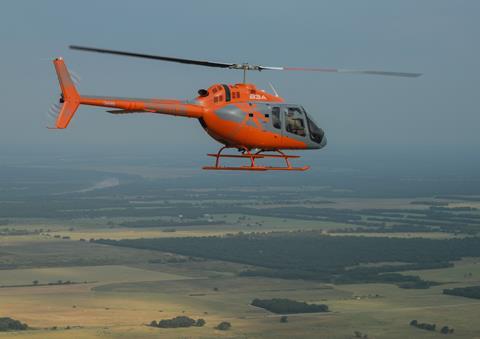
Bell is offering its 505 model helicopter, known for its reliability. M1 is serving as a prime contractor for Robinson Helicopter’s R-66 model, while Lockheed Martin, also a prime, has yet to announce its specific helicopter subcontractor. Roles are clearly delineated: prime contractors will handle finances, major repairs, and broad logistical support, while subcontractors will be responsible for helicopter supply, supply chain management, component-level repairs, and the bulk of the flight school curriculum.
Beyond the Lakota: Why a Simpler Helicopter is the New Mandate
This significant overhaul stems from a pressing need to rethink training methodologies. The Army is actively seeking a less complex and more cost-effective helicopter fleet. Senior officials have previously indicated that the currently used UH-72 Lakota helicopters are too advanced and expensive for initial training, partly due to their dual-engine design. The Lakota was described as „a very sophisticated aircraft that almost flies itself,” which contradicts the Army’s desire to bring aviators back to fundamental skills to prevent future accidents. The service is now specifically seeking a „very simple aircraft,” ideally single-engine, to focus on basic piloting fundamentals.
Airbus, the current vendor of the Lakota fleet, submitted a proposal that included the UH-72 but disputed claims of excessive complexity and cost, suggesting a hybrid single-engine solution alongside the UH-72A to reduce training costs and maximize existing capabilities.
The COCO Model: A Shift Towards Contractor-Led Flight Operations
In addition to acquiring a new fleet, the Army is also restructuring the contract vehicle itself. The program will adopt a new Contractor-Owned, Contractor-Operated (COCO) model, empowering companies to own and run the training program rather than the government – a significant departure from current practices. This model is currently being trialed through a one-year pilot program that began last spring, paving the way for the broader implementation of „Flight School Next.”
Ambitious Scope, Congressional Oversight: Training Goals and Legislative Hurdles
The „Flight School Next” program is ambitious, aiming to train between 800 and 1,500 rotary-wing pilots annually over a 26-year period. The contract award is slated for September. However, Congress will be closely monitoring this timeline. A provision within the recently signed National Defense Authorization Act (NDAA) stipulates that funds cannot be obligated or expended for soliciting proposals or awarding a contract for any transformation of the Initial Entry Rotary Wing training program at Fort Rucker in 2026 until the service’s secretary provides a „detailed report” on the aforementioned one-year pilot program. The NDAA also mandates an analysis of cost-effectiveness and a „rationale for any proposed changes to training systems or platforms.” The Army has not yet commented on this congressional provision.