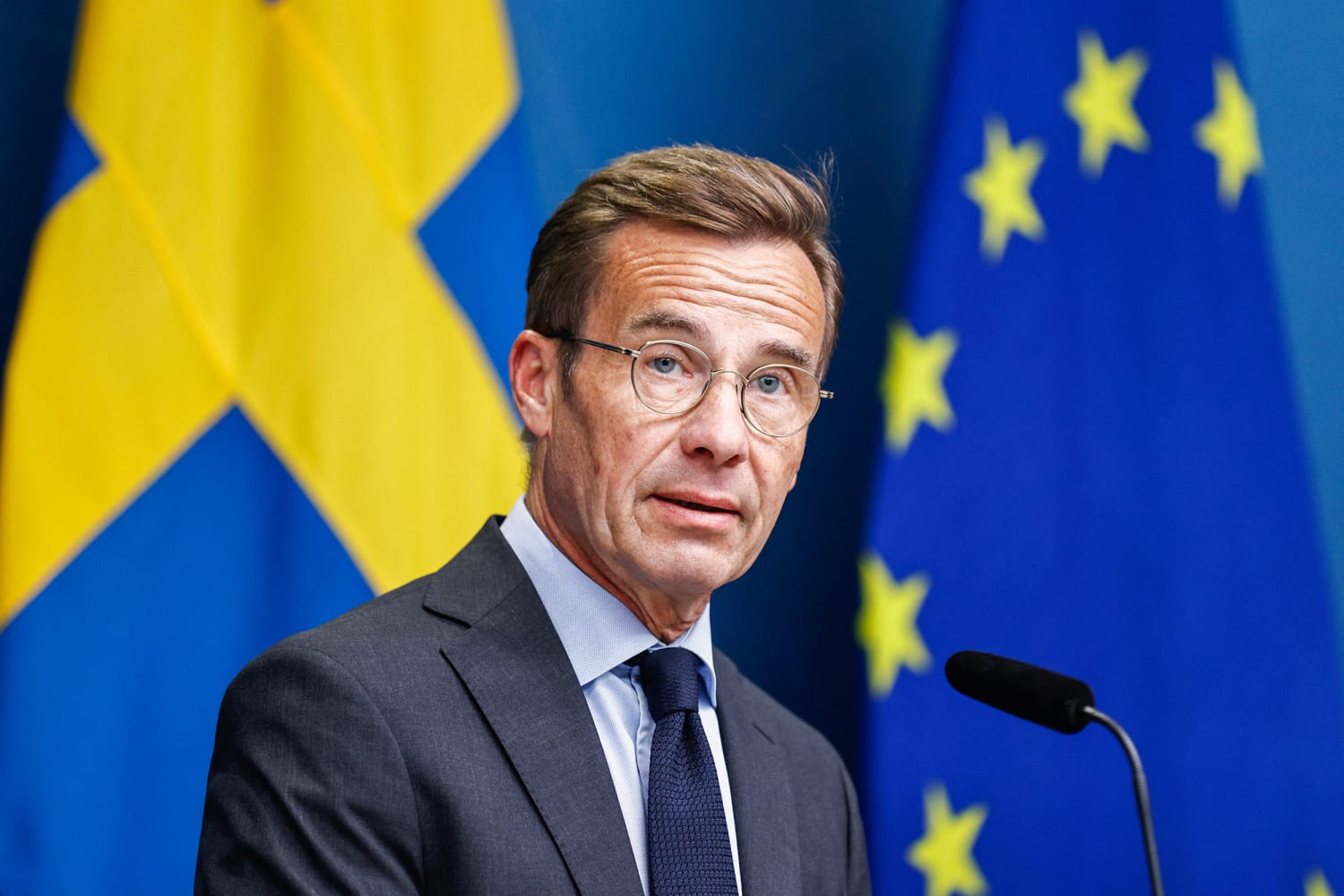
Swedish Prime Minister Ulf Kristersson recently confirmed that Sweden has initiated early discussions with France and the United Kingdom regarding potential cooperation in nuclear weaponry. His revelation, while emphasizing the preliminary nature and lack of concrete proposals or established timelines, marks a significant shift in Stockholm’s approach to the sensitive issue of European nuclear deterrence. This move comes amidst a context of increased geopolitical uncertainty and a re-evaluation of continental security.
Transatlantic Doubts and the Call for European Self-Defense
The background to these discussions is complex. Amidst questions surrounding the United States’ long-term commitment to European security, particularly in light of certain recent American strategies suggesting a reduction in military presence in Europe and an increased responsibility for European nations to handle their own defense, the debate about independent European nuclear deterrence has gained new momentum. France, for example, has repeatedly expressed public interest in discussing nuclear capabilities with other European states.
A New Swedish Stance: From Neutrality to Nuclear Engagement?
When asked how Sweden responds to these French overtures, Kristersson was unequivocal: „Once we joined NATO, we are fully involved in all discussions, including those in Europe concerning nuclear weapons. Not for them to be used, but because, as long as dangerous countries possess nuclear weapons, sound democracies must also have access to them.” Furthermore, regarding Sweden’s possible participation in a French nuclear program, the Prime Minister responded affirmatively, confirming that such discussions are already underway with both France and the United Kingdom. These remain, for now, imprecise, and the French arsenal is „uniquely French,” but Paris is showing openness to collaboration. However, Kristersson emphasized that Sweden does not deem it necessary to place nuclear weapons on its territory in peacetime.
Media Pressure and Swedish Nuclear Expertise
These statements also follow an incisive editorial published by an influential Swedish daily, titled „No one wants to discuss Swedish nuclear weapons, but we must,” which argued that Europe and Sweden can no longer avoid a serious discussion about non-US nuclear deterrence options. The article highlighted Sweden’s potential advantages: its expertise in nuclear technology, accumulated from Cold War research and civil/military programs, alongside a capable defense industry, could grant Stockholm a pivotal role in such a Northern European initiative. Indeed, NATO’s Director of Nuclear Policy has underscored the need for Sweden to communicate to its public the importance of having joined a nuclear alliance.
France and the United Kingdom: Engines of European Deterrence
Historically, France has regarded its nuclear weapons solely as a national guarantee of security. However, President Emmanuel Macron has initiated a debate about extending this protection to European allies, including through coordination with the United Kingdom. In fact, France and the United Kingdom have been bound since last July by the Northwood Declaration, a pledge to coordinate their nuclear strategy, even though France is not part of NATO’s Nuclear Planning Group.
An Echo from the Past: Sweden’s Secret Nuclear Program
This is not the first time Sweden has explored this direction. During the Cold War, the country ran a secret nuclear weapons program, which was abandoned in the early 1970s. Subsequently, Sweden signed the Treaty on the Non-Proliferation of Nuclear Weapons in 1968, relying on the American nuclear umbrella. However, its accession to NATO in March 2024 has opened a new chapter, forcing Stockholm to fully re-evaluate the implications of relying on the alliance’s nuclear deterrence.