The United States Coast Guard is gearing up for a monumental transformation, fueled by a massive capital injection of $25 billion from the recent reconciliation spending bill. The newly appointed commandant, Admiral Kevin Lunday, emphasized the ambition to „supercharge” the force’s capabilities, with concrete plans for expanding the fleet of domestically built icebreakers and an accelerated phasing out of the MH-65 Dolphin helicopters.
Capital Infusion and Strategic Vision
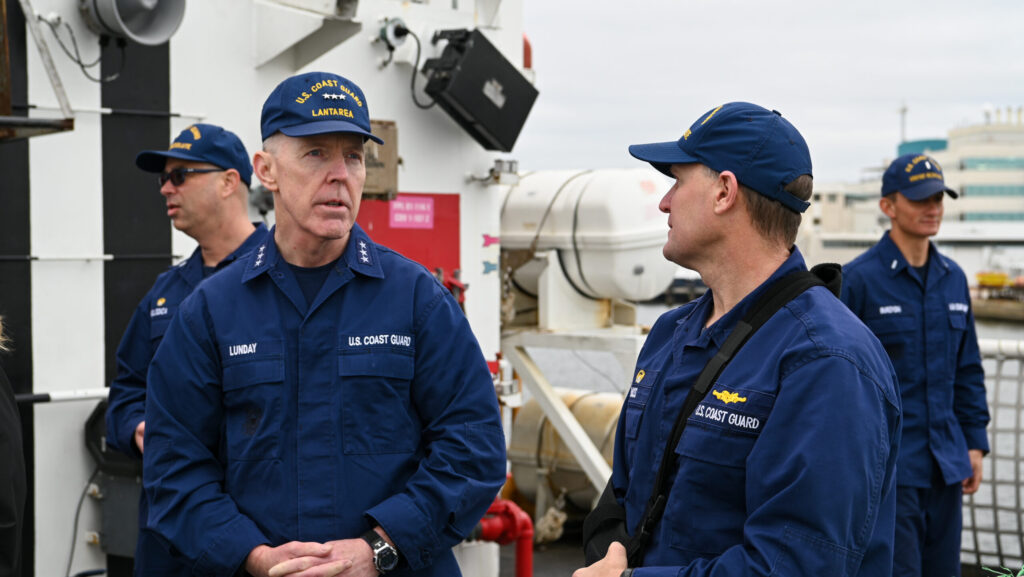
„Supercharge is exactly the right word,” Admiral Lunday told lawmakers. „It is what is fueling the success of Force Design 2028… and moving people closer to the front lines to be able to streamline and create an acquisition and contracting superhighway.” Lunday, who was sworn in as the 28th USCG commandant on January 15, presented his vision before the Senate Commerce, Science and Transportation Committee’s Coast Guard, Maritime and Fisheries subcommittee, answering a range of questions, including those concerning the types of icebreakers.
The Icebreaker Revolution: A National Priority
At the heart of this modernization lies a considerable naval ambition: a fleet of 11 new icebreakers. To date, six contracts for new medium Arctic Security Cutters (ASC) have already been awarded, with two to be built in Finland and up to four on US territory. However, attention is now turning to the remaining five vessels, which could be a combination of ASCs and lighter variants, with a firm requirement that they be built entirely in the USA. „We’re working on awarding additional contracts for five more that will onshore more shipbuilding into US shipyards and strengthen America’s industrial base,” Lunday underscored. Officials are intensely analyzing industry feedback on both variants (light and medium) to develop an acquisition plan. „We don’t have a specific breakdown of which of the numbers of each variant yet,” the commandant added.
Alaska, A New Strategic Point on the Maritime Map
A key aspect of future plans involves the potential homeporting of icebreakers in Alaska. Senator Dan Sullivan, subcommittee chairman, pressed on this topic, and Admiral Lunday confirmed that his team is currently working through options, indicating that up to four of these vessels could be stationed in the Arctic state. „We’re going to have to assign the people very soon, and we’re going to have to make decisions in consultation with the Department [of Homeland Security] and then in communication with Congress on what those home basing decisions will be, and that will happen in 2026,” the commandant explained. This move comes in the context of a previous call from former President Donald Trump, who last year advocated for the acquisition of up to 40 icebreaking vessels in total as part of a long-term modernization effort.
Air Fleet at a Crossroads: Farewell Dolphin, Welcome Jayhawk?
In addition to discussions about vessels, the committee also addressed plans to modernize the helicopter fleet, including the possible acquisition of MH-60 Jayhawk aircraft from Sikorsky. Lunday acknowledged that the service is still deciding what to do with its older MH-65 Dolphin helicopters, manufactured by Airbus. However, it seems increasingly likely that these aircraft will be retired much earlier than the initially envisioned date of 2037. „The Dolphin is much harder to maintain. The original equipment manufacturer doesn’t supply parts, so we’re phasing those out… but we think the sunset is going to come much faster, given the obsolescence,” he informed subcommittee members, signaling a significant shift in the Coast Guard’s aerial strategy.