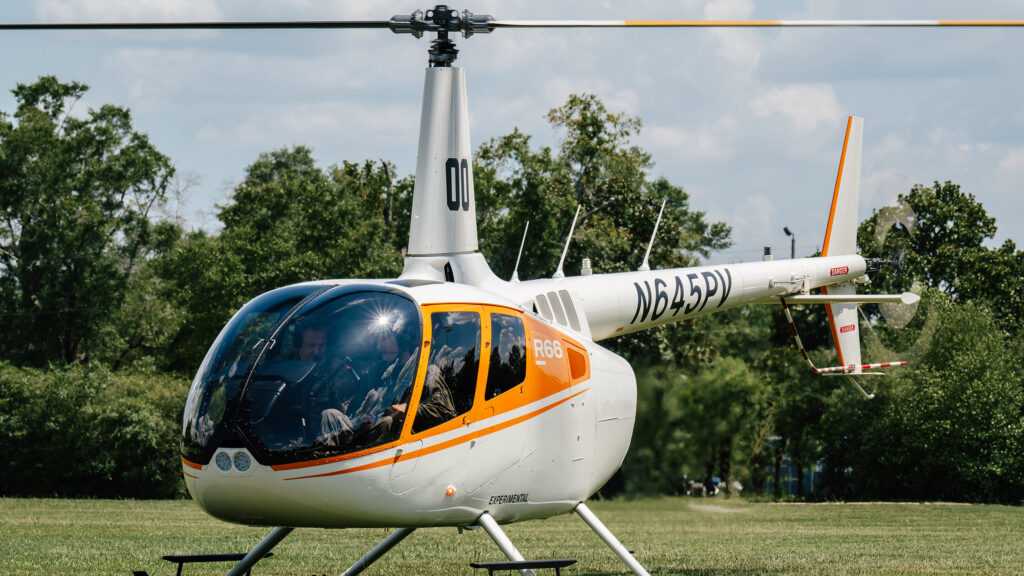
The United States Army has significantly narrowed its search for the future of helicopter pilot training, announcing the selection of three industry giants to advance to the pivotal third phase of its „Flight School Next” competition. This multi-faceted program, poised to revolutionize rotary-wing aviation education at Fort Rucker, now sees Bell, M1, and Lockheed Martin positioned to submit their comprehensive proposals, signaling a crucial step towards transforming how the Army molds its next generation of aviators.
Elite Trio Advances: The Race for Phase III
Confirming their selection to Breaking Defense today, Bell, M1, and Lockheed Martin will now proceed to Phase III, which demands the submission of a full written Commercial Solution Proposal. This marks a critical juncture in the competition, following an earlier Phase II where the same companies presented detailed insights into their pricing structures, innovative approaches, and overarching program frameworks. The rigorous process underscores the Army’s commitment to securing a modern, cost-effective, and high-quality training pipeline.
Lockheed Martin Champions a Comprehensive Vision
„We are grateful for the Army’s confidence in our Flight School Next solution to move on to Phase III,” stated Todd Morar, vice president of Air and Commercial Solutions at Lockheed Martin. The aerospace titan, acting as a prime contractor, revealed its partnership with civilian helicopter manufacturer Robinson, which will offer its R-66 aircraft as a subcontractor for both Lockheed and M1. David Smith, President and CEO of Robinson, expressed pride in this selection, calling it „a decision that aligns mission requirements with fiscal reality.” Lockheed Martin’s long-standing dedication to refining a comprehensive solution aims to deliver fundamentally better aviators through a modern, affordable, and high-quality training system.
Bell Ready to Deliver a Cost-Effective Solution
Bell, competing as an independent entity, is putting forward its proven 505 model for the program. John Novalis, strategic director of Flight School Next at Bell, highlighted the significance of this stage: „This next phase is a critical point in the competition and Bell along with our teammates are ready to demonstrate what we believe is the most cost-effective and low-risk solution for the Army’s next-generation flight training program.” The company is confident its offering will meet the rigorous demands of the Army’s future training needs.
Beyond the Airframe: A New Model for Aviation Training
The Flight School Next program extends far beyond just selecting new helicopters. The Army is actively seeking a completely new curriculum and an innovative acquisition model. Central to this vision is a contractor-owned, contractor-operated (COCO) framework, empowering the selected company to own and manage the entire training program, rather than direct government operation.
Under this COCO model, the prime contractors will be responsible for overseeing finances, major repairs, supply chain management, and comprehensive logistical support. Subcontractors, in turn, will focus on supplying the helicopters and their spare parts, handling component-level repairs, providing technical support, developing the majority of the curriculum, and implementing essential upgrades.
Ambitious Goals and a Tight Deadline
The Army has set an ambitious target to make an award by the end of September. The long-term scope of the program is equally impressive, aiming to train between 900 and 1,500 rotary-wing pilots annually over an extensive 26-year performance period. This signifies a profound and sustained investment in the future of Army aviation.
Uncertainty for Other Contenders
While Bell, Lockheed Martin, and M1 move forward, the status of other companies that initially vied for the program remains less clear. Airbus, the incumbent flight school vendor, responded to the initial call with its UH-72 Lakota fleet, but its current standing in the competition has not been publicly confirmed by the Army. Other notable contenders included Leonardo, proposing its TH-73 helo with Boeing as its prime; MD Helicopters with its 530 model; and Enstrom Helicopters with its 480B. Representatives for Boeing, MD Helicopters, and Enstrom Helicopters declined to comment on whether they would be progressing further in the program, leaving the focus squarely on the three finalists poised to redefine Army flight training.