The experience accumulated by Israeli forces over the past two years, particularly in the Gaza conflict and on other fronts, has not only accelerated the development of major defense systems, such as air defenses, but has also spurred significant innovations in the realm of small tactical equipment, essential for ground troops. A crucial lesson is emerging: battlefield effectiveness depends as much on a soldier’s personal gear as it does on sophisticated aerial platforms.
Frontline Criticism: Unexpected Priorities
Following the devastating attack on October 7, 2023, a chorus of voices from the field signaled shortages not in F-35 aircraft, but in protective vests and socks. This observation, from Tomer Malchi, co-founder and CEO of ASIO Technologies, highlights a huge discrepancy between investments in costly platforms and the evident gaps in equipping maneuvering forces. Deficiencies also included unit-level technologies, vital for daily operations.
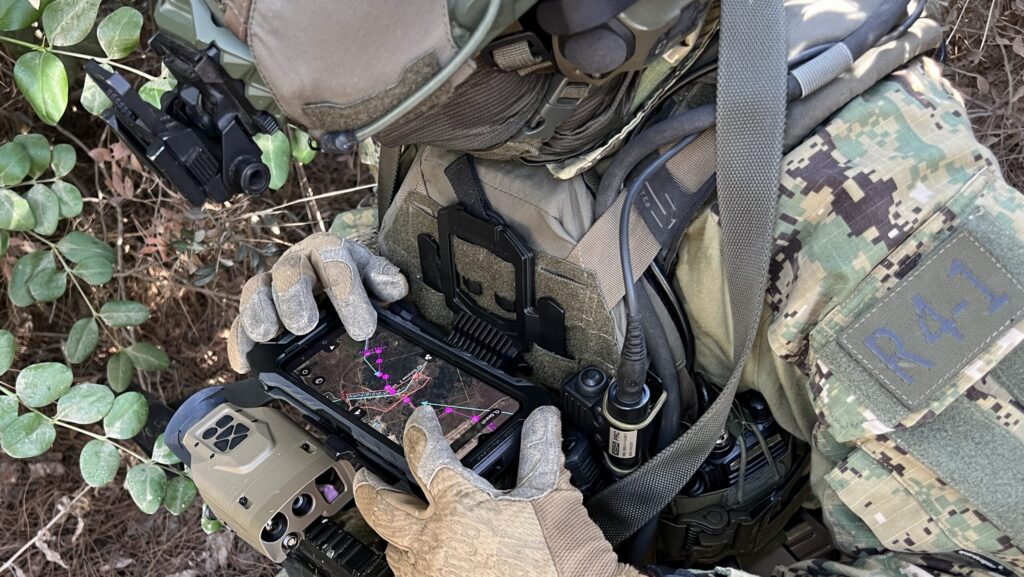
A local company, ASIO Technologies, produces Orion, a handheld „tactical mission enhancement system” designed to provide essential data to ground troops. The system was widely used by ground forces throughout the Gaza conflict, although its development began many years prior.
A Strategic Vision From Six Years Ago
Six years before the events of October, the ASIO team created a ruggedized PDA (personal digital assistant), integrating a GIS (geographic information system) mapping engine with a touchscreen. At that time, three major gaps were identified that technology needed to address, a vision that proved prescient.
Three Essential Gaps: Command, Awareness, Reconnaissance
The first challenge concerned the command and control (C2) system, extending C4I capabilities down to the battalion level. This is a lesson learned from the Israeli experience, but also visible in conflicts like that in Ukraine, where the necessity of putting new technologies directly into the hands of soldiers has become evident.
The second priority was improving situational awareness. Imagine that from a tall building, soldiers can precisely identify a target on a digital map and quickly share the information with nearby units. This capability to locate threats and distribute information in real-time is crucial.
Thirdly, the issue of ISR (Intelligence, Surveillance, Reconnaissance) was addressed, with a focus on tripod-mounted optical solutions that would be lighter and more affordable.
Orion and Lynx: Augmented Reality for Soldiers
From these tactical needs emerged not only the Orion system but also the Lynx monocular imaging device, a portable piece of equipment weighing approximately 650 grams. The Lynx was designed to be mounted on a soldier’s personal gear and connects to the Orion command-and-control architecture. The system can acquire entities and targets, then geospatially fuse them, augmenting them over the real landscape. Experts compare this process to the game Pokémon Go, where tactical information is overlaid onto the real world to identify threats.
A third system developed by ASIO is Nocta, dedicated to unmanned aerial vehicles (UAVs). It uses technology similar to Lynx optics to help drones navigate terrain, correlating captured images with a stored map and generating a precise, low-latency position of the drone, even in GPS-denied environments. This lightweight add-on, weighing approximately 100 grams, represents an essential solution for small drones facing GPS jamming.
Autonomous Navigation in GPS-Denied Environments
One of the major challenges of the recent war was GPS jamming and other technological obstacles. To overcome these issues, Orion was designed to operate offline. The device allows optical data sharing, ensuring communication at battalion and squad levels even in the absence of a signal, providing soldiers with increased operational freedom.
Simplicity, Key to Success for Reservists
Given that most Israeli ground forces are composed of reservists, it was essential for new devices to be intuitive and easy to use, without requiring intensive training. Unlike special forces or regular units with ultra-specialized equipment, the learning curve needed to be minimal. Making the system so simple and intuitive was a remarkable achievement.
Direct feedback from the battlefield continues to inform and refine the Orion system. The ability to fully control a terrain and know the exact position of forces, as demonstrated in Gaza and Lebanon at the tactical level, is fundamental.
Universal Lessons and an Eye on the Future
Orion’s battlefield success has already attracted the attention of foreign militaries, and international trials are well underway. „Maneuvering forces are the most neglected element today and yet the most important,” stated Tomer Malchi. Conflicts from the 1991 Gulf War, to the 2006 Lebanon War, and up to recent confrontations in Ukraine or Gaza, demonstrate that „if you don’t have effective ground forces, nothing happens, but these battalion-level forces are the least equipped.” The technology brought by ASIO addresses the needs for intensity, usability, command and control, as well as situational awareness, with the potential to radically change the paradigm of modern warfare.