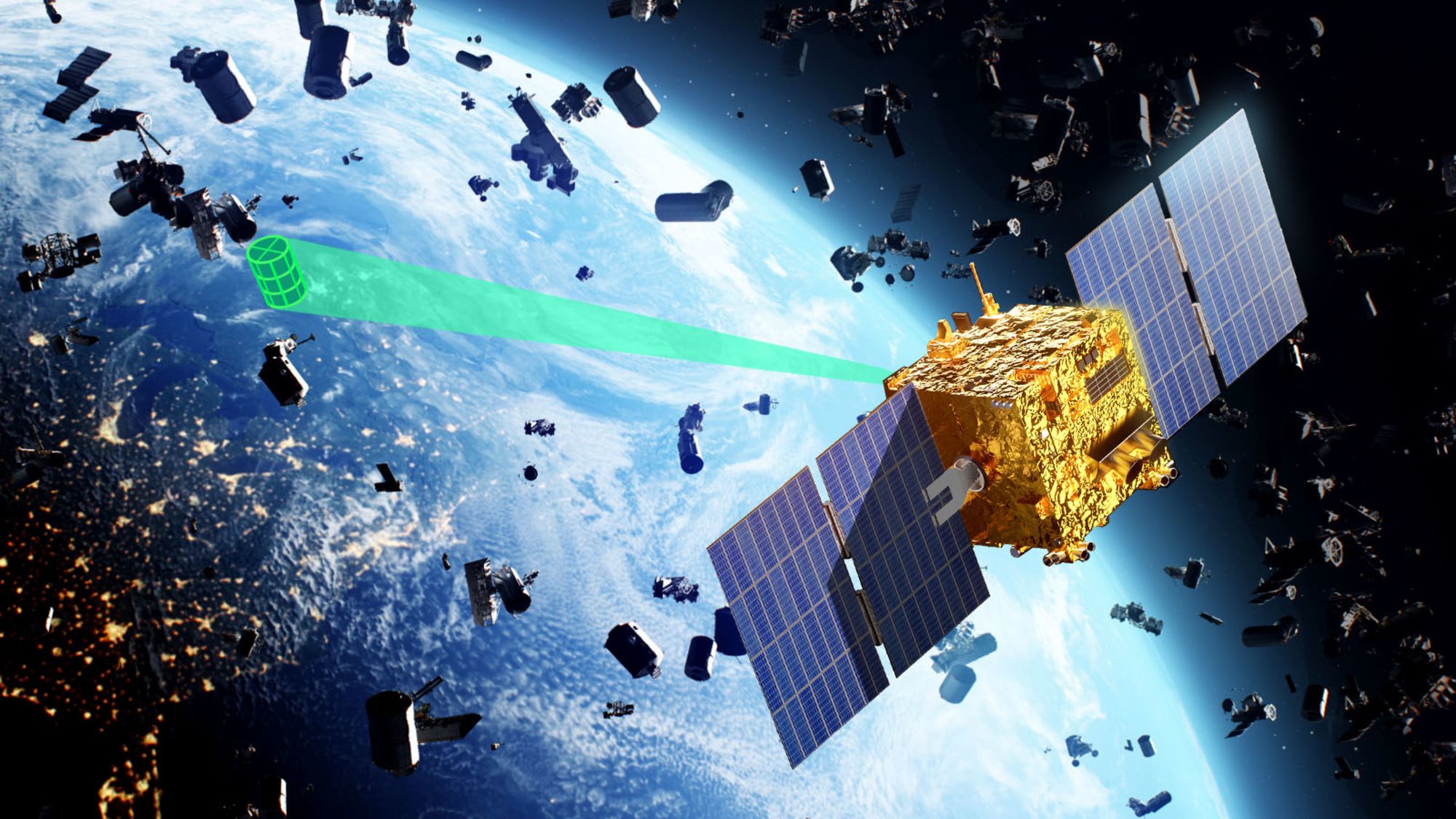
A Race Against Time in Orbit In an era of unprecedented spatial congestion, where the risk of accidental collisions and the specter of escalating military conflicts loom menacingly, a new United Nations working group is convening in Vienna. Its mission is of paramount urgency: to develop practical mechanisms for information sharing, vital for maintaining peace and safety in outer space.
Pioneering Global Space Cooperation The Expert Group on Space Situational Awareness (EG SSA) was established last July under the influential Committee on the Peaceful Uses of Outer Space (COPUOS), at the initiative of the United Arab Emirates, which assumes the chairmanship. Although two preliminary virtual sessions have taken place to initiate dialogue, the current meeting from February 2-13 marks the group’s first in-person gathering. This fact underscores not only the scope but also the imperative nature of the subject addressed.
Unprecedented Opportunity: America’s Call for Tangible Solutions Ryan Guglietta, the US State Department representative at the meeting, enthusiastically welcomed the formation of EG SSA in a written statement on February 6. He described it as „an unprecedented opportunity for Member States to convene their technical experts, both from government and the private sector, for substantive discussions on improving spaceflight safety.” Optimism is palpable, with Guglietta adding: „We are optimistic that the group can deliver practical, tangible outcomes that will help all space actors communicate better and avoid collisions.” The United States delegation, according to a State Department official, is jointly led by NASA and the State Department’s Permanent Mission to International Organizations in Vienna.
Beyond Protocol: Redefining Delicate Relations with Beijing The United States actively supported the establishment of EG SSA as early as 2025, with the primary goal of improving SSA data sharing with partner nations, a necessity amplified by the exponential growth in the number of countries active in space. Although US officials have not publicly named the target countries, China clearly stands at the forefront of the priority list. For years, the Pentagon has notified Beijing about potential dangerous approaches of Chinese satellites, leveraging complex data from the US Space Command (SPACECOM) space surveillance network. These notifications, identical to those provided to American commercial operators, were sent via email to the Beijing Institute of Telecommunications and Tracking Technology (BITTT), the research unit of the People’s Liberation Army Aerospace Forces and the official contact point of the Chinese government for space safety.
A Diplomatic Thaw Fuelled by Orbital Emergencies In the past, a reply from BITTT to SPACECOM was an absolute rarity. A telling example remains the February 2022 incident, when Beijing accused two SpaceX Starlink satellites of dangerously approaching its Tiangong space station. At that time, a SPACECOM spokesperson vehemently lamented the lack of direct communication from China. „The U.S. Government has made repeated efforts, for nearly a decade, to improve bilateral sharing of spaceflight information with the PRC,” the official stated at the time.
However, over the past year, a paradigm shift has been observed by US government and industry officials. Beijing has begun contacting the American side regarding potential collisions. The most notable event was in October, when the China National Space Administration for the first time initiated contact with NASA about a possible collision between satellites of the two agencies and offered to reposition its own satellite. This significant progress is the result of sustained US government efforts to draft cross-agency guidelines last year, designating BITTT as the main communication channel. This initiative helped to „organize” the American response, eliminating confusion previously generated by multiple contacts.
The Path to a Safer Sky: Recommendations and Future Visions Furthermore, in August 2025, an inter-agency group issued a similar set of best practices for American commercial operators, aimed at mitigating potential collisions with Chinese satellites. These guidelines precisely detail when and how operators should contact BITTT after a SPACECOM notification about a possible collision or when they wish to discuss safety precautions or maneuvers. This „thaw” in bilateral SSA relations could catalyze UN negotiations, whose agenda includes essential discussions on „enhanced global operational coordination on SSA data systems and harmonization of data formats across global SSA systems,” as well as the creation of forums for regular information exchanges.
Ian Christensen, senior director of private sector programs at the Secure World Foundation, emphasized that „Chinese stakeholders perceive a stronger need for a government policy structure to enable them to engage directly on space safety.” He expresses hope that, although the Expert Group is a multilateral process, it will contribute to creating the indispensable political conditions for a fundamental improvement in space safety information sharing between the US and China. The group is scheduled to hold an extensive series of meetings, both virtual and in-person, until the COPUOS plenary meeting in 2028, when the final results of its work are expected.