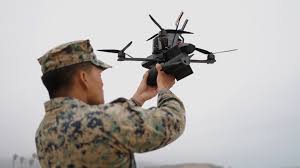
As global powers race to equip their forces for the modern battlefield, leveraging insights from recent conflicts, particularly in Ukraine, the focus on unmanned and autonomous systems has never been sharper. Yet, a critical challenge emerges: it’s not about finding groundbreaking technology, but integrating it effectively into the very fabric of how wars are fought and sustained.
The Adoption Challenge: From Lab to Frontline
The United States military, alongside its allies, faces a unique paradox. While a plethora of viable unmanned technologies exist—many capable of significantly enhancing operational capabilities—the real hurdle lies in adoption, not invention. The true test is how seamlessly these innovations fit into existing military doctrines, operations, and, crucially, how much trust human operators place in both the technology and its intended application. Without this confidence, even the most advanced systems risk languishing, failing to be produced and fielded in the quantities necessary to make a decisive impact.
Beyond Innovation: The Indispensable Role of Industrial Experience
Government leaders, in their pursuit of military advantage, must recognize that the experience and expertise of industry partners are as vital as the technology itself. A revolutionary piece of tech, no matter how „buzzy,” becomes moot if warfighters don’t trust it or if the startup behind it cannot scale production to meet demand. Autonomy and unmanned systems truly deliver an advantage only when underpinned by hard-won experience in hardware manufacturing, robust industrial capacity, and the specialized expertise that comes from real-world application.
Established Players: The Backbone of Future Warfare
For warfighters to widely embrace these systems, they must perform reliably and consistently. This demands a foundation of experience to mitigate risks, ensure high-quality, scalable production, and guarantee readiness for battlefield deployment with minimal external support. It is companies with a proven track record of delivering reliable, maintainable, and effective military hardware at reasonable costs that are best positioned to serve as the bedrock. These entities can provide the robust platforms upon which new autonomous capabilities and enabling software can be seamlessly integrated. Conversely, firms lacking such experience—especially those attempting full vertical integration of autonomy software and hardware—face significant challenges in meeting operational demands, integrating smoothly into military ecosystems, and sustaining operations in austere environments.
Forging New Alliances: Integrating Fresh Perspectives
This is not to say that new entrants should be excluded from the defense industrial base; quite the opposite. Innovative startups, often brimming with groundbreaking ideas, can be strategically combined with seasoned members of the defense industry. A rising trend of teaming agreements between traditional aerospace and defense hardware providers and novel software firms signals a more effective path forward. These partnerships marry the robust manufacturing and integration capabilities of established Original Equipment Manufacturers (OEMs) with cutting-edge specialized software technologies. For instance, the unmanned systems market has seen collaborations between traditional providers and AI-enabled software vendors offering advanced computer vision, perception systems, and mission-focused autonomy, all built around core vehicle autonomy systems designed for open architecture integration. Another emerging business model involves partnerships leveraging commercial mass production capabilities to achieve high-volume output at lower costs, exemplified by unmanned surface vessel makers teaming with existing boatbuilders and shipyards—a rarity just a decade ago.
The Data Advantage: Fueling AI with Real-World Insight
Companies with deep military experience offer another critical advantage: a wealth of high-quality data crucial for training AI models. As defense moves towards an AI-enabled future, the efficacy of these models is directly tied to the quality of their training data. Extensive data derived from autonomous and unmanned operations in real-world threat environments is invaluable. Many firms, operating drones under a contractor-owned and -operated model, have amassed millions of hours of operational data from global deployments, often in challenging conditions. The domain-specific insights gleaned from this data are difficult to replicate and can be applied across a broad spectrum of unmanned and autonomy solutions, from refining target recognition models to enhancing predictive maintenance algorithms.
Security’s Bedrock: Why Experience Endures
As warfighters increasingly rely on autonomous and unmanned systems, the imperative is clear: the defense industrial base needs companies that understand how to develop and build these machines in a manner that aligns precisely with how the U.S. military will fight and sustain them on the battlefield. Ultimately, the discussion revolves around the security of the United States. And for that, experience remains an indispensable cornerstone.