A New Vision for Deterring Aggression
Taiwan’s current defense approach is deemed insufficient to deter Chinese aggression. A recent analysis highlights the island’s urgent need to adopt a new operational concept, one that builds critical mass, offers operational flexibility, and yet remains affordable.
The „Asymmetric Hellscape” Concept
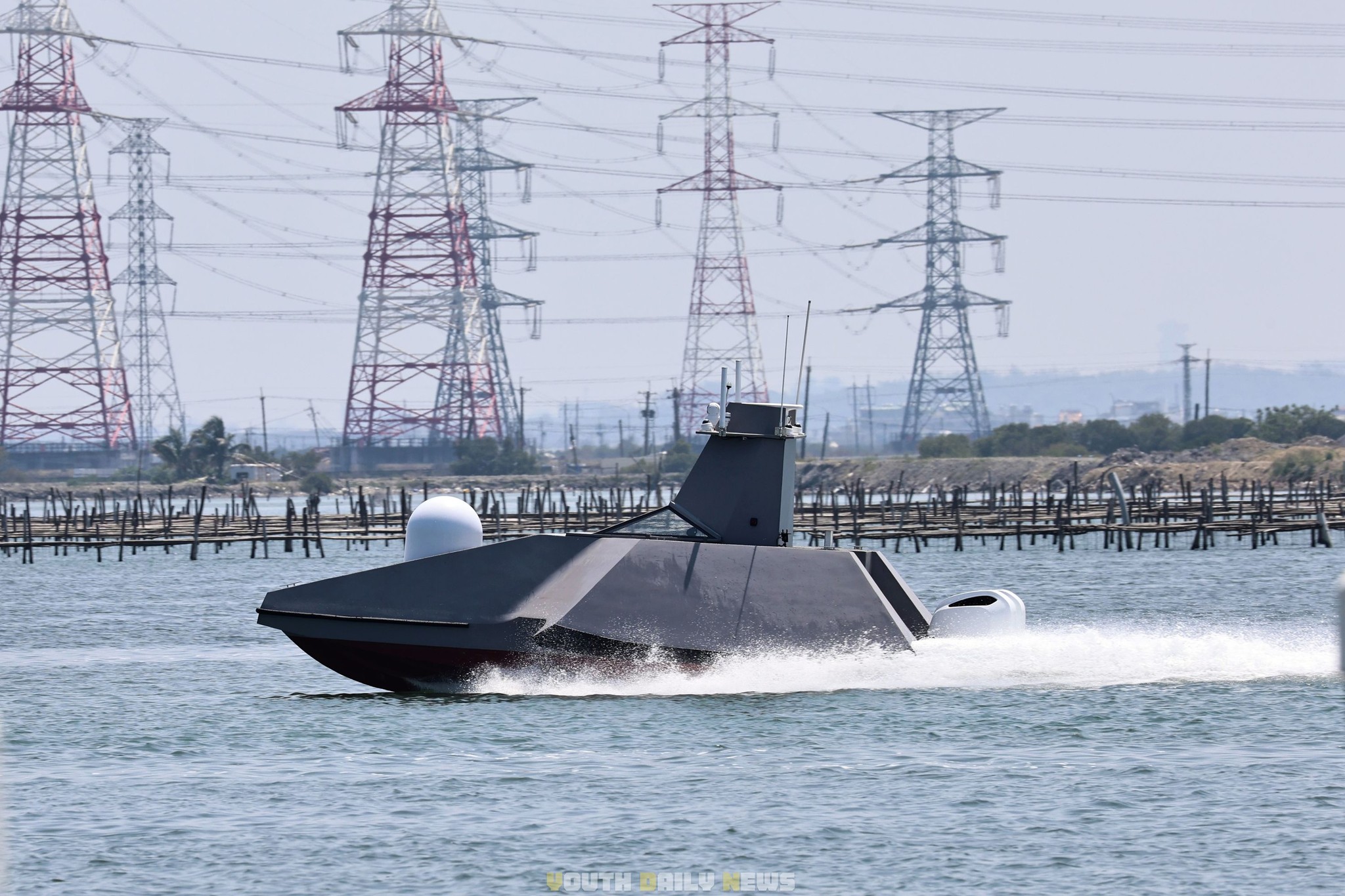
To make an invasion prohibitively costly, analysts propose the creation of a true maritime „asymmetric hellscape,” comprising thousands of drones working in concert with conventional weapons. The primary objective would be to defeat China’s People’s Liberation Army (PLA) at its most vulnerable moments: during its cross-strait transit and when its troops are landing.
Major Challenges on the Path to Reality
However, transforming this vision into reality is not without obstacles. Among the greatest challenges are the lack of a domestic industrial base capable of producing drones at scale and institutional problems within the Taiwanese military. Experts urge Taiwan to allocate more funding for such a plan, instead of continuing to „spend the bulk of its defense budget on large, exquisite prestige weapons.”
Drones could augment Taiwan’s limited stockpile of expensive weapons with precise, affordable mass, producing cross-domain effects while reducing risk to military personnel by employing uncrewed systems for the most dangerous missions. This approach would also fulfill Taiwan’s asymmetric „porcupine” strategy, designed to prevent China from quickly conquering the island by directly counterattacking a conventional air and naval assault with its superior forces.
A 80-Kilometer Maritime Danger Zone
The report proposes establishing a multilayered, 80-kilometer (50-mile) maritime „hellscape” stretching from the invasion beaches the PLA would assault. This zone would include different drone and weapon mixes, aimed at sinking, damaging, or otherwise interfering with the ships bringing in the invasion forces.
It is an operational concept supporting a „defense-by-denial” strategy, aimed at preventing Beijing from achieving its military objective, thereby deterring an attack in the first place. This is achieved by preventing the PLA from transporting enough troops to Taiwan to conquer the island, using an approach designed to remain effective even amid extensive communications and GPS jamming.
Layered Strategy: From Saturation to the Final Blow
The first layer would stretch from 40 to 80 kilometers from the coastline and would utilize a variety of longer-ranged drones – air, sea, subsurface, and even decoy drones – working alongside conventional anti-ship cruise and supersonic missiles to saturate enemy air defenses. „Facing mixed drone and missile raids, Chinese forces would have little time to distinguish sophisticated threats from decoys, forcing them to engage everything. This would rapidly deplete shipboard interceptors, leaving the fleet vulnerable to follow-on attacks,” the analysis states.
This would be followed by attacks on the second layer, which stretches from 5 to 40 kilometers offshore. Here, attacks would target the landing craft carrying troops and equipment from larger landing ships to shore, in an effort to disrupt the PLA’s landing schedule, using extensive pre-laid minefields, and more drone and missile attacks as the attacking PLA forces attempt to negotiate and clear these mines.
The last two layers are located from 5 kilometers to the shoreline and on the invasion beaches themselves. Here, shorter-range, line-of-sight weapons and attack drones with autonomous terminal guidance would come into play, enabling them to go the „last mile” and hit their target without operator input, thus nullifying attempts to jam the link between the drones and their human controllers.
Lessons Unlearned? Criticism of Implementation
The analysis warns that Taiwan’s implementation of its „porcupine” strategy has so far fallen short. Critics, including Trump administration officials, have accused Taiwan of displaying „an alarming lack of urgency” and not spending nearly enough, despite recent increases in defense budgets. It also notes that the conservative Taiwanese military, which already suffers from personnel shortages and insufficient training, has not invested enough in these asymmetric capabilities.
„Beyond its equipment problems, Taiwan’s military suffers from serious deficiencies in manpower, training, and planning that raise doubts about its ability to resist a larger PLA force,” it states. „Without this foundation, military planners struggle to justify procurement decisions, commanders cannot develop realistic training scenarios, and units lack a shared understanding of how they would actually fight.” The result is a force that may possess the right equipment but lacks the intellectual framework to employ it effectively.
The Industrial and Budgetary Imperative
Taiwan is also urged to redirect more of its spending towards the domestic defense industry to manufacture drones locally. President Lai Ching-te’s additional special budget for defense has allocated only 300 billion New Taiwan dollars (approximately $9.6 billion USD) for locally made weapons and three times that amount for weapon systems imported from the US.