As the safety of critical sea lanes comes into dramatic focus following Iran’s closure of the Strait of Hormuz, the United Kingdom’s Royal Navy has announced a pivotal acquisition: a new fleet of unmanned surface vessels (USVs). These advanced drones are designed, in part, to „keep sailors safe on global deployments,” signaling a strategic pivot towards autonomous naval capabilities.
A Shifting Tide: Geopolitical Imperatives Drive Innovation
The Royal Navy’s move underscores a profound shift in global naval strategy, driven by escalating threats to freedom of navigation. With the Strait of Hormuz, a vital artery for global commerce, facing potential blockade, and security incidents on the rise, the imperative for innovative solutions has become critical. These new naval drones promise to redefine how maritime forces operate in volatile regions.
Royal Navy’s New Robotic Arm: The K3 Scout Fleet
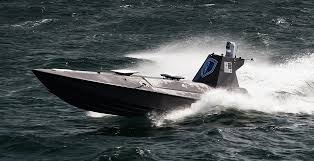
On Wednesday, the Royal Navy confirmed the purchase of 20 K3 Scout Medium USVs from Kraken Technology Group. These vessels are slated for use by the Coastal Forces Squadron and 47 Commando Royal Marines for „operations, training, and development activities to set the foundation for further uses of autonomous uncrewed technology.”
This initiative is part of the Navy’s larger „Project Beehive,” which aims to deliver a „platform to act as a proving ground for future hybrid navy technologies while also providing an immediate operational capability.”
Unmanned Versatility: What the K3 Scout Can Do
The K3 Scout Medium USV, measuring 8.4 meters (27.5 feet) in length and with a maximum displacement of 2,500 kg (5,511 lbs.), is a low-signature craft. It boasts impressive capabilities, capable of speeds up to 55 knots and a range of up to 650 nautical miles. Crucially, the USV can carry a 600 kg payload and is designed for modularity, allowing it to be repurposed for multiple mission sets, including „logistics, search and rescue, survey, ISR (Intelligence, Surveillance, Reconnaissance), strike or kinetic” operations, according to the company.
The K3 Scout can be operated either via Beyond Visual Line of Sight Communications Systems or on local mesh networks, offering flexible command and control for independent operations or collaborative missions with crewed units. Its design allows it to be operable from the mission bays of Type 31, Type 26, and other platforms, providing operational commanders with diverse capability choices.
From Proving Ground to Potential Deployment: Unanswered Questions
The question of whether such an „immediate operational capability” might include a deployment, for instance, to the Strait of Hormuz for mine-clearing operations as part of potential US-Israeli actions against Iran, remains officially unanswered. Second Sea Lord Vice Adm. Paul Beattie described how the „Beehive capability [could] operate alongside existing crewed and uncrewed systems such as the mine hunting capability.”
A Ministry of Defence spokesperson declined to comment on any potential operational deployments due to security reasons. „For operational security reasons, specific payloads will not be discussed. However, the flexibility of the K3 allows rapid integration of a large number of different payloads; this will provide operational flexibility for the [Royal Navy],” the spokesperson stated. Kraken, the manufacturer, also refrained from commenting on any potential deployment to the Middle East.
With Royal Navy and Royal Marines personnel already undergoing training, an „exceptionally capable USV [is expected to be] operational in the next few months.”
Forging a Hybrid Future: The Vision for a Reimagined Navy
The Royal Navy’s decisive move towards USV technology aligns with the vision articulated by First Sea Lord Gen. Sir Gwyn Jenkins in his speech at the DSEI expo in London last September. He stated that the service would be „reimagined” into a „new hybrid navy [featuring] a dispersed but digitally connected fleet of crewed, uncrewed, and autonomous platforms that will redefine maritime military power.”
Kraken Technology Group, the developer, has a strong track record, having participated in various MoD and NATO exercises, as well as US Special Operations Command innovation cycles, underscoring its expertise in advanced naval technologies.