The American space program is facing a significant hurdle. United Launch Alliance’s (ULA) heavy-lift Vulcan rocket has been grounded indefinitely following a technical anomaly, threatening to delay or reassign multiple upcoming strategic missions for the Space Force and National Reconnaissance Office (NRO). This crucial decision casts a shadow of uncertainty over the U.S.’s ability to timely launch key satellites vital for national security.
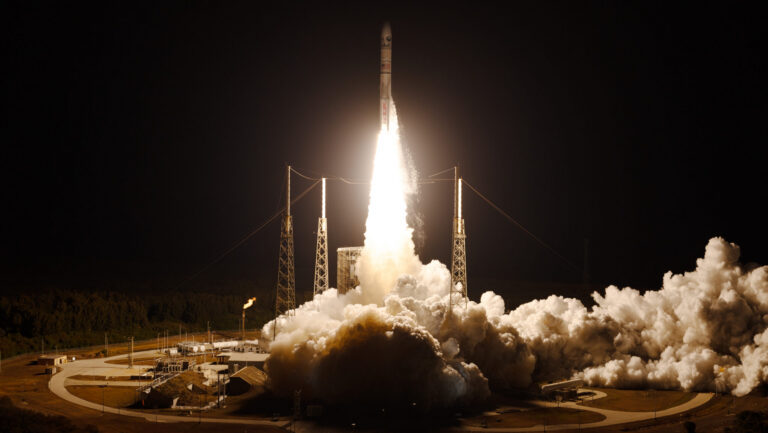
Technical Glitch Halts Launch Schedule According to Lt. Gen. Douglas Schiess, Space Force deputy chief of operations, the service is still „actively looking through what the impacts will be,” but it’s clear that „several launches coming up” could be affected. The issue stemmed from a GEM 63XL solid rocket motor (SRM) anomaly discovered during Vulcan’s otherwise successful Feb. 12 launch of the USSF-87 mission, which carried two Geosynchronous Space Situational Awareness Program (GSSAP) satellites. While the Vulcan booster and Centaur stages performed nominally, the SRM anomaly was significant enough to prompt a full operational pause.
High-Priority Payloads Face Uncertain Future Among the high-priority missions now in limbo are the first Next-Generation Overhead Persistent Infrared – Geosynchronous Earth Orbit (Next-Gen GEO), a joint Space Force-NRO SILENTBARKER neighborhood watch bird, and the Wideband Global SATCOM-11+. Additionally, „some NRO satellites and space domain awareness” satellites are also impacted. The priority of the payload and the immediacy of the planned launch date are key drivers in reassessing the NSSL (National Security Space Launch) manifest. The Boeing-built WGS-11 and the Lockheed Martin-built Next-Gen GEO, with its RTX infrared sensor payload, are closest to their planned launch dates, making them the most vulnerable to delays. Next-Gen GEO, for instance, had already been pushed back from September 2025 due to sensor troubles and the Space Force’s crowded launch manifest.
Space Force Pivots: SpaceX Steps In for Critical Mission In an immediate response, the Space Force announced on March 20 that it has shifted the planned Vulcan launch of the final satellite in the Global Position System (GPS) III series, GPS III SV-10, to a SpaceX Falcon 9. This mission is now expected to lift off no later than the end of next month. Space Systems Command’s (SSC) Delta 80 team, which manages the NSSL program, „continues to evaluate specific launch manifest impacts resulting from the anomaly… and adjust as necessary,” an SSC spokesperson stated, emphasizing the commitment to providing „responsive and reliable launch to deliver critical capability where and when it’s needed.”
Intensive Investigation Underway for Root Cause and Correction A ULA spokesperson confirmed that an „integrated” US government and contractor team „is reviewing the technical data, available imagery and collecting any debris.” ULA is working closely with Northrop Grumman, the provider of the GEM 63XL motors, and has established an investigation team. „Until the team has reviewed the data, inspected all available evidence, and developed and implemented corrective actions, we will not fly another Vulcan mission,” ULA clarified. Furthermore, ULA and Northrop Grumman „are working on integrating a planned GEM 63XL upgrade for the next Vulcan mission,” indicating a long-term improvement effort. This forced pause underscores the inherent complexities and risks of modern spaceflight, with direct implications for the United States’ strategic security and capabilities.