In an era of shifting global security paradigms, France is doubling down on its military might. The French government announced today a €36 billion ($42 billion) boost to its defense budget over the next four years, a cornerstone of an updated military planning law designed to bridge the gap between legacy systems and the battlefield of the future.
A Historic Financial Leap: Spending Doubles in a Decade
The revised bill, introduced today by Armed Forces Minister Catherine Vautrin, earmarks €63.3 billion ($74 billion) for defense in 2027. This landmark figure represents a 100% increase in defense spending over the last ten years. Projections show the trajectory continuing upward, with total annual spending expected to hit €76.3 billion ($89.1 billion) by 2030.
While substantial, this budget accounts for roughly 2.6% of France’s GDP. This remains notably below the 3.5% target set by NATO members at last year’s summit for the 2035 horizon. Furthermore, these allocations remain subject to the political winds of the French Parliament, which must approve the figures annually.
The Armor Gap: An Interim Tank to Bridge the 2040 Horizon
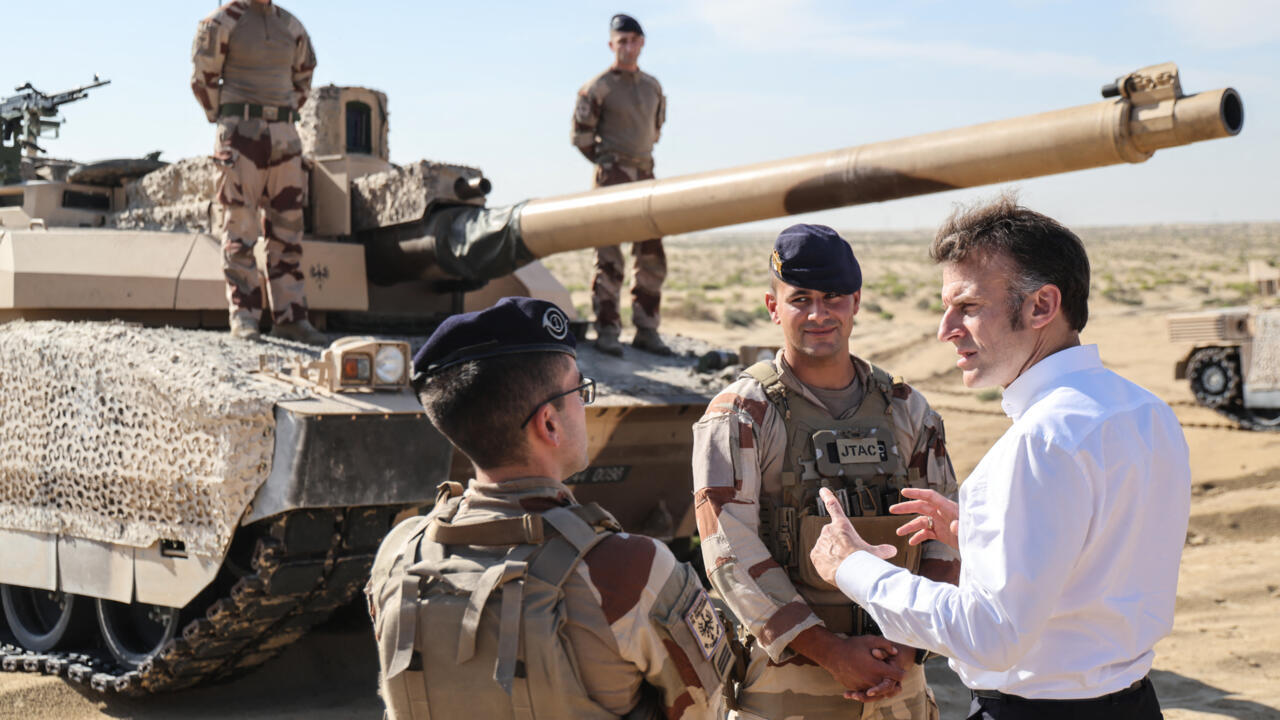
A critical highlight of the new strategy is the recognition of a looming capability gap in ground warfare. As the current fleet of Leclerc main battle tanks approaches the twilight of its operational life and the joint Franco-German Main Ground Combat System (MGCS) remains years away, Paris is considering a „stopgap” solution.
“Our current Leclerc tanks will last until 2040, but the MGCS project will take about another decade… We need an interim tank,” Minister Vautrin stated. The proposed platform would likely be a KNDS Germany or KNDS France chassis equipped with a French-designed turret. This move follows competitive pressure from firms like Rheinmetall, which has recently showcased its own medium-term solutions, signaling that France is unwilling to wait indefinitely for stalled multinational projects.
Dominating the Domains: Space, Drones, and Deep-Strike Capabilities
The modernization drive extends far beyond the mud of the battlefield. France plans to invest €3,9 billion to fortify its space-based surveillance and communication networks. On the personnel front, the Ministry aims to bolster its reserve forces to 50,000 by 2030, bringing the nation’s total trained military strength to 330,000.
The future of French strike power, however, lies in unmanned systems and long-range precision. Between 2026 and 2030, €8.5 billion will be funneled into the procurement of drones and missiles. The goal is a comprehensive fleet ranging from small FPV units to strategic assets capable of „deep strikes” reaching targets over 2,500 kilometers away.
To counter similar threats from adversaries, Paris is dedicating €1.6 billion to anti-drone technology, including laser-guided rockets and truck-mounted cannons. Highlighting the urgency, a new tender was launched today for interceptors capable of neutralizing heavy drones weighing over 100kg and traveling at speeds of up to 600 km/h—a clear admission that current technologies are no longer sufficient for the high-speed, high-mass threats of tomorrow.