In a high-stakes demonstration of maritime surveillance, London has exposed a covert Moscow operation targeting critical deep-sea infrastructure. For over a month, British naval and air assets tracked every move of a Russian incursion that threatened the undersea cables serving as the invisible backbone of global communications.
A Shadow War Over Critical Infrastructure
British Defense Secretary John Healey issued a direct challenge to the Kremlin, confirming that the UK, alongside its allies, monitored „every mile” of a Russian deployment in and around British waters. The operation involved an Akula-class submarine and two specialized surveillance vessels from the Main Directorate for Deep Sea Research (GUGI). While no physical damage to pipelines or cables was reported, London officials characterized the activity as a clear mission of espionage and preparation for potential sabotage.
Diversionary Tactics and Subsurface Surveillance
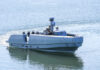
Military intelligence suggests the Akula-class submarine was likely deployed as a decoy to divert attention from the GUGI vessels. These specialized spy ships spent significant time hovering over strategic infrastructure points in the North Atlantic. Experts warn that these vessels are purpose-built to install wiretaps or gather intelligence to support contingency plans aimed at disrupting NATO communications during times of conflict.
The counter-operation was massive in scale: a Royal Air Force P-8 Poseidon logged over 450 flight hours, while the frigate HMS St Albans covered thousands of nautical miles to maintain a constant watch. Norway provided critical support in this coordinated response, deploying its own patrol aircraft and frigates to secure the northern corridors.
Naval Capacity Under the Microscope
This undersea standoff arrives at a time when the Royal Navy’s resources are under intense scrutiny. Concerns have been raised regarding the „hollowing out” of naval capabilities over the past decade, highlighted by recent struggles to deploy Type 45 destroyers to key regions. As allies like Germany step in to fill operational gaps in NATO missions, the UK government has pledged an additional £300 million for shipbuilding to bolster the fleet.
Despite the resource strain, the message from London remains uncompromising: any attempt to sabotage subsea infrastructure will lead to „serious consequences.” While specific military responses remain classified to keep Moscow guessing, the UK’s message to Vladimir Putin was clear: the era of unmonitored Russian activity in the North Atlantic is over.