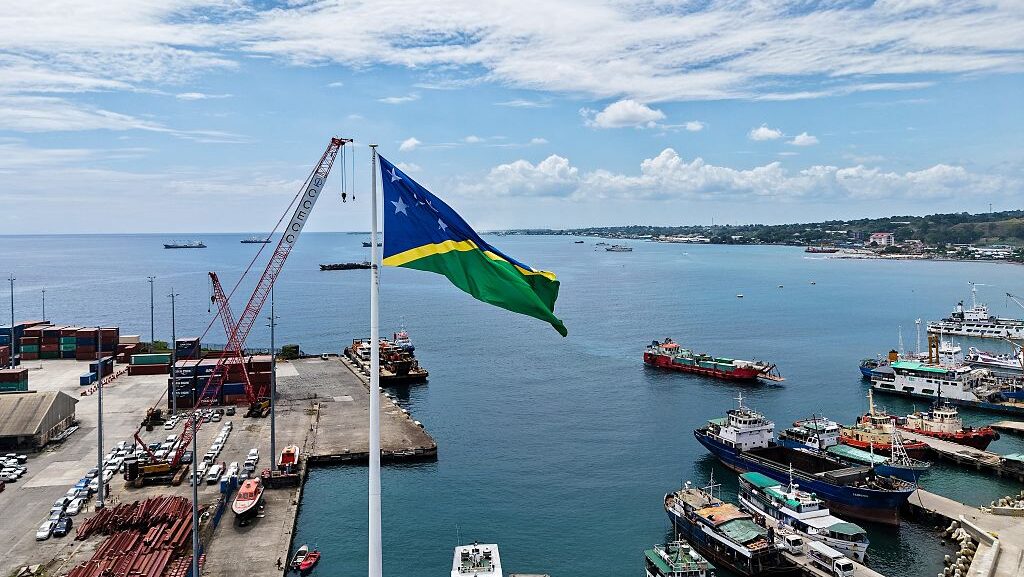
While the world’s gaze is fixed elsewhere, Beijing is quietly weaponizing critical infrastructure across the South Pacific. Under the guise of commercial development, local airstrips and harbors are being repurposed to accommodate Chinese military assets, signaling a profound shift in the region’s geopolitical landscape.
Militarization Under a Commercial Veil
Chinese state-owned enterprises are leading an ambitious effort to overhaul regional infrastructure, tailoring it for military use. A prime example is Vanuatu’s Luganville Wharf, which has seen significant renovations and is now capable of docking large Chinese warships.
Recent assessments identify nearly 40 such „dual-use” facilities throughout the region, representing a $3.55 billion investment. These projects, which include extending runways and deepening harbors, align with Beijing’s „military-civil fusion” doctrine. If fully realized, this network would grant China unmatched operational reach and maneuverability during a regional crisis.
Washington’s Strategic Blind Spot
Despite the clear trajectory of these developments, U.S. national security strategies have yet to fully acknowledge the threat. The deployment of Type 055 destroyers—China’s most advanced surface combatants—to small regional ports indicates that these sites are already under strategic consideration as potential logistics hubs or staging grounds.
In a conflict scenario, these island bases could enable China to disrupt fuel and ammunition shipments, severing the coordination between U.S. and allied forces. What is presented as a commercial pier today could become a combat launchpad tomorrow.
A Layered Counter-Strategy
To meet this challenge, defense planners must move beyond traditional diplomacy. A primary step involves strengthening maritime cooperation with Pacific Island nations. Enhancing U.S. Coast Guard „shiprider” agreements offers regional partners security and disaster relief capabilities without forcing them to cede operational control of their facilities to foreign powers.
Furthermore, the Department of Defense must standardize the criteria for „dual-use” hubs and incorporate them into formal contingency planning. High-priority sites must be analyzed for their military specifications and published in annual power reports to ensure visibility and readiness.
Monitoring and the Bottom Line
The final pillar of a counter-strategy is real-time intelligence. Establishing a Pacific Fusion Center to aggregate maritime data would allow regional partners to track Chinese naval movements and monitor infrastructure modifications as they happen.
While these initiatives require funding, they remain a cost-effective alternative to trying to outspend Beijing’s infrastructure bribes. By leveraging existing funding frameworks, the U.S. can build a presence-based strategy that counters China’s ambitions. In an era where the boundary between trade and warfare is increasingly blurred, complacency is a luxury Washington can no longer afford.