40 Seconds to Survival: The Lethal Lesson from Ukraine
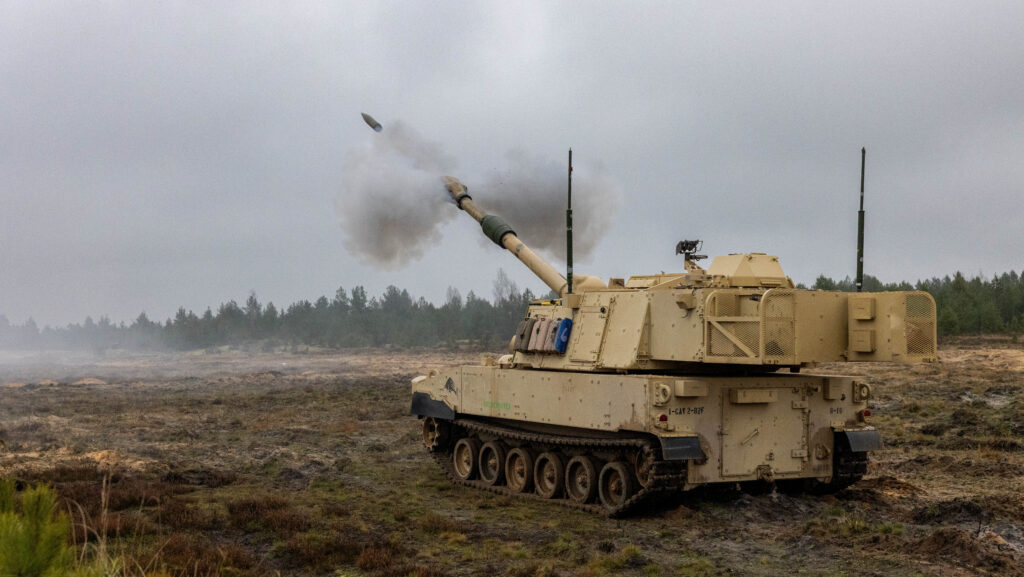
In a decisive shift that redefines the future of land warfare, the US Army has signaled it will stop purchasing the M109A7 Paladin Integrated Management (PIM) howitzers. This strategic pivot, revealed during recent budget testimonies, marks a move away from legacy heavy armor toward ultra-mobile artillery systems capable of surviving a battlefield now dominated by loitering munitions and rapid electronic detection.
Army Secretary Dan Driscoll highlighted a stark operational reality: the Paladin takes nearly 15 minutes to deploy, whereas the next generation of mobile tactical cannons can be ready in just 40 seconds. In the context of the war in Ukraine, that time difference is the margin between a successful mission and total destruction. „The Paladin is simply incapable of operating at the necessary speed,” Driscoll told lawmakers, emphasizing that while current assets will be maintained, new taxpayer investments must secure a more agile platform.
Budgetary Axe: Fiscal 2027 Slashes Paladin Procurement
The Army’s commitment to this new direction is mirrored in its fiscal 2027 budget request. The service has proposed a dramatic cut to the PIM line, asking for a mere $84 million—a fraction of the $715 million allocated in fiscal 2026. Crucially, documentation indicates that these remaining funds will not be used to buy a single additional howitzer.
Acting Chief of Staff Gen. Christopher LaNeve reinforced the necessity of shedding weight to increase lethality. As the Army prepares for „pacing threats,” the focus has shifted toward lightweight systems that can be rapidly deployed globally and maneuvered effortlessly across contested terrain. The goal is no longer just firepower, but „fires at speed.”
Beyond the ERCA Failure: Scouring the Globe for a Successor
This pivot follows the 2024 collapse of the Extended Range Cannon Artillery (ERCA) program, which attempted to mount a massive 30-foot gun tube onto the Paladin chassis. The project was shuttered after live-fire tests revealed catastrophic wear and tear. Having learned from the failures of ERCA and the cancelled Crusader project of the early 2000s, the Army is abandoning the „build from scratch” philosophy.
Instead, the service has embarked on an international „roadshow,” evaluating battle-proven systems from global industry leaders such as Hanwha, Rheinmetall, Elbit Systems, and BAE. The strategy is to acquire an existing, high-performance self-propelled howitzer to fill the gap immediately. If the current timeline holds, the Army expects to award a contract for this new mobile cannon by July, ushering in a new chapter for American field artillery.