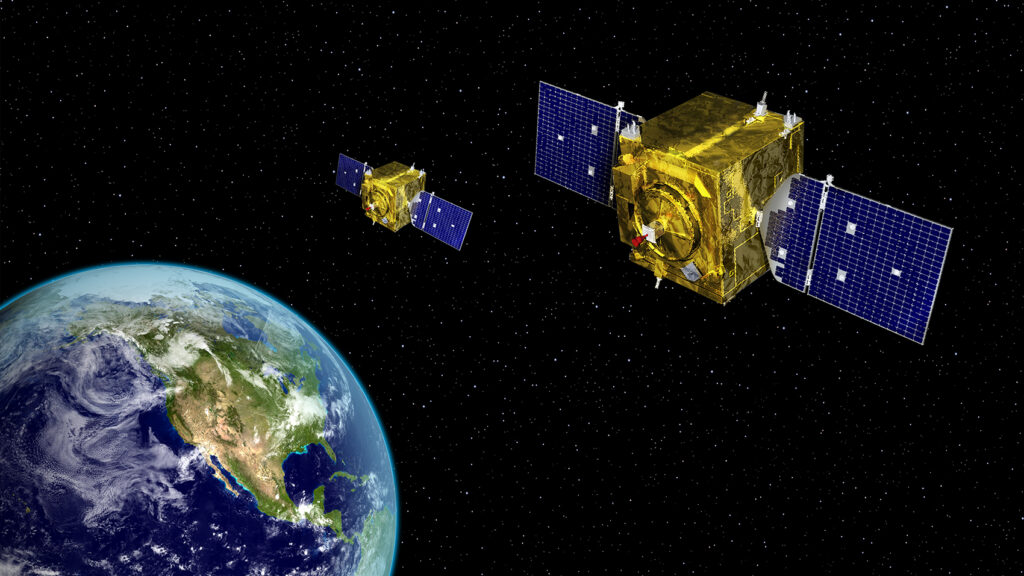
In a strategic move to safeguard critical American assets in outer space, the Space Rapid Capabilities Office (Space RCO) has awarded three key contracts for the development of next-generation radar warning receivers. The project aims to equip the future generation of military satellites with systems capable of detecting, in real-time, whether they are being monitored or targeted by ground-based enemy radars.
Tactical Awareness: „Eyes in the Back of the Head” for Geosynchronous Assets
The contracts, valued at $3 million each, were awarded to Assurance Technology Corporation, Raptor Dynamix, and Innovative Signal Analysis. The primary objective is to implement the concept of „own-ship awareness,” a function now considered essential in the increasingly contested modern orbital environment.
The Director of Space RCO emphasized that this data is no longer a luxury but a mandatory military standard: satellites must know if they are being tracked to react accordingly. The new sensors will allow the Space Force to distinguish between routine observation and active targeting, radically improving the survivability of space infrastructure.
The Andromeda Program: The Era of Maneuverable and Refuelable Satellites
This warning technology will be integrated into future satellites under the „Andromeda” program, designed to be far more agile than current surveillance constellations. Unlike older models, these new platforms will be capable of on-orbit refueling, granting them an extended lifespan and the ability to perform complex maneuvers to evade threats.
The current effort builds on the success of previously launched prototypes, which demonstrated „quasi-operational” success in monitoring external attempts to pinpoint U.S. satellites. The focus is now shifting toward miniaturizing these sensors and reducing power consumption to allow for their integration across a broader range of small-scale satellites.
Call to Industry: Seeking Optical Threat Warning Technologies
Space RCO’s plans extend beyond radar detection. The office has already issued a request for information (RFI) to the private sector to identify vendors capable of delivering mature technologies, including optical payloads for threat warning. Interested firms have until mid-May to present solutions that can be rapidly integrated into the U.S. space defense architecture, ensuring the nation maintains its technological edge over global competitors.