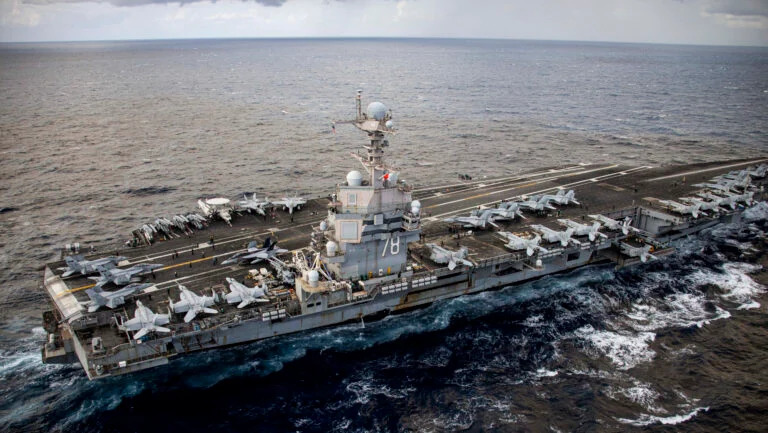
The United States Navy is set to revive the legendary battleship, but with a futuristic, nuclear twist. The upcoming Trump-class vessels will be powered by the same cutting-edge nuclear reactors found on the Gerald R. Ford aircraft carriers, signaling a seismic shift in maritime defense strategy and global power projection.
A Carrier’s Heart in a Fortress of Steel The decision to implement the A1B nuclear reactor—the powerhouse of the world’s most advanced aircraft carrier—underscores the Pentagon’s massive ambitions. Admiral Daryl Caudle confirmed that this is not merely about propulsion; the new battleship will inherit a suite of „pull-through” technologies from the Ford class, including steam generators, cooling pumps, and sophisticated radar and missile systems. This technological synergy aims to create a combat platform of unprecedented lethality.
Strategic Reach: Dominating the Pacific Expanse The strategic necessity for such a behemoth is driven by the vast challenges of the Pacific theater. In an ocean three times the size of the Atlantic, the Navy requires the „legs” and endurance that only nuclear power can provide. Designed as a premier capital ship, the Trump-class battleship will offer significant payload volume, ensuring that the fleet possesses the necessary firepower to sustain high-intensity conflicts in distant waters.
The $46 Billion Question: Ambition vs. Affordability The Navy’s long-term roadmap envisions a fleet of 15 battleships by 2056, with the first delivery slated for 2036. However, this vision carries a staggering price tag: $46 billion for design and development over the next five years alone. With the first ship estimated to cost $17 billion in 2028, the project has already drawn fire from lawmakers who label the costs as „extraordinary” and „unaffordable.”
Expanding the Horizon: Why Size Matters in Modern Warfare Despite the budgetary scrutiny, naval leadership maintains that the battleship is a vital evolution. The vessel’s larger hull size allows for capabilities that current next-generation destroyers (DDGs) simply cannot accommodate. By filling the gaps in the current fleet structure, the Trump-class battleship is positioned to do what destroyers cannot, providing a massive, versatile platform ready for the complexities of future naval warfare.