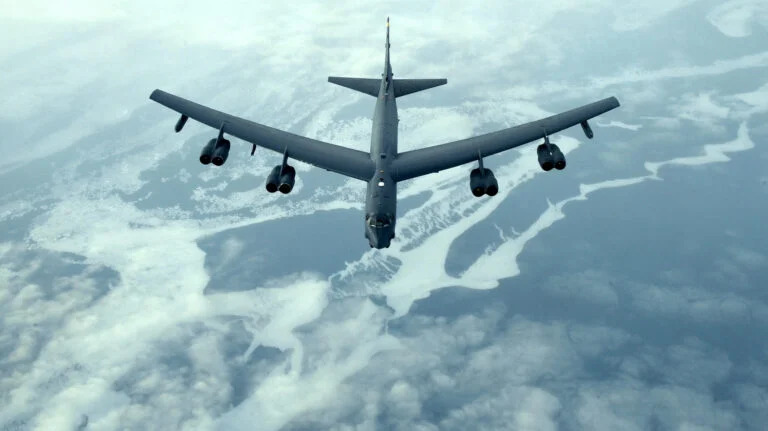
After years of budgetary turbulence and technical setbacks, the modernization of the legendary B-52 Stratofortress has finally reached stable ground. Top Air Force acquisition officials recently assured Congress that the program to revitalize the aging bomber fleet is now on a firm trajectory, ensuring these massive aircraft remain a global deterrent for at least another thirty years.
The Cost of Longevity: Billions Invested in Next-Gen Engines and Radar
Upgrading the 76-strong B-52 fleet is as much a financial challenge as it is a tactical necessity. The program’s centerpiece—replacing the antiquated Pratt & Whitney engines with Rolls-Royce F130 powerplants—has seen its price tag climb from $12.5 billion to $15 billion. While the program recently cleared a critical design review, the projected initial operational capability has shifted to 2033.
Simultaneously, the integration of a sophisticated new radar system—essential for navigating modern threat environments—has faced its own set of delays and cost increases. With an investment now exceeding $4 billion, the new radar is expected to be fielded by 2030. These upgrades are deemed vital to transforming a Cold War-era platform into a cutting-edge asset capable of tackling 21st-century warfare.
Tactical Reversal: A Second Life for the B-1 and B-2
The Air Force has adjusted its long-term bomber strategy, providing a reprieve for its other heavy hitters. While the ultimate goal remains a two-bomber fleet consisting of the B-52 and the in-production B-21 Raider, the B-1 Lancer and B-2 Spirit are now slated to remain in service longer than previously anticipated.
Nearly $433 million is being funneled into the B-1 fleet to equip aircraft with satellite communications and external pylons for hypersonic weapon integration, extending their operational life through 2037. Likewise, the stealthy B-2 Spirit fleet will remain active for the foreseeable future, following its proven utility in recent high-stakes missions.
The Future Horizon: Searching for the Next Heavy Hitter
As the current fleet receives massive capital infusions, military planners are already looking toward the next generation of long-range strike capabilities. Classified documents reveal that an „Analysis of Alternatives” is underway to explore future heavy bomber configurations.
This 18-month study will weigh the costs and requirements of potentially developing a brand-new heavy bomber versus further modifications to the B-52. For now, the United States remains committed to a strategy that blends the reliability of its „iron giants” with the high-tech promise of future stealth platforms, ensuring the sky remains under its command.