As global militaries race to deploy artificial intelligence and next-generation sensors, an unexpected enemy has emerged: their own domestic regulations. Between restricted airspace, depleted missile stockpiles, and the vulnerability of home bases, the road to technological dominance is proving far more arduous than anticipated.
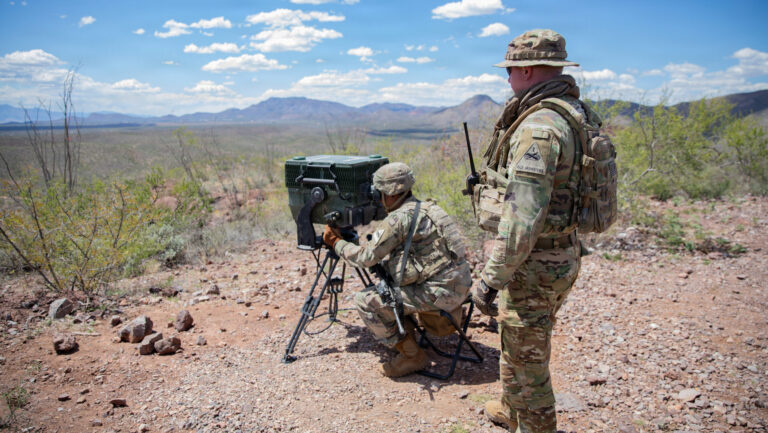
Training Under the Microscope: When Regulations Ground Drones Military leaders are warning that possessing the world’s most advanced combat systems is futile if soldiers cannot test them to their full potential. Currently, training ranges are paralyzed by a wall of civilian regulations. Whether it is strict control of the electromagnetic spectrum or flight restrictions imposed by civilian aviation authorities, elite forces find themselves in absurd situations—such as shutting down civilian road traffic just to allow a drone to cross between two training areas.
Without „exquisite” ranges that simulate real-world contested environments, where communications are jammed and GPS is unavailable, the integration of new technologies remains purely theoretical. In an era of stagnant budgets, the need for testing autonomy has become a strategic priority equal to the acquisition of the hardware itself.
The Internal Front: Hybrid Sabotage and the Vulnerable „Fortress” The challenge is not limited to training. Recent crisis simulations show that force projection to strategic theaters (such as the Strait of Hormuz or the Indo-Pacific) can be halted at the very point of departure. Cyberattacks on civilian utilities—capable of poisoning water supplies or cutting power to military installations—and commercial drones repurposed as precision weapons represent an imminent threat.
The military’s dependence on private-sector power and communication grids creates massive security gaps. The success of future missions depends on a new breed of operator: the „geek with a gun”—a soldier capable of physical combat while simultaneously managing the complex software of autonomous ground vehicles (CUGS) or securing data networks under fire.
Innovation in an Era of Scarcity: Sonobuoys and Cruise Missiles Beneath the waves, the battle to detect silent submarines is being fought by a new generation of „smart buoys.” Open architectures, like the „Open Buoy” concept, allow for sensor updates in record time. However, on the surface, heavy industry is lagging: ASW frigate programs are facing decade-long delays, and JASSM-ER missile stockpiles for the F-35 fleet are under pressure due to high expenditure in current conflicts. Lead times for new deliveries can now stretch up to four years.
The Ethics of the Algorithm: The Human Remains the Final Decider Despite the rush toward automation, military leaders are calling for a „reality check” regarding Artificial Intelligence. While AI can make processes more efficient, no machine can carry the legal or ethical responsibility of lethal violence. Machines cannot be held accountable under the Law of Armed Conflict and cannot predict the unpredictable chaos of the battlefield. Therefore, regardless of how advanced a sensor or drone becomes, the final decision will always rest with a human, ensuring that technology remains a tool, not a replacement for human judgment.