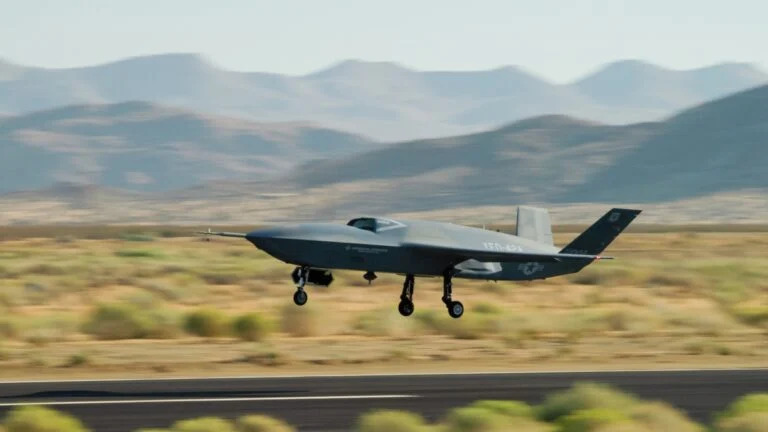
The next-generation autonomous wingman drone built by General Atomics is back in the skies just one month after a crash in the California desert. The rapid turnaround of the YFQ-44A aircraft highlights a significant shift in defense procurement, where test-flight failures are increasingly viewed as essential learning milestones rather than program-ending setbacks.
Software vs. Gravity: Rectifying the Autopilot Glitch
The YFQ-44A returned to flight testing following a comprehensive safety review and a critical software overhaul. According to technical reports, the April 6 crash occurred shortly after takeoff due to a complex autopilot miscalculation regarding the aircraft’s weight and center of gravity.
The software remediation addressed the system’s inability to reconcile these flight parameters, allowing the drone to resume its mission of validating autonomous combat concepts. The company’s ability to diagnose and fix a fundamental flight control issue within weeks demonstrates the high-velocity engineering cycle required for modern defense contracts.
Embracing Risk: The „Failing Forward” Strategy
Military officials overseeing the development of the Collaborative Combat Aircraft (CCA) program have lauded the team’s response to the mishap. Under the „failing forward” doctrine, the Air Force is intentionally accepting higher acquisition and testing risks to prevent operational risks in future conflicts. By pushing the envelope during the testing phase, the program identifies critical flaws early, ensuring that the final hardware delivered to the fleet is battle-hardened.
The program’s resilience was further proven by its multi-vendor approach. Even as the General Atomics platform was grounded for review, exercises continued using hardware from competitors like Anduril. This strategy ensures that the overall timeline for delivering advanced autonomous capabilities to the Air Force remains „on beat,” regardless of individual platform hurdles.
The Billion-Dollar Battle: Securing the Future of Combat Flight
The CCA program is one of the most well-funded and strategically vital initiatives in modern aviation. For fiscal year 2027, the budget requests include approximately $1.4 billion for research and development, alongside nearly $1 billion earmarked for procurement.
As the industry drives toward a major production decision this summer, the competition remains fierce. While General Atomics and Anduril are currently leading the charge for the initial increment, traditional defense powerhouses like Northrop Grumman remain in the fray as „dark horse” contenders. With a second phase of the program already involving early design contracts with nine different firms, the race to define the future of autonomous air warfare is only just beginning.