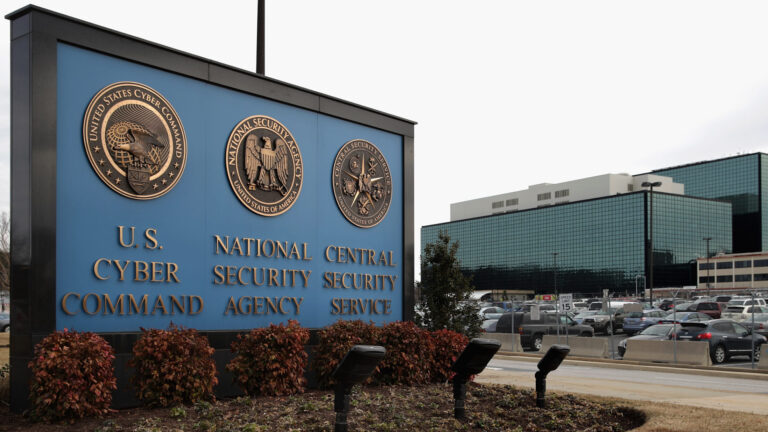
Following weeks of strategic delays, the White House has finally unveiled a landmark executive order establishing a new „voluntary framework” for the oversight of cutting-edge artificial intelligence. At the heart of this directive lies the National Security Agency (NSA), now positioned as the central architect of American AI defense and surveillance.
The mandatory label: Oversight behind closed doors
While the administration emphasizes cooperation, the underlying mechanics of the order reveal a mandatory core. The NSA is tasked with creating and maintaining a classified benchmarking process to identify „covered frontier models”—AI systems with the potential to execute sophisticated cyberattacks.
The industry’s main concern lies in the lack of transparency: the NSA makes the determination using secret criteria that developers can neither see nor contest. While companies can technically opt out of sharing their models, they cannot opt out of the label itself. The government has essentially created a „watch list” for algorithms, where the NSA holds the ultimate authority to decide which technology poses a national security threat.
The 30-day gambit: Speed over scrutiny?
The final document represents a significant pivot from earlier, more restrictive drafts. The preview period, during which „trusted partners” can analyze new models before their release, has been slashed from 90 days to just 30. This change is being hailed as a „game changer” by tech advocates within the administration, ensuring that American AI labs can remain compliant without stifling the rapid pace of innovation.
This tension between safety and speed is not theoretical. Recent history has shown that advanced models, such as Claude Mythos, possess the chilling ability to uncover thousands of software vulnerabilities at speeds far exceeding human defense capabilities. The new 30-day window aims to catch these flaws before they are weaponized by foreign adversaries, though some fear the timeframe is too narrow for a comprehensive audit.
Geopolitical stakes: Maintaining the American lead
The shift toward a shorter oversight window reflects a broader geopolitical strategy. The priority remains clear: the United States must outpace global competitors, particularly China, at all costs. By reducing the regulatory burden, the White House signaling that while security is paramount, it will not be allowed to handicap the American tech sector.
As the NSA begins to implement these classified benchmarks, the AI industry enters a new era. It is a world where the line between commercial innovation and national defense is permanently blurred, and where the most powerful algorithms will now have to pass through the silent filter of the world’s most powerful intelligence agency.