For the first time in modern naval history, a US carrier strike group will operationally integrate an unmanned surface vessel during a routine deployment. This mission marks the decisive transition of unmanned systems from the stage of technological experiment to an active component of the strike force.
Moving beyond the „science project” phase in the Western Pacific
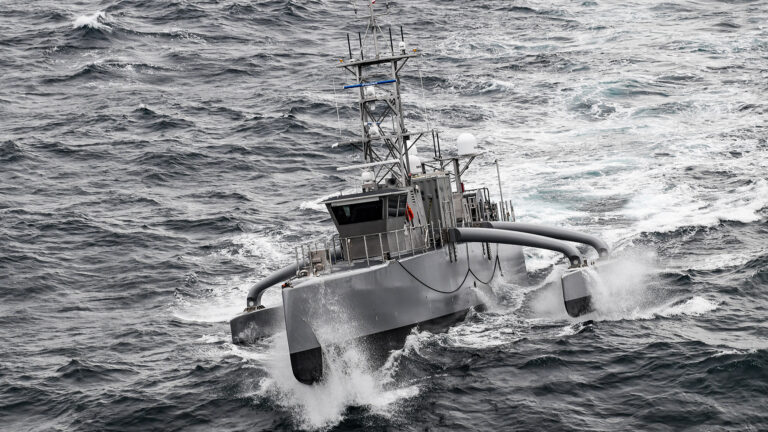
The Seahawk unmanned vessel, an advanced model designed for anti-submarine warfare and maritime domain awareness, is no longer just a prototype tested under controlled conditions. Its integration into the Theodore Roosevelt carrier strike group demonstrates the Pentagon’s desire to use robotic systems to supplement primary forces in complex missions. Military experts believe this step will lay the foundation for future concepts of operations (CONOPS), providing vital data on how manned and autonomous ships can effectively collaborate at sea.
The autonomy dilemma and the „hedge force” strategy
Admiral Daryl Caudle, Chief of Naval Operations, has highlighted the need for a „hedge force strategy” that capitalizes on the advantages of robotic systems. At a time when the US fleet is facing immense pressure due to extended deployments and a shrinking number of ships, autonomous systems are seen as a solution to maintain a global presence. However, the Navy still faces an „unmanned dilemma”: establishing a clear command structure and a unified strategy to integrate these capabilities into global force management strategic decisions.
A new procurement model: The digital marketplace for autonomous vessels
To accelerate the deployment of such technologies, the US Navy has abandoned traditional slow prototyping programs in favor of a „marketplace” model. This flexible approach allows the defense industry to propose production-ready platforms tailored to the specific requirements of different regional commands. The success of the deployment alongside the Theodore Roosevelt will directly influence acquisition decisions, testing critical parameters such as sea endurance, transit speed, and the capacity for underway replenishment without risking human personnel.
The ultimate test: Logistics and sensors in contested environments
Throughout the mission, the Seahawk will be evaluated for its ability to provide long-range intelligence, surveillance, and reconnaissance (ISR) data, exceeding the limits of traditional helicopters. Additionally, the deployment will analyze how the unmanned vessel can handle mine countermeasure missions or logistics in high-risk areas. The results of this operational experience will transform fighting doctrines, turning the presence of maritime drones from an exception into a mandatory routine for the maritime security of the future.