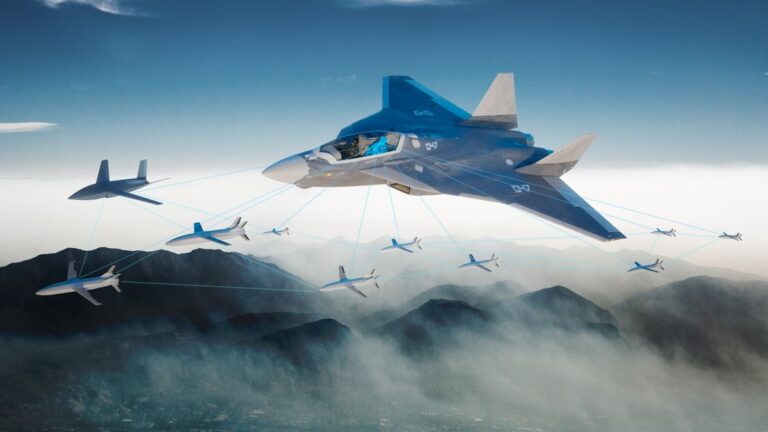
Although the sixth-generation fighter jet envisioned under the FCAS program may be dead before taking flight, Germany and France plan to salvage the technological core of their joint effort. Government officials in Berlin have confirmed that leaders in both nations have acknowledged the reality that plans for the long-troubled aircraft must be scrapped, as industrial partners remained deadlocked over fundamental issues.
Facing industrial reality: Friedrich Merz and Emmanuel Macron halt joint fighter development German Chancellor Friedrich Merz and French President Emmanuel Macron have reached a shared conclusion that the companies involved in building the joint fighter jet cannot reach an agreement. Consequently, Chancellor Merz has advised President Macron not to pursue the construction of the joint aircraft any further. This decision follows years of friction between Dassault and Airbus, primarily centered on project leadership, workshare distribution, and conflicting design philosophies.
Preserving the technological core: The digital nervous system remains a strategic priority Despite the dissolution of the fighter jet component, Berlin and Paris intend to rescue what they term the „core” of the broader project: the next-generation „system of systems” data-sharing architecture. This digital infrastructure is viewed as the nervous system that connects aircraft, drones, and other tactical components into a single integrated whole. While the future of other elements, such as engine projects and autonomous wingmen, remains uncertain, these topics are slated for further deliberation.
Reassessing the partnership: The July Ministerial Council to define a new roadmap A decisive turning point is expected next month during the Franco-German Ministerial Council meeting. Defense ministries from both nations are set to draft an updated joint work plan for defense industry cooperation, shifting focus toward a few projects deemed „realistic and relevant.” This strategic pivot aims to streamline resources after the original project, valued at over €100 billion, stalled due to divergent national interests—including France’s specific requirement for a nuclear-capable aircraft.
A wake-up call for Europe: Addressing fragmentation in the face of global competition The collapse of the main FCAS component has drawn criticism regarding the lack of European defense coordination. Observers, including officials from Belgium, have pointed out that pursuing parallel fighter projects, such as the rivalry between FCAS and the UK-Italy-Japan GCAP program, undermines continental unity. This setback is being described as a painful wake-up call for European capitals to prioritize deeper integration and collective security over individual national industrial interests.