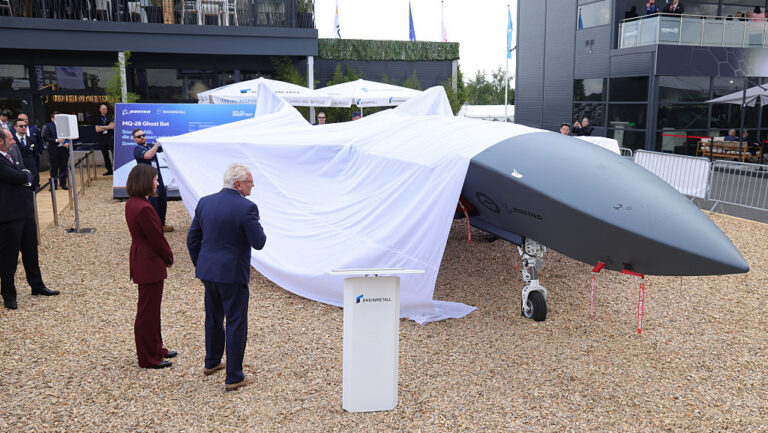
At the Berlin Air Show, Boeing Australia and Rheinmetall officially presented the MQ-28 Ghost Bat, a collaborative combat aircraft that captured the spotlight. The unmanned craft, flown in specifically from its home in Australia, represents the centerpiece of their joint bid to equip the German air force with autonomous systems designed to fly alongside manned fighter jets.
Enhanced performance for the unmanned hunter arriving from Australia
The unveiling in Berlin revealed new technical features of the MQ-28 Ghost Bat. The drone now boasts a 25 percent increase in wingspan, allowing it to carry an additional 2,000 pounds of fuel and mission payloads. The platform has already accumulated over 200 flight hours and can be internally equipped with AMRAAM missiles or small-diameter bombs, providing high tactical flexibility. Armin Papperger, CEO of Rheinmetall, emphasized that to meet the 2029 operational target, final contract negotiations must begin by next year at the latest.
A crowded market in the race for aerial superiority
Boeing and Rheinmetall are not the only players targeting this strategic sector. Competition is fierce, with several defense giants showcasing their own „loyal wingman” solutions. The German firm Helsing revealed new variants of its CA-1 Europa platform, dedicated to electronic and kinetic attack, with maiden flights scheduled for early 2027. Simultaneously, Airbus displayed a full-scale model of its U760 Ravenstorm concept, an evolution of its collaboration with American partners, specifically adapted for European market requirements.
American technology and time pressure in the context of European security
Major overseas manufacturers are also participating in this competition. General Atomics presented a full-sized version of its Gambit drone family, already selected for similar programs by the U.S. Air Force. Company representatives argue they offer the most advanced solution currently available, ready for immediate use without the need for further development of weapon bays. This technological rush comes amid a tense security climate, as leaders in Berlin warn that Europe must be prepared for potential major military challenges by the end of this decade.