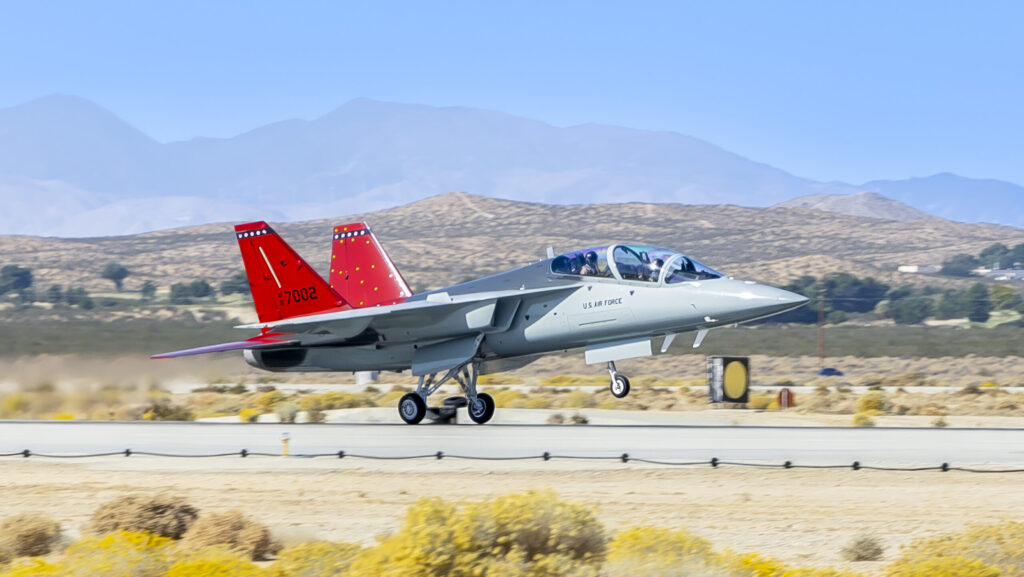
On the verge of approving the T-7 Red Hawk for production, the U.S. Air Force has quietly assessed a fundamental problem: the service may struggle significantly to keep its new training jet flying. Internal documents from March 2026 label the sustainment of the aircraft as „high risk,” casting a shadow over the long-term success of the multi-billion dollar program.
Missing technical data: The clash between the Pentagon and Boeing stalls the trainer jet’s logistics
At the heart of the issue is a dispute over what the contract requires of Boeing. The Air Force is currently missing critical technical data—including design drawings and material lists—that it needs to maintain the aircraft independently. Sources indicate that Boeing failed to flow down these data requirements to its vast network of suppliers, leaving the military without the necessary information to perform its own repairs.
Without this „organic” sustainment capability, the Air Force will be forced to rely on the contractor for even basic maintenance, a situation that often leads to lower readiness rates. The problem is further complicated by a shortage of spare parts, leading insiders to warn that the service will „struggle mightily” to keep the Red Hawk in the air for pilot training.
The bill for taxpayers: Hundreds of millions needed to fix contractual loopholes
Fixing this data gap will likely come with a steep price tag for American taxpayers, potentially on top of Boeing’s existing $9.2 billion contract. To secure the missing information, the Air Force may have to deal directly with individual suppliers and establish separate contracts for data rights—a process estimated to take years and cost hundreds of millions of dollars.
Rodney Stevens, the Air Force’s program executive officer for training, acknowledged that the program previously faced significant challenges regarding data obligations. However, he pointed to a new „active management strategy” designed to foster collaboration and find a „new path forward” with Boeing, rather than pursuing a lengthy legal battle over the original 2018 contract terms.
Production moves forward: The military bets on an active management strategy despite internal warnings
Despite these glaring sustainment concerns, the T-7 is moving toward a production decision. Boeing has defended the program, highlighting over 344 flight test hours and a commitment to safety and quality. Nevertheless, internal assessments of manufacturing readiness suggest that some supply chain metrics are still below the ideal levels for full-rate production.
Military officials stress that having independent „right to repair” capabilities is crucial, especially in wartime scenarios where contractor support might be unavailable. As the Air Force pushes Boeing to deliver the airframes, the focus is now shifting toward preventing the T-7 from becoming another platform plagued by low availability, similar to the F-35. The goal remains a „best of both worlds” model where military maintainers handle day-to-day operations while industry partners provide specialized support.