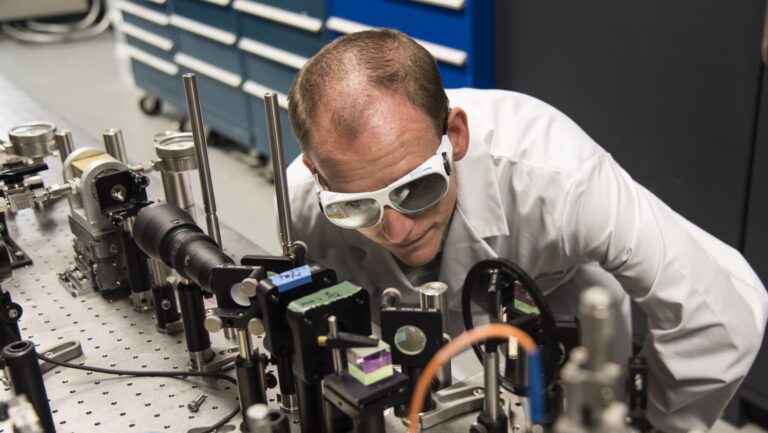
An alarming internal Department of Defense review warns that decades of underfunding have led to a critical deterioration of military research facilities. The infrastructure dedicated to Research, Development, Test, and Evaluation (RDT&E) has reached a point where it weakens the United States’ ability to maintain a technological edge, forcing elite organizations to operate in spaces with documented safety risks and major technical limitations.
Alarming deterioration and safety risks in military research centers
Many current laboratories are in such poor condition that researchers are unable to utilize cutting-edge technologies. Instead of funding innovative experiments, millions of dollars are diverted annually to cover ever-growing maintenance bills. Issues range from inadequate bandwidth for large datasets to unstable power grids that cannot support artificial intelligence, and air conditioning systems incapable of protecting delicate equipment.
A proposed $5 billion „fenced” fund to prevent budget raiding
The review’s primary recommendation calls for the creation of a special fund for research infrastructure, legally „fenced off” so it cannot be raided by military services to address short-term emergencies like fixing barracks or base childcare. A proposed allocation of approximately $5 billion over five years would start with $650 million in the first year. Additionally, the report asks Congress to raise the threshold for „minor” military construction projects from $9 million to $20 million to provide laboratories with the agility needed for rapid facility modernization.
Twenty-first century technology trapped in 45-year-old facilities
The average age of laboratory facilities across all military services exceeds 45 years, with most built during the Cold War era. These buildings have long surpassed their life expectancies, and the requirements of modern research are far beyond their structural capabilities. The study, commissioned by Secretary of Defense Pete Hegseth, involved visits to over 30 facilities and represents the first step in an implementation plan designed to overhaul the department’s technological strategy.