The US Space Force is taking a decisive step toward extending military operations beyond Earth’s orbit by launching a new task force dedicated to cislunar space. This specialized unit, known as the Cislunar Coordination Office, is charged with building the technological and logistical roadmaps required to support NASA’s planned moon base. This initiative aligns with national space superiority goals, which mandate the establishment of a permanent American lunar outpost by 2030 to ensure a sustained presence in deep space.
A strategic roadmap for America’s lunar ambitions
The Cislunar Coordination Office will bring together program managers and engineers to synchronize acquisition efforts and technological development. This office will serve as a central hub for various government organizations, including DARPA and NASA, as well as private sector partners. The strategy reflects a long-term vision: as US interests expand to the Moon, the Space Force must ensure that those operations are safe, secure, and sustainable, providing the necessary protection for the next steps in space exploration.
Monitoring the void between Earth and the Moon
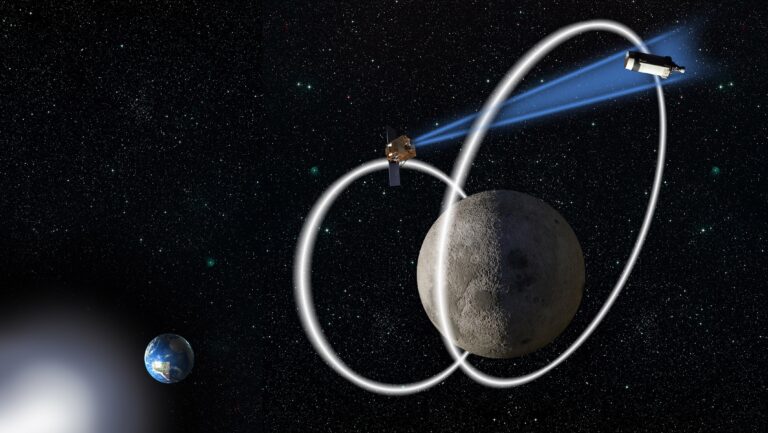
One of the most complex challenges of this new mission is space domain awareness at vast distances. The mathematics and tools required to track objects in cislunar space are fundamentally different from those used in low Earth orbit. The Space Force is prioritizing the development of secure, low-latency communication networks to protect personnel and critical infrastructure. Furthermore, maintaining a permanent lunar presence will require a significant increase in launch operations tempo, placing new demands on existing launch facilities at Cape Canaveral.
Oracle Prime: Advanced technology for cislunar surveillance
To support these goals, the Air Force Research Laboratory (AFRL) is preparing to launch the Oracle Prime experimental satellite next year. This will be the first-ever mission designed for sustained operations at the L1 Lagrange Point, located approximately 326,000 kilometers away. From this strategically balanced gravitational position, the satellite will conduct surveillance of local space objects, distinguishing between orbital debris and active satellites, including international assets like China’s Queqiao-2 relay satellite.
The NASA-Space Force partnership: A common vocabulary for the future
The collaboration between NASA and the Space Force is already an operational reality, characterized by close coordination at all levels. From supporting astronaut programs to managing shared launch infrastructure, both entities are working to create a sustainable ecosystem. The recent success of crewed missions under the Artemis program underscores the urgency of these preparations, as the United States targets its first crewed lunar landing since 1972, currently planned for 2028.