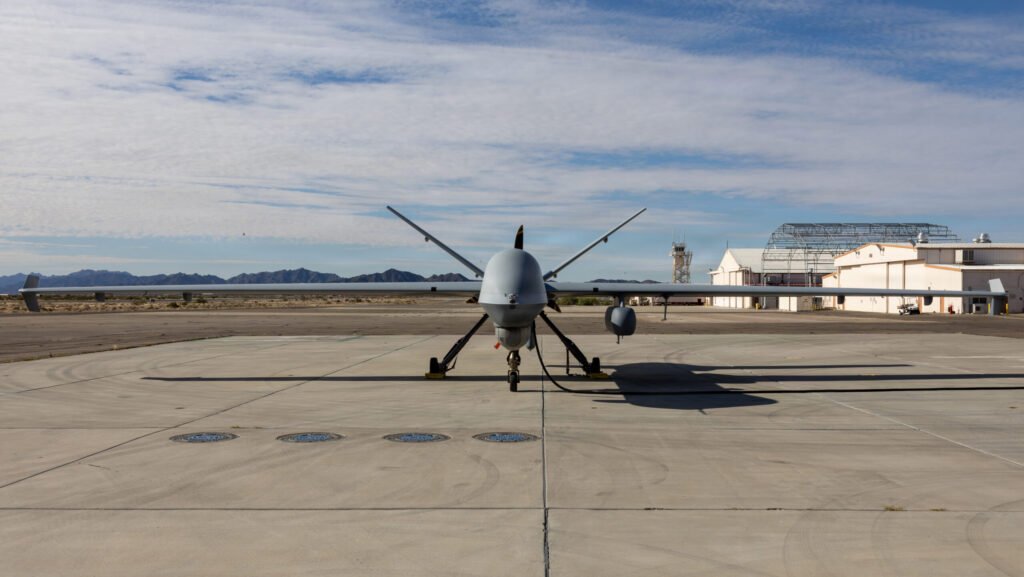
The United States is radically recalibrating its aerial warfare strategy following heavy losses of MQ-9A Reaper drones during the recent conflict with Iran. The Pentagon has officially launched a search for a new „hunter-killer” drone model capable of mass production at low costs. This new military vision prioritizes quantity and modularity, acknowledging the harsh reality that high-value, sophisticated aircraft have become a strategic vulnerability against advanced air defense systems.
The toll of high-value platforms: unsustainable losses in modern combat
Reliance on high-cost aircraft has been deemed „unsustainable” according to new defense notices, after nearly 30 Reaper drones were reportedly lost in just six weeks of operations. With price tags reaching up to $50 million per unit, these losses have created significant budgetary and operational gaps. The U.S. military now requires a fleet designed „with the expectation that some will be lost in combat,” signaling a shift from „exquisite” platforms to pragmatic, expendable solutions.
The MMA project: a modular approach to massed aerial warfare
The new program, titled „Massed Modular Aircraft” (MMA), aims to field a full-scale prototype within 21 months. The goal is to have at least 20 mission-ready drones by 2031, capable of performing strike and reconnaissance missions similar to the Reaper, but at a price point below $30 million. Technical requirements are stringent: a payload capacity of at least 2,800 pounds, an 8,000-nautical-mile range, and speeds of at least 200 knots, all within a modular framework for easy upgrades.
Industry giants prepare to battle for the modular future
Although production of the MQ-9A ceased in 2025, industry leader General Atomics has already announced its intent to compete for the MMA contract. The company aims to leverage its 30-year investment in drone technology to provide a product that exceeds requirements while reducing operational risk. The Pentagon is utilizing an accelerated „Other Transaction” agreement process to encourage non-traditional contractors to participate, hoping to drive innovation and lower costs in a sector previously defined by exorbitant spending.