



















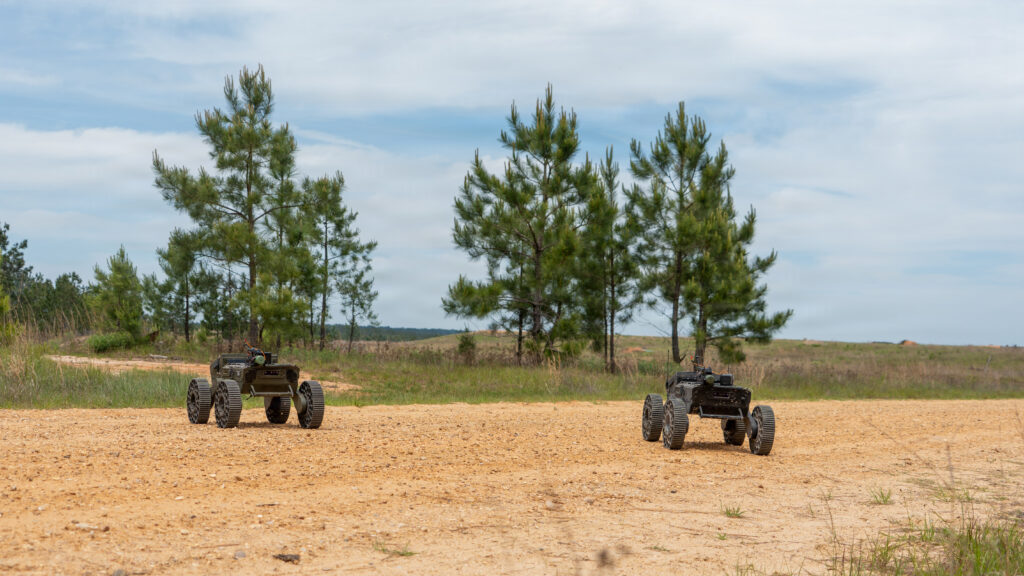
In a radical shift of tactical paradigms, the U.S. Army is taking a decisive step toward eliminating human risk in the most dangerous combat engineering missions. Four industry giants have been selected to develop autonomous systems capable of „rapidly” breaching obstacles and minefields, clearing the way for troops without exposing a single soldier to enemy fire.
High-Stakes Warfare: Farewell to Soldiers in „No Man’s Land”
The U.S. Army has officially named Caterpillar, Forterra, IDV USA, and Overland AI as participants in the Engineer Autonomous Breaching Capability (EABC) program. The objective is both ambitious and vital: creating robotic platforms capable of operating beyond-line-of-sight to dismantle enemy defensive barriers.
These systems are more than just remote-controlled vehicles; they are units equipped with advanced autonomy designed to ensure the „safe passage of follow-on forces.” Through this move, the military aims to minimize personnel exposure during the critical moments of an offensive, where, historically, human casualties among combat engineers have been devastating.
The Litmus Test: From Prototype to Battlefield Reality
The contracts are expected to be finalized in the coming weeks, marking the start of an intense testing phase. The program will not be confined to laboratory simulations; the selected vendors will undergo rigorous demonstrations culminating in early next year with a direct unit-level assessment.
This „Transformation in Contact” phase will allow soldiers to provide real-time feedback directly from the field. The results will be instrumental in the production decision for the next generation of systems, as the Army seeks the optimal balance between high-tech performance and affordability.
The New Autonomous Triad: Engineering, Sustainment, and Fires
The EABC program is just one piece of a much larger puzzle. The Army’s modernization strategy has recently crystallized around three primary pillars of autonomy: engineering (breaching), sustainment (logistics), and fires. In tandem with the mine-clearing robots, officials have launched initiatives for robotic logistics—aimed at removing drivers from high-risk supply routes—and even autonomous bridge-building and casualty evacuation.
This technological offensive clearly signals the future of the battlefield: a network of unmanned systems taking over the „dull, dirty, and dangerous” tasks, keeping the strategic decision in human hands while keeping the human far from the immediate line of fire.


