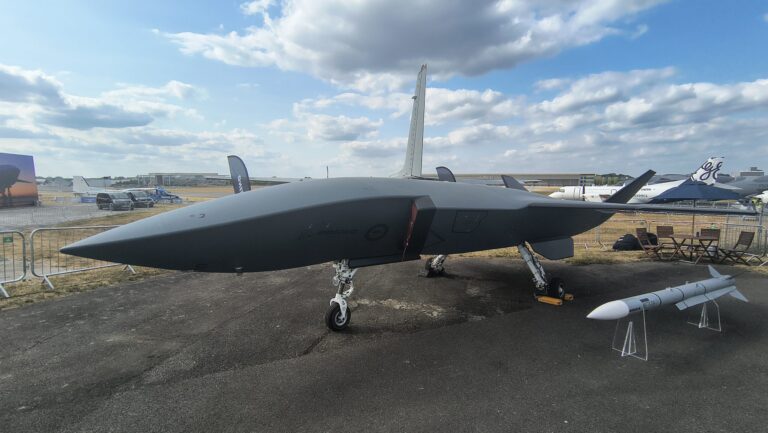
Aerospace giant Boeing is considering a radical paradigm shift in the production of the MQ-28 Ghost Bat combat drone, weighing plans to build manufacturing facilities in multiple countries. This strategic move comes in response to increasingly vocal demands from international leaders who prioritize industrial sovereignty, wanting cutting-edge weaponry to be built within their own borders to guarantee supply security during times of crisis.
Sovereignty as a priority: Small and adaptable factories to ensure resilience in the face of conflict
Glen Ferguson, the MQ-28 global program director, explained that the company’s vision has shifted from the concept of a „mega-factory” toward a network of localized production centers. In an environment where supply chains can be rapidly disrupted, a nation’s ability to regenerate and build aircraft at a sustained rate becomes a crucial strategic advantage. Thus, Boeing aims to offer international partners not just a product, but the industrial capacity needed to meet their own defense needs autonomously.
European urgency: Germany takes decisive steps to integrate Ghost Bat drones by 2029
The security context in Europe, marked by the war in Ukraine and increased NATO spending, has created an unprecedented sense of urgency in the Collaborative Combat Aircraft (CCA) market. Against this backdrop, Germany is emerging as the first potential European operator of such drones, aiming to field them alongside crewed fighters by 2029. To support this ambition, Boeing has expanded its German supplier base by adding electronics specialist Hensoldt, joining heavyweights such as Rheinmetall and Rohde & Schwarz.
Global partnerships for cutting-edge technology: Integrating combat systems and infrared sensors
In addition to industrial expansion in Germany, the MQ-28 Ghost Bat program is strengthening its technological architecture through prestigious international collaborations. The multinational firm Eaton has joined the project to supply the drone’s internal weapons bay launcher. Meanwhile, the Leonardo group has been formally inducted to manage infrared search-and-track (IRST) systems, a vital technology for detecting threats without compromising the aircraft’s stealth profile. These partnerships underscore the complex and collaborative nature of the new concept of aerial warfare.