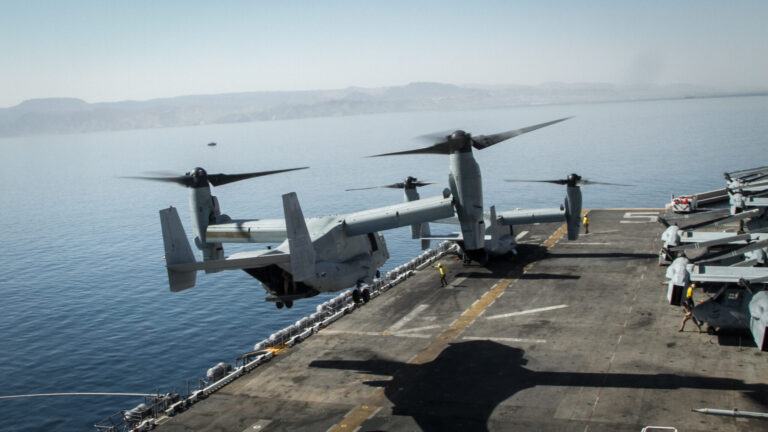
The U.S. Marine Corps welcomed its final MV-22 Osprey today, marking the conclusion of a historic procurement program. However, the milestone is overshadowed by a stark reality: the aircraft that revolutionized military aviation must now be saved from its own technical flaws to remain relevant through 2055.
The End of an Era and the Modernization Gamble
With the delivery of the 359th aircraft, the Osprey acquisition program for the Marine Corps is officially complete. Since entering service in 2007, the MV-22 has redefined how American forces generate combat power, offering speed and reach that connected bases and ships in ways previously unimaginable. With over 686,000 flight hours logged, the Osprey has become the backbone of air-ground task force operations.
Yet, the end of deliveries does not mean the end of development. Aviation leadership emphasizes that the current responsibility is transforming this asset into a safe and lethal platform for the decades to come. The focus now shifts to a massive modernization initiative aimed at correcting systemic vulnerabilities and reducing maintenance hours, with the goal of keeping the fleet operational for another 30 years.
A Legacy Haunted by Tragedies and Critical Flaws
Beyond operational success, the recent history of the Osprey is written in blood. The fleet has been rocked by a series of fatal crashes, most recently in June 2022, where a clutch system failure killed five Marines. Furthermore, the crash of an Air Force Osprey off the coast of Japan in November 2023, caused by a gearbox failure, led to the grounding of the entire global fleet for months.
Although the flight ban was lifted in March 2024, the aircraft currently operate under severe restrictions. Gearbox inspections are now mandatory before every takeoff, and flight limitations remain in place until critical components are completely redesigned or upgraded. Military officials maintain total discretion regarding the number of affected aircraft, citing national security reasons.
The Race for Survival: Objective 2055
To secure the fleet’s future, engineers are working against the clock to redesign the input quill assembly—the volatile component that has caused numerous incidents. Until the new technical solution is implemented, current flight restrictions appear to have at least temporarily halted the occurrence of further catastrophic failures.
The leadership’s message is one of strategic caution: the evolution of the MV-22 did not end with the final delivery. The challenge is immense—maintaining a revolutionary but controversial aircraft in a state of combat readiness in an environment where the margin for technical error has become virtually non-existent.