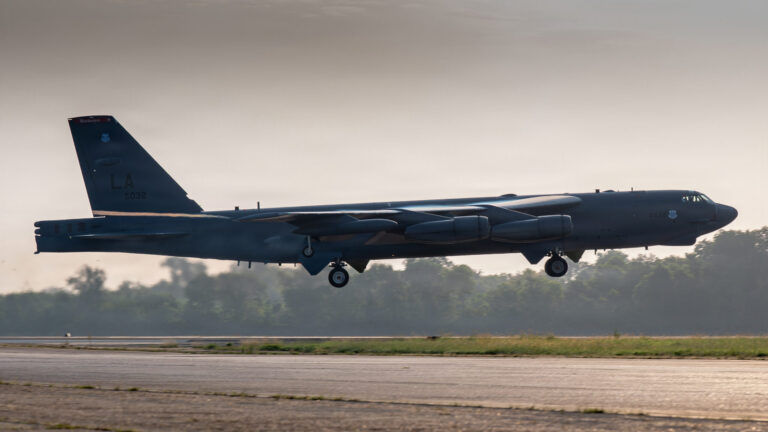
The Air Force’s ambitious plan to keep the legendary B-52 Stratofortress bombers in service through the 2050s is entering a critical period. A new watchdog report warns that the massive 13-upgrade package, valued at approximately $21 billion, is being undermined by poor digital tool management and alarming cost increases. Two of the most vital components—engine replacement and radar modernization—are already in the danger zone, casting doubt on the fleet’s ability to meet future operational requirements.
The engine crisis and skyrocketing costs for the Eisenhower-era veteran
The Commercial Engine Replacement Program (Cerp), aimed at replacing aging Pratt & Whitney powerplants with modern Rolls-Royce F130 units, has seen cost increases of over 38% compared to 2018 estimates. The total bill has now reached $15.4 billion, $400 million above previous projections. While the current schedule targets 2033 for operational status, experts warn of a major „concurrency” risk: production and flight testing are scheduled to begin simultaneously in 2029. This haste, driven by the extreme wear of the old engines, could trigger costly technical errors and a domino effect of delays in maintenance processes.
Radar modernization and the risks of concurrent flight testing and production
The radar segment is also struggling. The Rmp program, which aims to integrate a new Rtx sensor, has seen its budget balloon by 30%, reaching over $2.9 billion. Although the system is expected to be operational by 2030—three and a half years later than originally planned—execution risks remain high. The plan calls for production to start after only two months of flight testing, out of 18 total planned. This situation is further complicated by the recent tragic crash of a test aircraft in California, which resulted in the loss of the entire crew and may force further schedule adjustments.
Technical deficiencies and the absence of digital tools in the design process
A systemic issue identified in the modernization process is the limited use of digital engineering. While the engine program partially utilizes these tools, the other 12 modernization efforts ignore digital design technologies, missing major opportunities for efficiency and avoiding long-term logistical support problems. Furthermore, it was found that the B-52 fleet lacks one-third of the specific support equipment required, and confusion regarding management responsibility is blocking effective maintenance.
Maintenance woes and uncertainties regarding long-term fleet availability
Due to a lack of spare parts and adequate equipment, mission-capable rates for the B-52 bombers have not improved, remaining below established standards. Although the Pentagon has classified exact details about the fleet’s status as „sensitive,” it is clear that current bottlenecks could result in an insufficient number of combat-ready aircraft. Current recommendations urge the Air Force to reassess production decisions until the impact of cost increases and delays is fully analyzed, so as not to compromise the strategic role of this iconic aircraft.