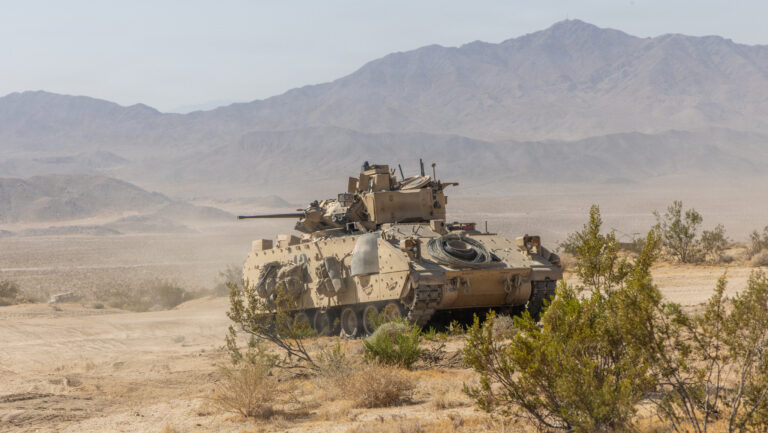
As the United States Army awaits the fielding of its new M1E3 Abrams tanks and XM30 Infantry Fighting Vehicles, the current platforms are facing a severe operational readiness crisis. This critical situation is largely fueled by supply chain bottlenecks that are delaying the maintenance of the equipment on which soldiers currently depend. Although modernization is on the horizon, the pace of implementation is not fast enough to immediately replace technology that is already showing signs of exhaustion.
The battle against time and missing parts: Why current armor must last another three decades
Military officials warn that, despite modernization plans, the ground forces will be forced to keep some of these legacy platforms in operation for another 20 or 30 years. This reality turns obsolescence issues into a long-term challenge, forcing command structures to find innovative ways to maintain yesterday’s technology at tomorrow’s combat standards. The problem is not limited to heavy tanks but affects the entire tactical wheeled vehicle fleet and tracked systems.
The “Tiger” strategy and industry partnerships: Moving beyond traditional supply methods
To combat these bottlenecks, new forms of collaboration with the private sector have been initiated, such as the recent event dedicated to the Abrams tank’s AGT1500 engine, nicknamed the “Tiger.” The goal was to identify secondary sources for subcomponents, attract companies capable of advanced manufacturing, and secure the necessary raw materials. This approach of „casting a wider net” in the market seeks to resolve the impasse where traditional suppliers can no longer meet demand or produce parts for legacy technologies.
A new acquisition architecture: Sustainability becomes a priority from the design phase
A fundamental shift is also occurring in the Army’s acquisition structure, where sustainment has begun to be included in discussions from the earliest stages of new vehicle development. Thus, for future projects like the M1E3 Abrams and the XM30, logistics experts are present at the decision-making table before the first units are even manufactured. This early integration promises to eliminate the readiness gaps affecting the current fleet, ensuring long-term sustainability from day one of the design process.