Trump administration’s new policy puts pressure on America’s space infrastructure
The Trump administration has introduced a sweeping national policy aimed at expanding US transportation capabilities “to, from and within space.” Although the document has received broad support from government agencies and the aerospace industry, officials and industry representatives continue to raise one central question: where will the money come from?
For the US Space Force, the presidential directive has also reignited a long-running dispute with US Space Command over the need for near-term funding to develop orbital mobility and logistics capabilities.
“Show me the money” is effectively the question being raised by analysts, industry representatives and officials familiar with the administration’s plans.
Target: more than 1,000 launches annually by the end of the decade
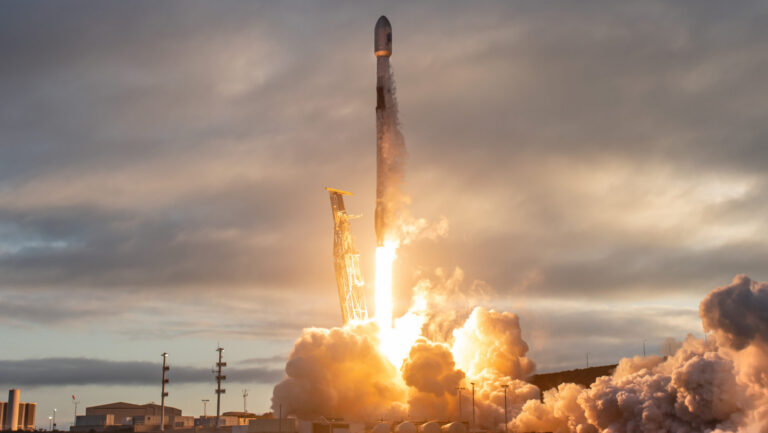
President Donald Trump issued a new National Space Transportation Policy on Aug. 20. Its headline objective is to increase the US launch rate to more than 1,000 missions per year by 2030.
The document was issued as a National Security Presidential Memorandum, giving the Department of Defense a central role in carrying out the policy. The Pentagon will have to work with NASA, the Department of Transportation, the Department of Commerce and the Federal Communications Commission.
The policy directs the Defense Department to:
- expand launch capacity at US space ranges;
- help identify new sites for launching and reentering rockets and space cargo;
- protect launch infrastructure from attacks by adversaries;
- develop commercial space mobility and logistics services.
The Pentagon operates two of the country’s largest launch facilities: Vandenberg Space Force Base in California and Cape Canaveral Space Force Station in Florida. The other two major centers are NASA’s Kennedy Space Center and Wallops Flight Facility.
The White House has not provided details about the expected cost of the initiative or which agencies would be responsible for contributing funds.
Industry welcomes the policy but calls for concrete investment
Representatives of the US space sector quickly welcomed the new strategy. The Space Force said the document provides important guidance for protecting American interests across all orbital regimes and preserving freedom of action in a contested space environment.
The Aerospace Industries Association warned, however, that launch demand is growing faster than existing capacity. Investment in infrastructure will be crucial to maintaining American competitiveness and leadership in space.
The Satellite Industry Association also praised the policy, arguing that reliable, affordable and resilient access to space is essential to the US economy, technological leadership and national security.
The Commercial Space Federation said the document provides needed regulatory updates to support the rapidly expanding launch industry.
Regulators begin preparing implementation measures
Shortly after the policy was released, the main US agencies overseeing the commercial space sector began working on implementation proposals.
The Federal Aviation Administration issued a request for information on the possible location of new launch and reentry facilities. The agency is seeking views on technical criteria, investment requirements and safety standards for future sites.
The review includes three potential locations in Florida, Georgia and Puerto Rico that had previously been proposed by outside organizations. It also considers the use of offshore platforms, either by converting existing oil rigs or building new maritime structures.
At the same time, the National Oceanic and Atmospheric Administration requested public input on a pilot voluntary certification program for companies developing novel space activities, including operations conducted in orbit.
Launch demand has surged in recent years
The goal of 1,000 launches per year is being driven by rapidly increasing demand, particularly for placing satellites in low Earth orbit.
Available statistics show a dramatic acceleration in launch activity. According to data compiled by astrophysicist Jonathan McDowell, the United States conducted 181 launches in 2025, compared with just 37 in 2020.
Most launches take place from Department of Defense facilities. NASA centers are primarily used for the agency’s own missions.
A Department of the Air Force study released in May identified 175 commercial and military launches conducted in 2025 from Vandenberg and Cape Canaveral alone. The analysis concluded that the Space Force may soon need another facility capable of supporting heavy-lift rockets.
Artemis, Starlink and Golden Dome add to the pressure
John Shaw, a former deputy commander of US Space Command, identified several factors that could create a gap between launch demand and available capacity.
The first is NASA’s Artemis program, which aims to establish a sustained human presence on the Moon. Beyond transporting astronauts, the program will require extensive infrastructure, including refueling systems, support platforms and logistics solutions for future lunar vehicles.
A second factor is the Pentagon’s plan to use the commercial Starlink network and its military Starshield variant, along with the development of constellations capable of tracking moving targets in the air and on the ground. All of these projects will require a large number of launches.
The Golden Dome missile defense initiative could add even more demand, depending on its eventual scope. The program could require new sensor satellites and potentially space-based interceptors.
Commercial expansion is another driver, ranging from orbital data centers and communications constellations to other emerging space activities based on smaller and cheaper satellites.
The goal is considered extremely ambitious
Experts warn that reaching 1,000 launches per year by 2030 would be an extraordinary achievement.
Existing infrastructure does not appear ready to support such a pace. Meeting the target would require rapid and substantial investment in the modernization and expansion of US space ranges, as well as close coordination among federal agencies.
Analysts point out that the new policy establishes goals but does not automatically provide the funds needed to achieve them. Departments and agencies will first have to submit assessments and proposals, while potential infrastructure projects could be included in future Pentagon budget requests.
As a result, major projects may not receive funding before fiscal year 2028 or later.
The cost of a new launch site is difficult to estimate
Space Force officials acknowledge that expanding launch capacity raises significant financial challenges. In addition to building new facilities, the Pentagon would need to allocate resources to coordinate national security launches between new sites and existing bases.
The cost of such an investment would depend on several factors:
- geographic location;
- availability of existing infrastructure;
- size and type of rockets;
- need for new roads and access systems;
- compatibility with existing launch ranges.
Some estimates suggest the cost could reach several billion dollars.
However, not all expenses would necessarily fall on the government. Launch pads are typically designed for specific rockets, and the companies that own those vehicles generally pay for the associated construction.
The government normally provides range services, roads, access routes and shared infrastructure. One example is SpaceX’s modernization of a launch pad at Vandenberg for its Falcon Heavy rocket.
Public-private partnerships may offer a financing path
One possible solution would be to use public-private development and financing models. Supporters of this approach argue that private investors could contribute if the projects offer sufficiently attractive economic incentives.
An alert issued by the law firm Holland & Knight also backed the concept, noting that the new policy encourages agencies to develop space infrastructure jointly with commercial partners.
A law enacted last year also created a special designation for spaceport bonds. The measure could expand companies’ access to tax-exempt financing for a broad range of spaceport-related facilities.
The model raises another question, however: what concrete benefits would private companies receive in exchange for their investment, and whether enough firms are willing to commit substantial capital to such projects.
Orbital mobility is another promise without clear funding
The new policy goes beyond launches from Earth. It places significant emphasis on orbital logistics and the ability to conduct launches within 48 hours.
The Defense Department and NASA are being asked to evaluate US government needs for in-space transportation missions, including space-weather monitoring, orbital-debris removal and on-orbit satellite servicing.
The Pentagon is also being encouraged to develop commercial space transportation and logistics services for refueling, repairing and moving satellites or other objects in space.
US Space Command has been advocating for years for the development of such capabilities. These include satellite refueling, repairs, attaching to space objects and moving orbital debris. In some circumstances, the same technologies could also be used to intercept or reposition an adversary’s spacecraft.
The Space Force supports the concept, but funding remains limited
The Space Force has gradually shifted from skepticism toward at least rhetorical support for space mobility and logistics. In 2023, it established a new acquisition mission area known as “Space Access, Mobility and Logistics.”
Funding has remained limited. Until fiscal year 2025, the effort was supported mainly through congressional add-ons. That year, the Space Force requested and received $20 million for the first time.
Funding was eliminated in fiscal year 2026. The fiscal 2027 request includes roughly $10 million for point-to-point delivery, but no funding is allocated for on-orbit servicing, mobility and logistics.
A heated debate therefore continues within the US government over the near-term value of these capabilities and how quickly they should be developed. For now, the presidential policy provides a strategic direction — but no clear financial answer.